

Why Every Car Loses Value - And Why It Matters
Depreciation is the silent cost that most car buyers never see on a window sticker, yet it often costs more than fuel and insurance combined. Understanding it is essential to making sense of the true annual cost of owning a car in America.
Unlike a home, which can appreciate under the right conditions, a vehicle is a depreciating asset by nature. It's a machine subject to wear, technological obsolescence, and shifting consumer tastes. The market reflects all of that - continuously.
Why does this matter practically? Because the gap between what you paid and what your car is later worth is real money out of your pocket, whether you plan to sell, trade, or simply keep a mental tally of your net worth. Drivers who ignore depreciation often feel the sting when they go to sell or trade in and find their vehicle is worth far less than expected.
15-25%
Value lost in a new car's first year
Industry analysts consistently estimate new vehicles shed 15-25% of their purchase price within the first 12 months of ownership.
~$2,800/yr
Average annual depreciation cost estimate
For a vehicle purchased at $35,000 and worth $21,000 five years later, depreciation alone averages roughly $2,800 per year before other costs.
40-60%
Typical value loss after five years
Most vehicles lose between 40% and 60% of their original value within the first five years, though rates vary significantly by make and model.
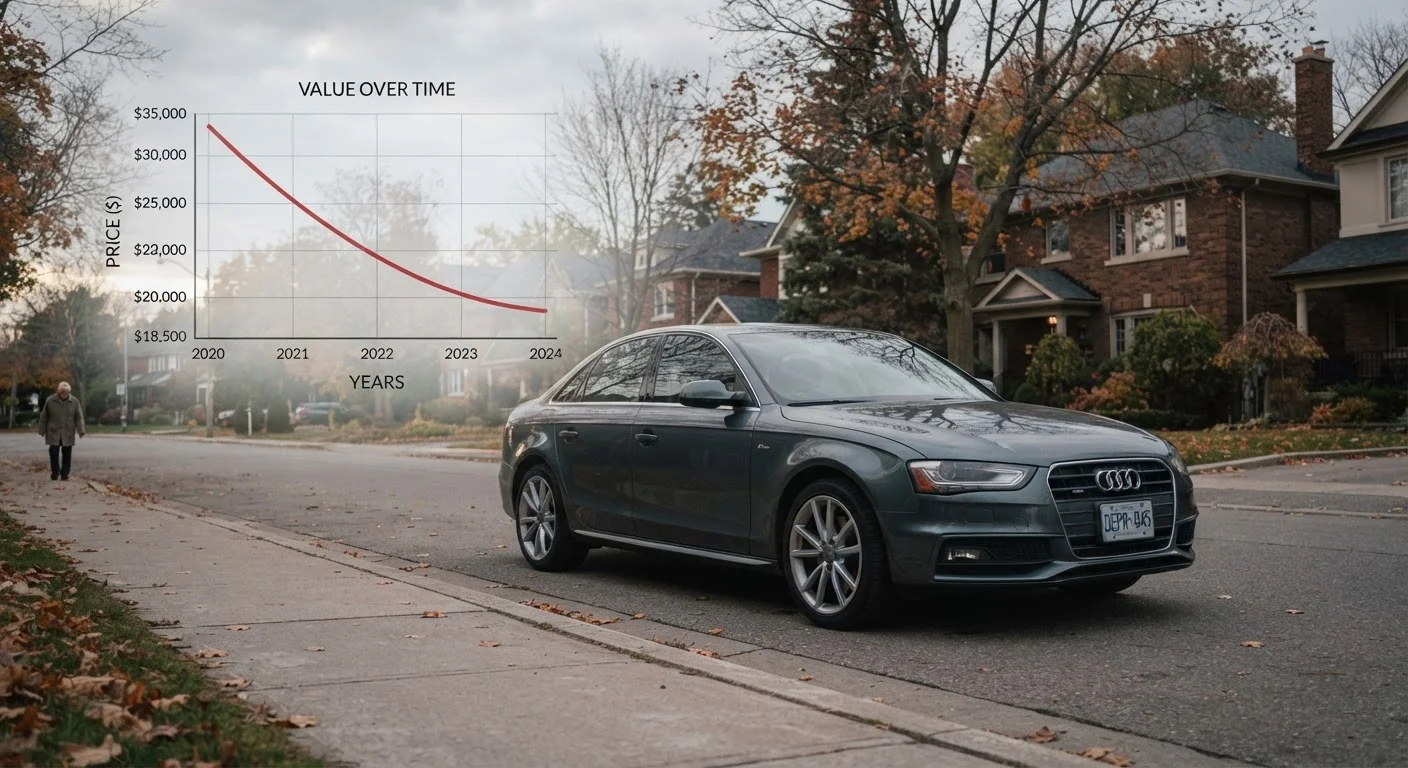
The Depreciation Curve: Where Value Drops Fastest
Depreciation doesn't move at a steady pace. It front-loads the pain. A new vehicle loses a substantial chunk of its value in the first year - commonly cited estimates from automotive data analysts suggest somewhere between 15% and 25% within 12 months. By years three to five, the rate typically slows considerably.
After about five years, a car might have lost anywhere from 40% to 60% of its original value, though this varies significantly by vehicle. After that, value decline becomes more gradual, and the vehicle often settles into a more stable price range. This curve is one of the central arguments for buying a used vehicle that's already absorbed the steepest drop - a point explored further in our look at new vs. used car trade-offs.
Key Factors That Influence How Fast Your Car Loses Value
Not all vehicles depreciate at the same rate. Several variables push that curve up or down:
- Make and model reputation: Vehicles with strong reliability records and high consumer demand tend to hold their value better. Trucks and SUVs popular in the U.S. market have historically shown strong resale value, while some luxury and specialty vehicles drop faster once the initial appeal fades.
- Mileage: Higher mileage signals more wear, and buyers pay less for it. The fewer miles driven annually, the slower the value falls, all else being equal.
- Condition and maintenance history: A well-maintained vehicle with documented service records commands more on the resale market. This is one reason keeping up with your routine car maintenance has a direct financial payoff.
- Accident and title history: A vehicle with a clean title and no reported accidents typically sells for meaningfully more than a comparable one with damage history.
- Color and features: Neutral colors (white, silver, gray, black) tend to appeal to a wider buyer pool. Unusual colors or stripped-down trim levels can reduce resale interest.
- Fuel type and market conditions: When gas prices spike, large gas-powered trucks and SUVs can lose value faster. Electric vehicles face their own depreciation dynamics tied to battery technology evolution and range improvements in newer models.
Depreciation's Real Impact on the Cost of Ownership
Many drivers focus on monthly payments and ignore the depreciation embedded in them. But when you account for the full picture - as part of everything that goes into the total cost of owning a car - depreciation often ranks as the largest single line item.
Consider a straightforward scenario: if you purchase a vehicle for $35,000 and it's worth $21,000 five years later, you've absorbed $14,000 in depreciation - roughly $2,800 per year before a single dollar of fuel, insurance, or maintenance is counted. For drivers in urban environments, this calculus becomes even sharper, as explored in our piece on owning a car in a big city.
Understanding depreciation also reframes how you think about deals. A low sticker price isn't always the full story - sale prices don't always mean you're saving money when depreciation, financing costs, and fees are factored in.
Practical Ways to Factor Depreciation Into Your Decisions
You can't eliminate depreciation, but you can make choices that limit its financial impact:
- Research resale value before you buy: Automotive data resources publish historical depreciation rates by make and model. Choosing a vehicle with stronger-than-average resale value is one of the most effective ways to lower long-term ownership costs.
- Consider buying used: A vehicle that's two to four years old has already absorbed the steepest depreciation drop. You're paying closer to what the market says the vehicle is genuinely worth at that moment.
- Limit excessive mileage: If you drive far beyond the average annual mileage (roughly 12,000-15,000 miles per year in the U.S.), your vehicle's value will fall faster. Carpooling, public transit, or combining trips where practical can help.
- Keep up with maintenance: Service records are proof of care. Buyers pay a premium for vehicles with documented maintenance histories, and lenders recognize the difference too.
- Understand loan terms in light of depreciation: Long loan terms spread payments out but can leave you owing more than your car is worth - a situation called being "underwater" or "upside down." A larger down payment or shorter loan term reduces this risk.
This article is for general informational purposes only and does not constitute financial or legal advice. Vehicle values vary widely by market, condition, and circumstances. Always consult multiple sources and qualified professionals before making significant financial decisions.
Frequently Asked Questions
A new car typically loses somewhere between 9% and 11% of its value the moment it's driven off the lot. By the end of the first year, total depreciation often reaches 15-25%. This is why many financial advisors consider a nearly-new used car a more efficient purchase.
Key factors include the vehicle's make and model, its fuel type, mileage, overall condition, color, accident history, and current consumer demand. Market conditions - like fuel prices affecting SUV demand - also play a significant role.
Historically, many EVs have depreciated faster than comparable gas vehicles, partly due to rapid technology changes and battery concerns. However, this varies widely by model and market conditions, and the trend is evolving as EV adoption grows.
You can't stop depreciation, but you can manage it. Keeping up with scheduled maintenance, limiting excessive mileage, avoiding accidents, and keeping the vehicle clean all help preserve resale value. Choosing a model with historically strong resale value also helps from the start.
If a car depreciates faster than you pay down your loan, you can end up "underwater" - owing more than the vehicle is worth. This is especially common with long loan terms and low down payments. Gap insurance can protect against this scenario.
Depreciation tends to slow significantly after the first three to five years of ownership. Vehicles older than five years typically lose value more gradually, which is one reason many buyers find this age range financially attractive.
The content on this site is provided for informational purposes only and should not be considered a substitute for professional advice. While we strive to provide accurate and up-to-date information, we make no guarantees regarding its completeness or accuracy. Always consult a qualified professional for advice specific to your circumstances before making any decisions.