

Why the Sticker Price Is Just the Starting Line
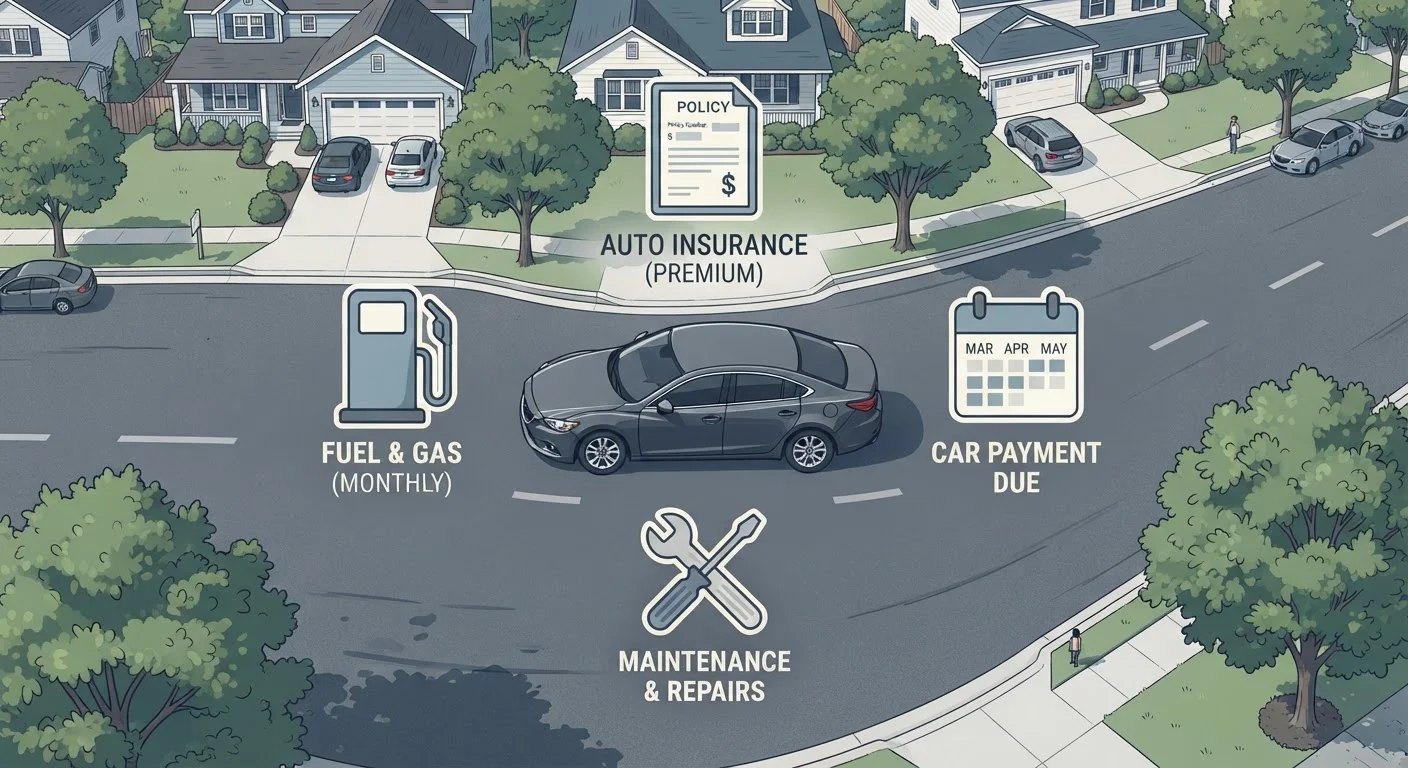
When most people think about what a car costs, they think about the monthly payment. But that payment captures only a fraction of what you'll actually spend. Vehicle ownership is a bundle of recurring and irregular costs that, together, can rival or exceed a monthly mortgage payment - and most drivers never stop to add them all up.
Before signing anything, it's worth understanding what you're actually committing to annually. For a full walkthrough of the purchasing process itself, see our step-by-step car-buying guide. This article focuses on what comes after: the ongoing financial reality of keeping a vehicle on the road.
Consumer research consistently puts average annual ownership costs above $10,000 for typical American drivers - a figure that surprises many people when they first encounter it. The breakdown below explains where that money actually goes.
Depreciation: The Cost You Never Write a Check For
Depreciation is the reduction in your vehicle's market value over time, and it's almost always the largest single annual cost of ownership - yet it's invisible in the sense that no one sends you a bill for it. A new vehicle commonly loses somewhere between 15% and 25% of its value in the first year, and around 50% of its original value by year five, though the exact rate depends on the make, model, market conditions, and how the vehicle is maintained.
The reason depreciation matters is that it represents real money lost when you eventually sell or trade in your vehicle. If you bought a car for $35,000 and it's worth $22,000 three years later, that $13,000 difference is a real ownership cost - regardless of whether you ever thought of it that way. Our article on how vehicle depreciation works explains the mechanics in more detail, including which factors affect the rate most.
$10,000+
Estimated average annual car ownership cost
AAA's annual Your Driving Costs study has repeatedly found that average vehicle ownership costs exceed $10,000 per year when all expense categories are included.
~20%
Typical first-year depreciation rate
Many new vehicles lose approximately 15-25% of their value in the first year, making depreciation the single largest component of annual ownership cost for most drivers.
$1,875
Annual fuel cost at average mileage and efficiency
Based on 15,000 miles per year, 28 mpg fuel economy, and a fuel price of $3.50 per gallon - figures that will vary with your specific vehicle and driving habits.
$500-$1,000
Typical annual routine maintenance spend
Following the manufacturer's recommended service schedule generally costs in this range per year, though older vehicles or those with higher mileage may require more frequent servicing.
Insurance, Fuel, and Financing: The Monthly Regulars
Insurance is non-negotiable in virtually every U.S. state, and premiums vary enormously based on your location, driving history, age, vehicle type, and coverage level. Urban drivers often pay significantly more than rural ones. Annual premiums for full-coverage insurance commonly range from roughly $1,200 to over $2,500 depending on those variables.
Fuel costs depend on how much you drive and what your vehicle gets in miles per gallon. At 15,000 miles per year - close to the national average - a vehicle averaging 28 mpg and fueled at $3.50 per gallon would cost around $1,875 annually in gas alone. Less fuel-efficient vehicles or higher mileage can push that well above $3,000.
Financing costs are real but easy to underestimate. Interest paid over a 60- or 72-month loan can add thousands of dollars to the total cost of a vehicle. It's worth noting that some car-buying assumptions around financing aren't always accurate - our piece on common car-buying myths addresses several of them directly.
Maintenance, Repairs, and Registration
Routine maintenance - oil changes, tire rotations, brake inspections, filters, and fluid top-offs - is the most predictable part of ownership costs. Following the manufacturer's service schedule typically runs $500-$1,000 per year for most vehicles. The car maintenance hub covers what that schedule actually looks like and why sticking to it matters financially.
Unplanned repairs are trickier to budget for but inevitable over time. A reasonable approach is to set aside $50-$100 per month as a repair buffer, particularly for vehicles outside their warranty period. Tires represent another often-overlooked cost: a full set can run $400-$1,000 depending on the vehicle, and most drivers replace them every 4-6 years.
Registration fees and annual taxes vary significantly by state but commonly add $100-$500 to the yearly total. Some states also require emissions or safety inspections that carry their own fees.
Build a Simple Annual Car Budget
Take six categories - loan payment or depreciation estimate, insurance, fuel, routine maintenance, registration, and a repair buffer - and assign a monthly dollar amount to each. Multiply by 12. This exercise takes under 20 minutes and gives you a far more accurate picture of your true ownership cost than any single monthly payment ever will. Revisit it when fuel prices shift significantly or when your vehicle ages out of its warranty period.
How Location and Lifestyle Shape Your Number
Where you live has an outsized effect on what owning a car costs annually. Urban drivers often face parking fees, tolls, congestion-related wear, and higher insurance premiums that don't apply to suburban or rural owners. The trade-offs of urban car ownership deserve their own analysis - the financial profile can look quite different from the national average.
Driving style and mileage also matter. High-mileage drivers accelerate depreciation and maintenance intervals. Aggressive driving increases fuel consumption and brake wear. None of this means you're doing something wrong - it simply means your annual cost will diverge from the average, and your budget should reflect that reality rather than a generic estimate.
For a comprehensive look at all the cost categories that make up the total ownership equation, see everything that goes into the total cost of owning a car.
Frequently Asked Questions
AAA has consistently estimated that average annual vehicle ownership costs exceed $10,000 when depreciation, fuel, insurance, maintenance, and financing are combined. The exact figure varies by vehicle type, location, and driving habits. Larger trucks and SUVs tend to cost more annually than compact sedans.
Depreciation is widely considered the largest hidden cost. A new vehicle can lose 15-25% of its value in the first year alone. Unlike fuel or insurance, depreciation doesn't require a direct payment, which is why many owners overlook it entirely until they go to sell or trade in their vehicle.
Yes. Interest charges on an auto loan add real dollars to your total ownership cost. On a $30,000 vehicle financed over 60 months at a moderate interest rate, total interest paid can easily exceed $3,000-$5,000. Your credit score and loan term have a significant impact on that figure.
Start by tracking six categories: loan payment or depreciation estimate, insurance premium, fuel costs based on your mileage, routine maintenance, registration and taxes, and a monthly buffer for unexpected repairs. Adding these up monthly and multiplying by 12 gives a realistic annual figure for your specific situation.
Generally, yes - used vehicles depreciate more slowly and carry lower insurance premiums. However, older vehicles can require more frequent and costly repairs, which can offset some savings. The net ownership cost depends heavily on the vehicle's age, reliability record, and how well it was previously maintained.
EVs typically have lower fuel and routine maintenance costs since they have fewer moving parts and no oil changes. However, higher purchase prices and potentially steeper insurance premiums can narrow the gap. Total annual costs vary depending on electricity rates in your area and how you finance the vehicle.
The content on this site is provided for informational purposes only and should not be considered a substitute for professional advice. While we strive to provide accurate and up-to-date information, we make no guarantees regarding its completeness or accuracy. Always consult a qualified professional for advice specific to your circumstances before making any decisions.