

Our Verdict
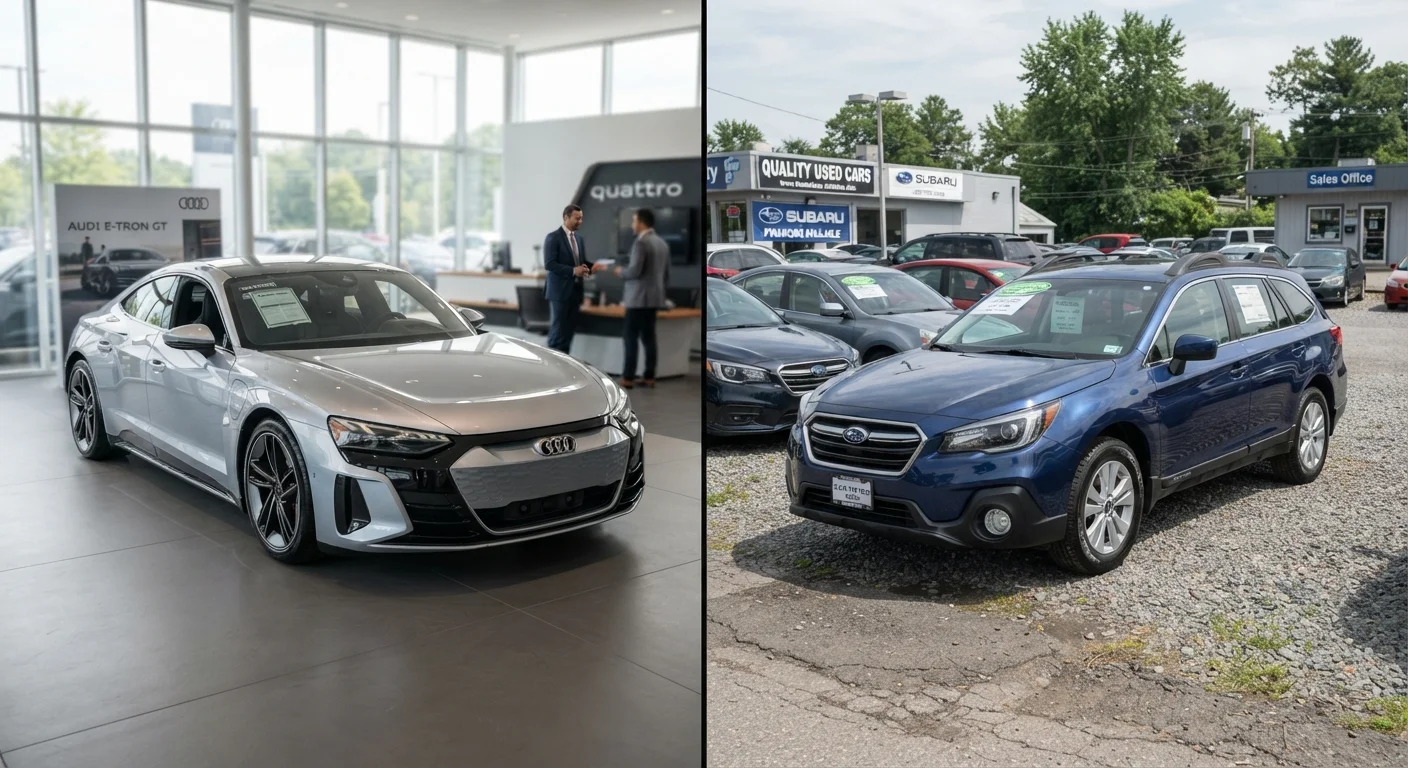
Neither new nor used is universally the smarter choice - the right answer depends on your financial situation, how long you plan to keep the vehicle, and how much uncertainty you're comfortable absorbing. Buyers who prioritize predictable ownership costs and the latest safety features tend to lean new; those focused on avoiding depreciation losses and stretching a budget often come out ahead buying used. Understanding the real trade-offs on both sides is what leads to a decision you won't regret.
| Best for | Recommended |
|---|---|
| Buyers who want the latest safety technology and a full factory warranty | New car |
| Budget-conscious buyers willing to accept some ownership uncertainty | Used car |
| Those who want used-car savings with added peace of mind | Certified Pre-Owned |
| High-mileage drivers planning to keep the vehicle long-term | New car |
The Depreciation Divide
Depreciation is the single largest financial factor separating new and used vehicles - and it almost always favors the used buyer in the short term. A new car can lose a substantial portion of its market value within the first few years of ownership, with the steepest drop typically occurring in years one through three. When you buy used, a previous owner has already absorbed that initial loss. Our vehicle depreciation explainer covers the mechanics in detail, but the practical point is straightforward: a three-year-old vehicle with reasonable mileage often delivers most of the utility of a new one at a meaningfully lower price.
That said, depreciation also works in the new-car buyer's favor over a longer horizon. If you keep a new vehicle for ten or more years, the per-year depreciation cost becomes less dramatic, and you have the advantage of knowing the vehicle's complete history from day one.
| New Car | Used Car | |
|---|---|---|
| Purchase price | Higher upfront cost | Lower upfront cost |
| Depreciation exposure | Absorbs first-year drop | Avoids steepest early loss |
| Warranty coverage | Full factory warranty | Limited or none (CPO varies) |
| Vehicle history | Fully known from new | Partially known; inspection advised |
| Financing rates | Often lower; promotional rates possible | Typically higher |
| Insurance cost | Generally higher premiums | Generally lower premiums |
| Technology & safety features | Latest available | Depends on model year |
Reliability, Warranties, and the Unknown History Problem
One of the most legitimate concerns about buying used is uncertainty - you're inheriting whatever maintenance decisions, driving habits, and minor accidents the previous owner accumulated. A vehicle history report (such as those from Carfax or AutoCheck) helps, but it doesn't capture everything. A pre-purchase inspection by an independent mechanic is one of the most practical steps you can take. See our pre-purchase inspection checklist for specifics on what to look for.
New cars come with factory warranties - typically a bumper-to-bumper coverage period and a longer powertrain warranty - that eliminate most surprise repair costs early on. Used cars may have little or no remaining warranty coverage, though certified pre-owned programs occupy a middle ground worth understanding. CPO vehicles go through manufacturer-approved inspections and carry extended warranties, but they also carry a price premium over standard used inventory.
Financing, Insurance, and the Full Cost Picture
Sticker price is only part of what you'll actually spend. Financing rates on new vehicles are often lower than on used - automakers occasionally offer promotional rates that aren't available on older inventory. However, because new cars cost more upfront, even a lower interest rate can result in a larger total interest payment. It's worth running the numbers on total loan cost, not just monthly payment. Our guide on dealership vs. bank financing explains how to compare loan offers before you sign.
Insurance is another variable. Comprehensive and collision coverage on a new vehicle generally costs more than on an older model, partly because the replacement cost is higher. Sales tax is calculated on purchase price, so new buyers pay more there too. Add registration fees, which in many states are tied to vehicle value, and the gap between new and used widens beyond the sticker difference. If you're trading in a current vehicle, that transaction introduces its own complexity - our trade-in preparation guide can help you approach that negotiation clearly.
Run a Total Cost Comparison, Not Just Price
Before committing to either option, add up insurance estimates, expected financing costs, and any known maintenance needs - not just the purchase price. A used car that requires $2,000 in immediate repairs may cost more in year one than it appears. Free online cost-of-ownership calculators can help you compare two specific vehicles side by side using real numbers rather than assumptions.
How to Frame the Decision for Your Situation
A few questions tend to clarify the choice faster than any general rule. First, how long do you plan to keep this vehicle? Longer ownership timelines favor new cars, where the depreciation cost gets spread over more years and the warranty provides early protection. Shorter timelines - say, three to five years - often favor used, since you avoid the steepest depreciation curve without holding the car long enough to face major aging repairs.
Second, how important is predictability? New car ownership is relatively predictable in the early years: warranty coverage, known maintenance schedule, and no inherited problems. Used ownership carries more variability, which some buyers manage comfortably with an emergency fund and used-car peace-of-mind strategies; others find it stressful. Neither response is wrong - they just point toward different choices.
Third, consider how you use the vehicle. High-mileage drivers often find that buying new and running a vehicle into the ground is cost-effective over a decade or more. Lower-mileage urban drivers - especially those weighing alternatives to ownership - might find a solid used vehicle a less financially demanding option. For a broader look at ownership costs in city environments, see our piece on owning a car in a big city.
This article is for general informational purposes only. Vehicle pricing, financing terms, warranty details, and market conditions vary widely and change over time. Consult current listings, lenders, and qualified automotive professionals before making any purchase decision.
The content on this site is provided for informational purposes only and should not be considered a substitute for professional advice. While we strive to provide accurate and up-to-date information, we make no guarantees regarding its completeness or accuracy. Always consult a qualified professional for advice specific to your circumstances before making any decisions.