

Our Verdict
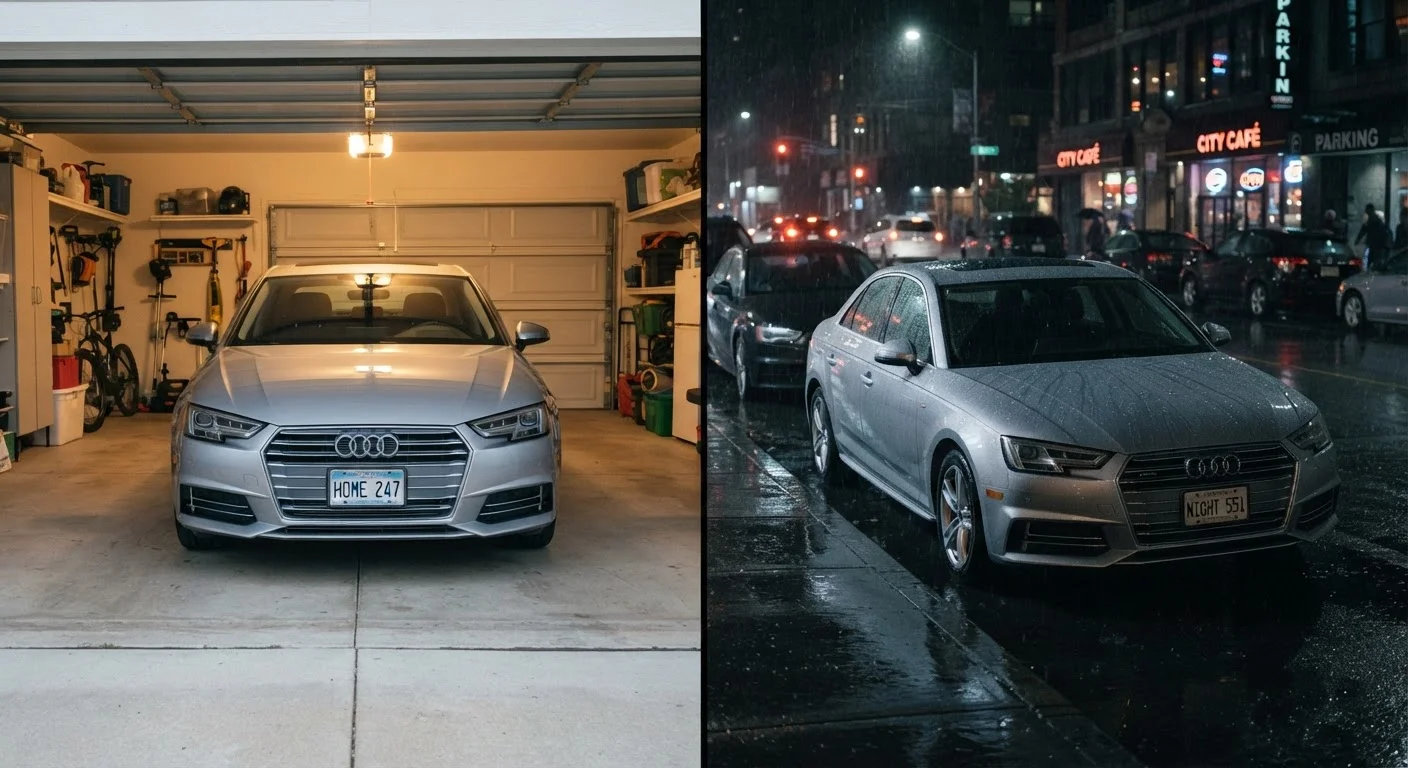
Garage storage offers meaningful protection for a vehicle's exterior, mechanical components, and security profile - advantages that compound over years of ownership. However, the practical reality is that millions of drivers don't have consistent garage access, and street parking doesn't automatically translate to rapid deterioration if other maintenance habits are solid. The storage question is worth weighing honestly, but it's one factor among many in the broader picture of ownership.
Drivers who own their vehicle outright or on a long-term financing plan and intend to keep it past 100,000 miles will benefit most from prioritizing covered storage.
Why Storage Location Is an Underrated Ownership Variable
Most drivers focus on mileage, service intervals, and fuel costs when thinking about ownership expenses. Where the vehicle sits for eight or more hours each night rarely enters the conversation - yet it influences paint longevity, mechanical wear, insurance premiums, and resale value in ways that accumulate quietly over years.
Whether you're weighing a move, evaluating a lease agreement, or simply trying to understand the full cost of ownership, storage location deserves a clear-eyed look. For a broader foundation on what changes after the initial purchase, see how leasing and financing shape your ownership experience.
Protects paint and trim from UV and weather damage
Prolonged sun exposure oxidizes clear coat and fades exterior color; a garage eliminates this exposure almost entirely, helping maintain the vehicle's appearance over time.
Reduces theft and vandalism risk
Vehicles stored in locked garages are significantly harder targets for theft and opportunistic vandalism compared to those left on public streets overnight.
Slows rubber and seal degradation
Temperature extremes accelerate cracking in weatherstripping, tires, and hoses; a garage moderates these swings, extending the functional life of these components.
May lower insurance premiums
Many insurers factor in storage conditions when calculating comprehensive coverage rates - a garaged vehicle may qualify for a modest rate reduction depending on the carrier.
Supports better resale condition
Less environmental wear means a cleaner, better-preserved vehicle at resale time, which can support stronger offers from private buyers and dealers alike.
The Case for Street Parking: Accessibility and Cost
Street parking is the default reality for a large share of American drivers, particularly in urban and dense suburban areas. There are legitimate reasons it remains widespread beyond simple necessity.
Garage access is costly or unavailable for many
In dense urban markets, renting a dedicated parking space can add hundreds of dollars per month to ownership costs, negating some of the financial benefits of protection.
Street parking is still adequate with good habits
Regular waxing, prompt attention to paint chips, and undercoating treatments can meaningfully offset street-parking exposure - the gap isn't absolute.
Renters often have no garage option at all
Apartment dwellers and renters in older urban housing stock frequently have no covered parking available, making this comparison academic for a large share of drivers.
Garage clutter can eliminate usable space
Many residential garages become storage areas rather than vehicle shelter, meaning the theoretical benefit goes unrealized without deliberate space management.
Renting a private garage or secured parking space in a major city can run anywhere from a few hundred to over a thousand dollars per month depending on the market - a cost that can easily exceed what some drivers pay for the vehicle itself. For more on the financial pressures of urban vehicle ownership, urban car ownership trade-offs covers this territory in detail.
Street parking also offers convenience in neighborhoods where an attached garage would require a long driveway or structural modifications. For renters especially, the option simply may not exist.
How Storage Affects Depreciation and Long-Term Value
Depreciation is influenced by a vehicle's overall condition, and condition is directly shaped by environmental exposure. UV radiation fades paint and cracks dashboard materials. Road salt splashed up in winter corrodes undercarriage components. Hail, falling branches, and debris do immediate cosmetic damage that chips away at resale value.
~15-25%
Typical first-year vehicle depreciation range
Industry estimates generally place first-year depreciation in this range, with condition and storage environment influencing where a specific vehicle lands over subsequent years.
Top 3
Catalytic converter theft risk factors
Law enforcement and insurance industry reports consistently list street parking among the primary factors increasing catalytic converter theft exposure.
A garaged vehicle that has been protected from these elements for several years will generally present better at resale - cleaner paint, tighter seals, less rust. That said, storage location is one input among many. Service records, accident history, and total mileage carry significant weight as well. Understanding how depreciation works helps put storage into proper proportion alongside these other factors.
Insurance, Theft Risk, and Practical Considerations
Insurance carriers use garaging address and storage conditions as rating factors when calculating premiums. A vehicle listed as stored in a private garage overnight is generally viewed as lower risk than one parked on a public street - though the actual premium difference varies considerably by insurer, coverage type, and location.
Notify Your Insurer If Storage Changes
If you move from street parking to a private garage - or vice versa - it's worth informing your insurance carrier. Storage location is a rating factor on comprehensive coverage, and failing to update it could create complications at claim time. This is especially relevant when relocating to a new address.
Theft and vandalism statistics tend to be higher for vehicles left on public streets, particularly in higher-density areas. Catalytic converter theft, window smash-and-grabs, and mirror damage are disproportionately common for street-parked vehicles. This doesn't mean every street-parked car will be targeted, but the exposure is statistically greater.
If your goal is to keep a vehicle running well past 150,000 miles, covered storage pairs naturally with the maintenance habits outlined in practices that help cars last. For those just starting out, first-year ownership essentials offers a grounding in what matters most early on.
The content on this site is provided for informational purposes only and should not be considered a substitute for professional advice. While we strive to provide accurate and up-to-date information, we make no guarantees regarding its completeness or accuracy. Always consult a qualified professional for advice specific to your circumstances before making any decisions.