

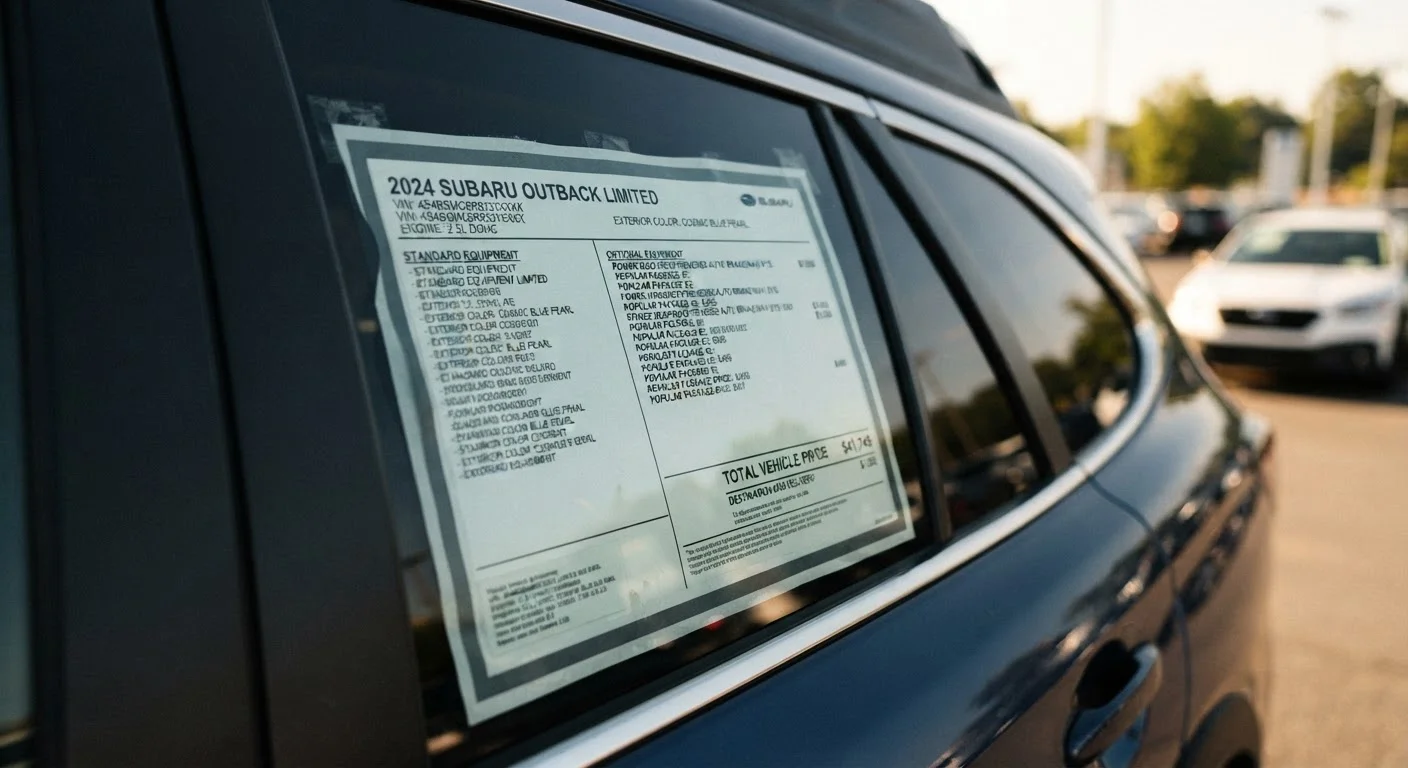
What Is a Monroney Sticker and Why Does It Exist?
The Monroney sticker - formally called the Automobile Information Disclosure label - is the window sticker you see on every new vehicle at a dealership. Named after U.S. Senator Mike Monroney, who championed the 1958 law requiring it, the sticker gives buyers a standardized snapshot of a vehicle's price, features, fuel economy, and safety data. Removing it before sale is a federal offense.
Think of it as the nutrition label of the car world: dense with information, easy to gloss over, but genuinely useful once you know what each section means. Reading it carefully before engaging with a salesperson puts you in a fundamentally stronger position. For a parallel exercise in decoding official labels, see our guide on understanding nutrition labels.
Sticker formats vary slightly by manufacturer, but federal regulations require every Monroney to include the same core categories. Here's what each one tells you.
What to Look for in Each Section
Start at the top of the sticker and work your way down. The layout is more logical than it first appears.
Vehicle Identification and Trim
The top section lists the make, model, trim level, and model year. The trim level (e.g., base, mid, sport, premium) determines which features are standard. A higher trim may bundle options you don't need - or include ones that would cost significantly more à la carte. Verify that the trim matches the specific vehicle you're evaluating, not a photo in a brochure.
MSRP and Itemized Options
The Manufacturer's Suggested Retail Price (MSRP) is broken into two parts: the base price and the cost of any factory-installed options or packages. Each option is listed with its individual price. Review these carefully - you may find packages that bundle desirable features with ones you'd never use. The base MSRP is a negotiating anchor, not a floor.
Below the factory options, many stickers include a second section labeled dealer-installed accessories. This is where markups are common: paint protection film, fabric coating, nitrogen-filled tires, and similar add-ons often appear here at prices that may far exceed their actual value. These are almost always negotiable, and some dealers will remove them entirely if asked.
Request the Sticker Before You Visit
Many manufacturers publish window sticker data online using the vehicle's VIN or stock number. If a dealer lists a specific vehicle on their site, you can often pull the sticker details before stepping foot on the lot. Reviewing it in advance - without time pressure - gives you a cleaner read of where the price is padded.
Destination Charge
Every sticker includes a destination and delivery charge - the cost of shipping the vehicle from the factory to the dealership. This fee is set by the manufacturer and is uniform for a given model; it is not negotiable. Include it in your total-cost calculations from the start.
Fuel Economy (EPA Estimates)
The EPA fuel economy section shows city, highway, and combined miles-per-gallon estimates. These numbers are generated under controlled lab conditions. Real-world mileage varies based on driving habits, load, climate, and terrain - often meaningfully so. Use the figures for comparison between vehicles rather than as a precise prediction of your monthly fuel costs. The sticker also includes an estimated annual fuel cost, which is a useful rough benchmark.
Safety Ratings
If the vehicle has been crash-tested by the National Highway Traffic Safety Administration (NHTSA) or the Insurance Institute for Highway Safety (IIHS), ratings may appear on the sticker. A 5-star NHTSA rating is the highest possible. Note that not every vehicle is tested, and the sticker will state clearly if ratings are unavailable. Standard safety features - automatic emergency braking, lane-keeping assist, blind-spot monitoring - are also listed here. Cross-reference these with the features you actually want before signing anything.
For an overview of what these safety systems do once you own the car, our guide on dashboard warning lights is a useful companion read.
Turning the Sticker Into a Negotiating Tool
Once you've read the sticker top to bottom, you have something most buyers walk into the dealership without: a clear picture of exactly what you're paying for and where the price is padded. A few practical moves from here:
- Separate the factory price from dealer add-ons. The manufacturer's options are fixed. The dealer's accessories section is where margin lives.
- Calculate the out-the-door number. MSRP plus destination, minus any negotiated reductions, plus taxes, title, and registration fees equals what you'll actually pay. Get this figure in writing before agreeing to anything.
- Compare identical trims across dealers. The same trim at two dealerships may carry very different dealer-installed packages. The sticker makes side-by-side comparison straightforward.
- Check the VIN. The Vehicle Identification Number on the sticker should match the one physically on the dash and on any paperwork. A mismatch is a serious red flag.
If you're also evaluating a used vehicle alongside a new one, our guide to reading a vehicle history report will walk you through the used-car equivalent of this due-diligence exercise. More general ownership costs and responsibilities are covered in the Vehicle Ownership hub.
This article is for general informational purposes only. Prices, fees, and dealer practices vary by region and market conditions. Always verify current figures and terms directly with the dealership and relevant government sources before finalizing any vehicle purchase.
The content on this site is provided for informational purposes only and should not be considered a substitute for professional advice. While we strive to provide accurate and up-to-date information, we make no guarantees regarding its completeness or accuracy. Always consult a qualified professional for advice specific to your circumstances before making any decisions.