

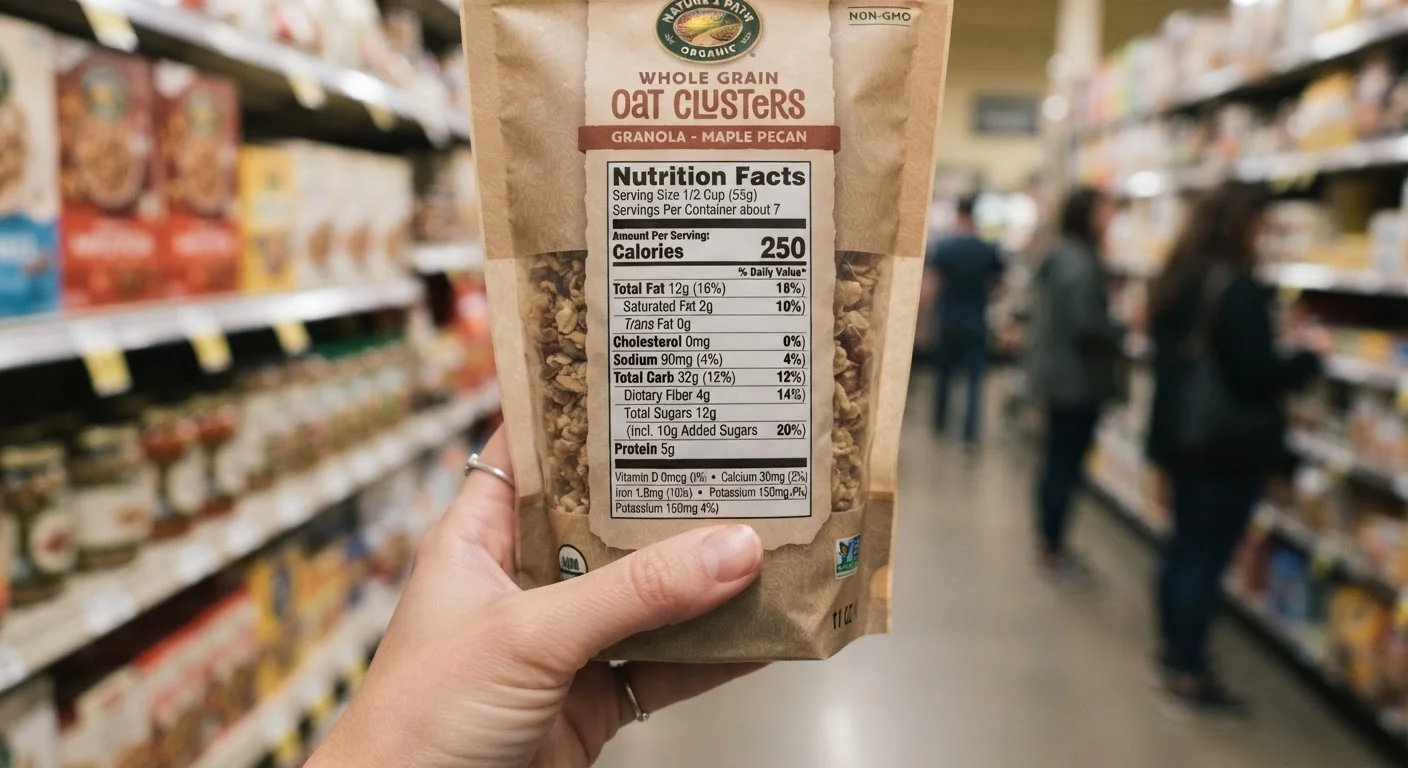
Why the Nutrition Facts Label Exists
The Nutrition Facts label is a federally standardized panel required by the U.S. Food and Drug Administration (FDA) on most packaged food products. Its purpose is straightforward: give consumers consistent, comparable information so they can make informed choices across different products and brands.
The label was updated in 2016 - with mandatory compliance phased in through 2020 - to reflect current dietary science and eating patterns. Key changes included making the calorie count more prominent, adding a separate line for added sugars, and updating serving sizes to reflect amounts people actually eat rather than idealized portions.
Understanding the label isn't about following a strict dietary regimen. It's the same practical literacy that helps you understand what's in a product before it goes into your cart - similar in spirit to reading a window sticker before buying a car or reading a restaurant menu like a pro before ordering.
Serving Size Is Not a Suggestion
Every calorie count, gram figure, and % Daily Value on the label is calculated per serving - not per package. If a bag of chips lists two servings and you eat the whole bag, every number doubles. Always confirm how many servings are in the container before drawing any conclusions from the label.
How to Read a Nutrition Label Step by Step
The Nutrition Facts panel follows a fixed structure, which makes it easier to read once you know the layout. Work through it from top to bottom - each section builds on the one above it.
Find and read the serving size first
Locate the Serving Size line at the very top of the Nutrition Facts box. It will show a common household measure (e.g., "2 cookies") and a gram weight in parentheses. Directly below it, Servings Per Container tells you how many of those portions are in the whole package.
Before reading anything else, ask yourself: how much of this will I actually eat? If the answer is more than one serving, mentally multiply every figure on the label accordingly.
Check total calories per serving
The Calories figure appears in large bold type just below the serving information. This number reflects the total energy in one serving from all sources - fat, carbohydrates, and protein combined.
Calories are a useful reference point, but they don't tell you anything about the quality of those calories. A snack can be low in calories and still be low in useful nutrients, or high in calories and still be nutritionally valuable. Context matters.
Review the nutrients to limit
The label groups certain nutrients under an implicit "limit these" category based on general dietary guidance. Look for:
- Saturated Fat - shown in grams and as a % Daily Value
- Sodium - especially relevant for people monitoring blood pressure
- Added Sugars - listed separately from total sugars since dietary guidelines specifically address this figure
Added sugars are worth a close look. Unlike naturally occurring sugars in fruit or dairy, added sugars are incorporated during processing. The label distinguishes between the two, which is useful context.
Note nutrients to get enough of
The lower section of the panel highlights nutrients many Americans under-consume: Dietary Fiber, Vitamin D, Calcium, Iron, and Potassium. Each shows a % Daily Value.
A product with 15-20% DV of fiber per serving is a meaningful contributor to your daily intake. If the figure is 2-3%, the product isn't a significant source of that nutrient - useful to know when you're comparing options.
Read the ingredient list
The ingredient list sits below or beside the Nutrition Facts panel. Ingredients are listed in descending order by weight - the first ingredient makes up the largest portion of the product by mass.
Scan the first three to five ingredients to understand what the product is primarily made of. If whole grains, vegetables, or proteins appear first, that reflects the product's composition. If a form of sugar or refined flour leads the list, that reflects a different reality regardless of what the front of the package says.
For a broader framework on decoding what's on packaging beyond just nutrition, reading product labels without getting lost in the fine print covers certifications, claims, and other label elements worth understanding.
Use the 5% and 20% Rule as a Quick Guide
The FDA offers a practical shortcut: 5% Daily Value or less for a nutrient is generally considered low, and 20% or more is considered high. This rule helps you quickly assess whether a product is a meaningful source of a nutrient - or a significant contributor to one you may want to limit - without doing detailed math in the aisle.
Once you've worked through the label a few times on products you already buy, the process becomes fast and intuitive. The goal isn't to calculate every gram at the shelf - it's to have enough information to make a choice you feel good about. For context on how unit pricing can complement label-reading when comparing similar products, unit pricing at the grocery store is worth a look.
What the Label Doesn't Tell You
The Nutrition Facts label is a powerful tool, but it has limits worth acknowledging.
- It doesn't account for your individual needs. The % Daily Values are based on a 2,000-calorie reference diet - a general benchmark, not a prescription. Your actual requirements vary based on age, activity level, health status, and other factors.
- It doesn't indicate overall diet quality. A single product doesn't make or break a diet. Patterns across meals matter more than any one label.
- It doesn't cover fresh produce or most single-ingredient foods. An apple has no label because it doesn't need one - but that doesn't make it nutritionally opaque.
Treat the label as one useful input among several. If you have specific health conditions or dietary requirements, a registered dietitian is a more reliable guide than any packaged-food panel.
This article is for general informational and educational purposes only. It is not medical or dietary advice. Readers with specific health conditions or nutritional concerns should consult a qualified healthcare or nutrition professional.
The content on this site is provided for informational purposes only and should not be considered a substitute for professional advice. While we strive to provide accurate and up-to-date information, we make no guarantees regarding its completeness or accuracy. Always consult a qualified professional for advice specific to your circumstances before making any decisions.