

Our Verdict
Neither loyalty programs nor discount booking sites universally win - the better option depends on how often you travel, how loyal you can realistically be to one brand, and how flexible your schedule is. Frequent travelers who concentrate their spending tend to extract more value from loyalty programs over time, while occasional or flexible travelers often come out ahead with discount sites.
| Best for | Recommended |
|---|---|
| Frequent travelers who fly or stay with the same brand regularly | Loyalty Programs |
| Occasional travelers prioritizing lowest upfront cost | Discount Booking Sites |
| Flexible travelers with no fixed airline or hotel preference | Discount Booking Sites |
| Business travelers seeking elite status perks and upgrades | Loyalty Programs |
How Each Approach Works
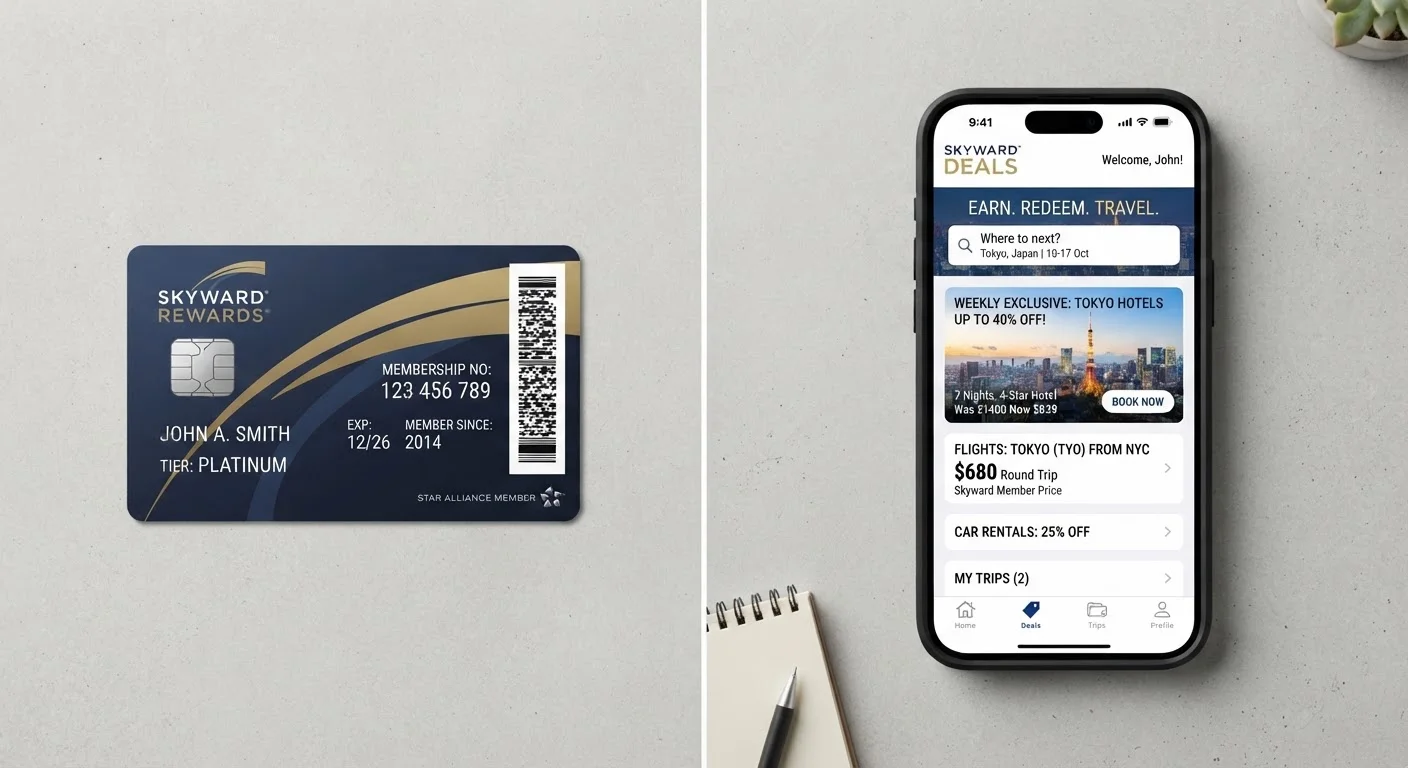
Loyalty programs - run directly by airlines, hotel chains, and car rental companies - reward members with points or miles for every dollar spent with that brand. Accumulate enough, and you can redeem them for free flights, hotel nights, upgrades, and more. The appeal is compounding value: the more loyal you are, the better the rewards get, especially as you climb toward elite status tiers.
Discount booking sites, by contrast, aggregate rates from multiple providers and compete on offering the lowest published price at any given moment. Some also offer their own loyalty layers, cashback, or member-only rates. The core promise is simple: pay less upfront, no brand commitment required.
Understanding this fundamental difference is the starting point. As we break down in our look at the convenience vs. savings trade-off, choosing between these two paths is rarely just about math - it's also about how you travel.
Where Loyalty Programs Shine
For travelers who fly frequently - say, several times a month - concentrating bookings on one airline or hotel chain can generate meaningful rewards surprisingly quickly. Elite status often unlocks complimentary upgrades, priority boarding, waived baggage fees, and dedicated customer service lines that have real monetary value beyond points alone.
Loyalty co-branded credit cards can accelerate earning significantly. Spending on everyday purchases - groceries, dining, utilities - funnels points into your travel account without requiring any additional flying. This is where the math starts to tilt decisively in loyalty programs' favor for consistent travelers.
That said, it's worth understanding the nuances before diving in. Our editorial piece on what travelers often get wrong about airline loyalty programs walks through common misconceptions that trip people up - including how devaluations can quietly erode the points you've been saving.
Stack Your Savings Strategically
You don't always have to choose one path entirely. Book directly to earn loyalty points, then use a co-branded travel credit card to multiply earnings on that same purchase. On trips where the discount site undercuts the direct price significantly - and no status milestone is at stake - it's perfectly reasonable to take the deal. Tracking your points balance and redemption options once or twice a year keeps you from letting hard-earned rewards quietly expire.
Where Discount Booking Sites Deliver
If you travel a few times a year and have no strong brand preference, discount booking sites can surface genuinely lower fares and rates. Their search engines pull from a wide pool of inventory, making it easier to compare options at a glance. For budget-conscious or flexible travelers, the immediate, visible savings are straightforward to evaluate.
One important caveat: booking through a third-party site sometimes means you earn fewer or no loyalty points on that reservation, and customer service in the event of a disruption routes through the booking platform rather than the airline or hotel directly. This is a meaningful trade-off, particularly for complex itineraries.
Our comparison of direct vs. connecting flights touches on related territory - cheap fares on discount sites often involve layovers or less convenient timing that add hidden costs in time and stress.
The Long-Term Math: A Side-by-Side Look
Calculating which approach saves more over time requires honest accounting. Loyalty program value hinges on how you redeem: points used for economy redemptions on busy routes often yield lower per-point value than strategic redemptions for premium cabins or partner awards. Discount sites, meanwhile, offer a known quantity - the price you see is what you pay.
Consider also the question of advance planning. Loyalty award seats are often limited and book out far in advance, whereas discount sites can surface last-minute deals. For more on how planning horizon affects your options, see our breakdown of booking everything in advance.
| Loyalty Programs | Discount Booking Sites | |
|---|---|---|
| Upfront savings | Minimal - pay standard rates | Often visible and immediate |
| Long-term value | High for frequent, loyal travelers | Limited; savings are one-time |
| Flexibility required | Low - brand loyalty needed | High - shop any provider |
| Perks & status benefits | Upgrades, priority, fee waivers | Rarely included |
| Customer service in disruptions | Direct with airline/hotel | Routed through third party |
| Best travel frequency | Frequent travelers | Occasional or flexible travelers |
Many seasoned travelers use a hybrid approach: booking directly and earning points for most trips, then checking discount sites when flexibility allows and the price gap is large enough to justify skipping the miles.
Making the Right Call for Your Travel Style
The smartest strategy isn't about picking a team - it's about matching the tool to the trip. Before booking, ask yourself three questions: How often do I travel with this brand? How flexible is my schedule? And how close am I to a meaningful reward or status threshold?
If you're within reach of a free flight redemption or elite status, sticking with the loyalty program likely pays off. If you're starting from zero with no near-term reward in sight, a discount site's upfront savings may be more tangible. Pairing either approach with the right payment method matters too - see our look at paying cash vs. using a credit card for a deeper dive on that angle.
Neither path is inherently superior. The one that saves you more is the one that aligns with how you actually travel - not how you imagine you might.
The content on this site is provided for informational purposes only and should not be considered a substitute for professional advice. While we strive to provide accurate and up-to-date information, we make no guarantees regarding its completeness or accuracy. Always consult a qualified professional for advice specific to your circumstances before making any decisions.