

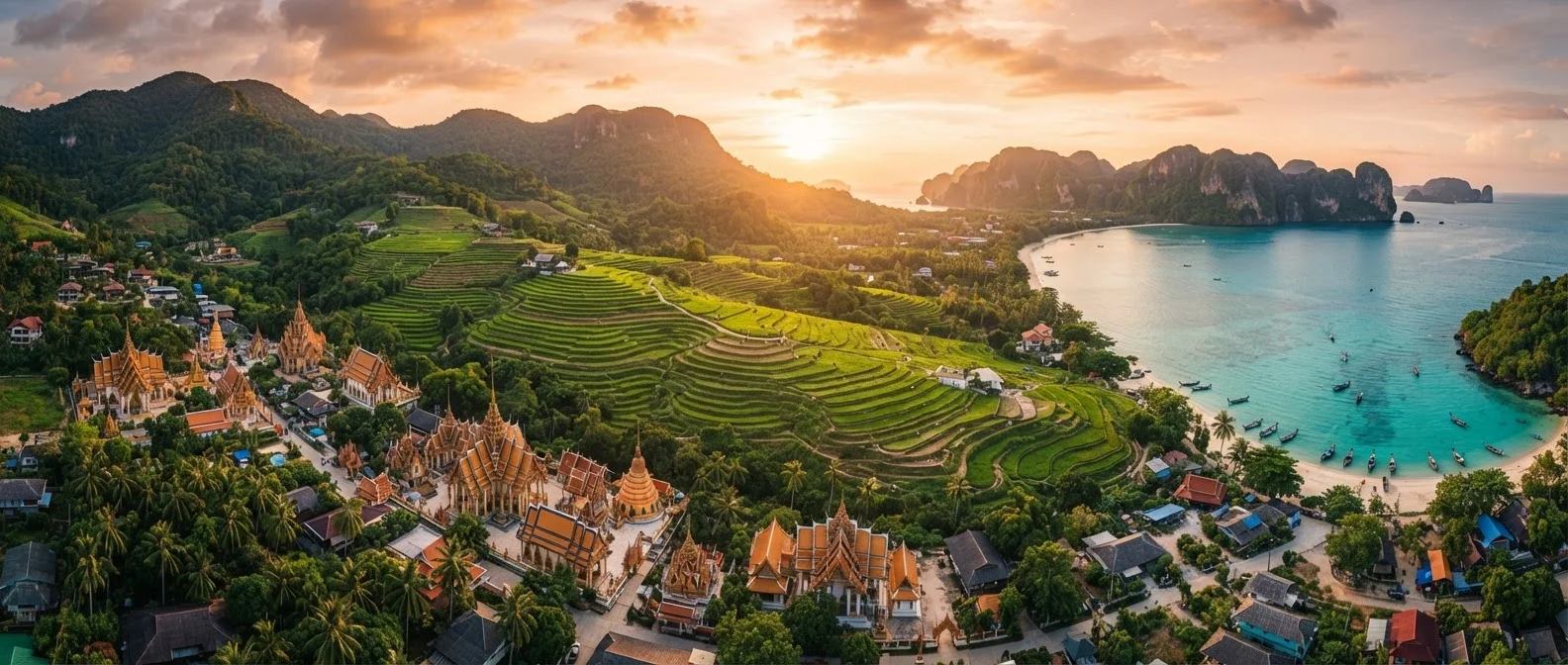
Why the Region Defies a Single Label
Southeast Asia is one of the world's most traveled regions - and one of the most misunderstood. For many American travelers, it gets lumped together as a single exotic destination: cheap, warm, beach-friendly, and vaguely ancient. The reality is far richer and more complex.
The region includes continental landmass countries like Vietnam and Myanmar, massive archipelago nations like Indonesia and the Philippines, and small, landlocked countries like Laos. It spans Buddhist, Muslim, Catholic, and Hindu-majority societies. It includes some of the world's most modern city-states (Singapore), some of its most politically complex environments (Myanmar), and some of the most visited beach destinations on the planet (Thailand's islands, Bali).
Treating the region as interchangeable leads to real planning mistakes - wrong packing, wrong expectations, and missed cultural context. A traveler who researches each country as its own destination will have a fundamentally better experience. See our guide to meaningful destination research for a practical starting framework.
Key Country-by-Country Contrasts
Understanding the region starts with recognizing what makes individual countries distinct:
- Thailand has well-developed tourist infrastructure, a constitutional monarchy, and a predominantly Buddhist culture. It's often an entry point for first-time regional visitors.
- Vietnam has a different political structure, a strong national identity shaped by centuries of resistance to foreign influence, and a cuisine and cultural aesthetic quite unlike its neighbors.
- Indonesia is the world's largest archipelago nation, with over 17,000 islands and hundreds of distinct ethnic groups. Bali's Hindu culture is quite different from Java's predominantly Muslim character.
- The Philippines is the only predominantly Catholic country in the region, reflecting its Spanish colonial history, with English widely spoken and a strong sense of local island identity.
- Cambodia and Laos are quieter, less-developed destinations with remarkable historical heritage - Angkor Wat and the Mekong River corridor - and a pace of travel that rewards patience.
- Malaysia is a multicultural country with Malay, Chinese, and Indian communities coexisting, and offers both urban sophistication (Kuala Lumpur) and rich rainforest ecosystems.
Singapore: A Regional Exception Worth Noting
Singapore, while geographically small and often grouped with Southeast Asia, functions as one of the world's great transit hubs with a distinctly high-income, urban character. Its political structure, infrastructure, and day-to-day experience differ dramatically from neighboring countries. Many travelers use it as a gateway into the region while treating it as a separate destination in its own right.
Singapore, while geographically small, functions as one of the world's great transit hubs and is often used as a gateway for regional exploration - its urban density and high-income character make it distinctly different from its neighbors.
Practical Differences That Affect Trip Planning
Beyond culture, practical travel realities shift dramatically from country to country. Visa policies, health requirements, currency systems, transportation networks, and accommodation standards all vary. Some border crossings are smooth and tourist-friendly; others are complicated or simply not available to foreign passport holders.
Health considerations also differ - some destinations may require specific vaccinations or preventive medications, and healthcare infrastructure quality varies widely. Always verify health requirements and recommendations with a travel medicine professional and consult official government sources before departure. Do not rely on travel blogs or forum posts for up-to-date entry or health requirements.
Infrastructure for independent travelers is highly developed in Thailand and Vietnam, moderate in Cambodia and Bali, and more challenging in rural Myanmar or eastern Indonesia. If you're deciding between Southeast Asia and another region entirely, our piece on Hawaii versus the Caribbean shows how different regional comparisons can help clarify what kind of trip you actually want.
11
Countries that make up Southeast Asia
The United Nations geoscheme groups Brunei, Cambodia, Indonesia, Laos, Malaysia, Myanmar, Philippines, Singapore, Thailand, Timor-Leste, and Vietnam into the Southeast Asian subregion.
~700M
People living across the region
Southeast Asia's combined population is roughly equivalent to that of Europe, spread across a mix of island and mainland nations with enormous ethnic and linguistic diversity.
17,000+
Islands in Indonesia alone
Indonesia is the world's largest archipelago nation, illustrating how a single Southeast Asian country can contain geographic and cultural variety that rivals an entire continent.
Respecting Cultural Differences on the Ground
Cultural norms shift meaningfully as you move across the region. Temple dress codes, rules around public displays of affection, acceptable behavior around religious sites, and attitudes toward tipping all differ by country - and sometimes by region within a country. What's considered polite in Buddhist Thailand may differ from expectations in Muslim-majority Malaysia or Indonesia.
Travelers who invest time in understanding local customs - even at a basic level - have more genuine experiences and show respect for host communities. This matters more than knowing which app to use or which neighborhood to stay in. Research the specific destination, not the broader region, and approach each country on its own terms. The differences are not obstacles; they're the whole point of traveling this far.
Frequently Asked Questions
Many countries in Southeast Asia are considered generally safe for tourists, but conditions vary by country and region. Travelers should consult the U.S. State Department's travel advisories and verify entry requirements before booking. Local laws, health conditions, and political situations can change, so official government sources are always the most reliable reference.
Visa requirements depend on your nationality and the specific country you're visiting. American passport holders can enter many Southeast Asian countries visa-free for short stays, but requirements differ - some require advance applications or fees. Always verify current entry rules through the destination country's official embassy or consulate website before traveling.
There's no single best time because the region spans multiple climate zones. The dry season in Thailand's north runs roughly November through April, while Indonesia and the Philippines have their own distinct wet and dry patterns. Timing your trip requires researching the specific country and even the specific region you plan to visit.
Yes, overland border crossings are common between countries like Thailand, Laos, Vietnam, Cambodia, and Malaysia. However, not all crossings are open to foreign tourists, border hours vary, and some routes are far more straightforward than others. Research individual crossing points in advance and allow extra time for unexpected delays.
Dramatically different. Thai cuisine is defined by aromatics like lemongrass and galangal; Vietnamese food leans toward lighter broths and fresh herbs; Indonesian cooking varies by island but often features bold spice blends and coconut. Sharing a regional label doesn't mean the cuisines are interchangeable - each country's food culture is a distinct culinary tradition.
The content on this site is provided for informational purposes only and should not be considered a substitute for professional advice. While we strive to provide accurate and up-to-date information, we make no guarantees regarding its completeness or accuracy. Always consult a qualified professional for advice specific to your circumstances before making any decisions.