

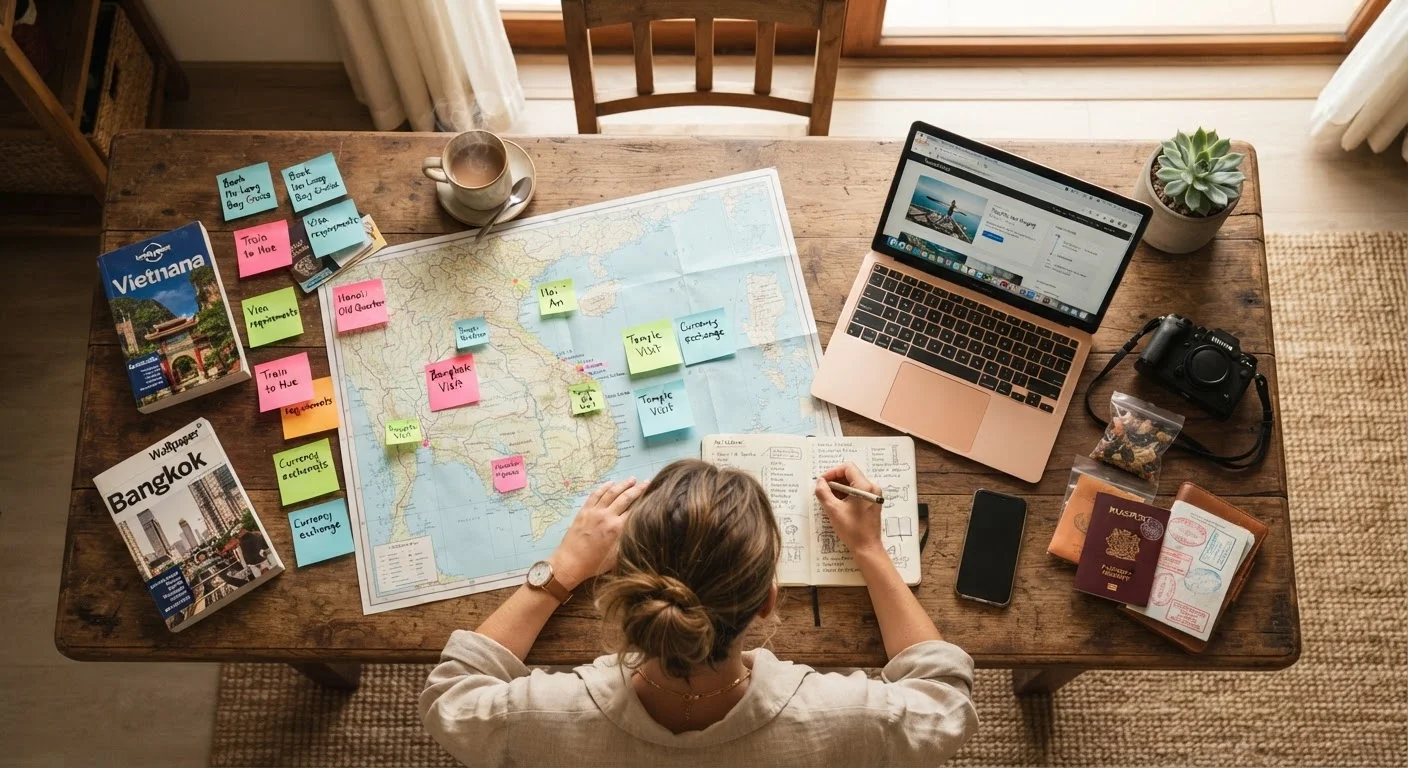
Why Research Depth Actually Matters
Most travelers spend more time researching a new TV than they do a two-week trip. They scan a listicle, screenshot a few Instagram spots, and call it planning. Then they arrive somewhere and realize they missed the neighborhood that actually felt alive, or they stood in a three-hour line for something that mattered less to them than they imagined.
Good destination research isn't about consuming more content - it's about asking sharper questions. What's the climate like during your travel window, not just in general? What cultural or social norms should you know before you walk into someone's community? What does the transit map actually look like, and how will you get from the airport to your accommodation at midnight? These are the kinds of questions that separate a trip you endure from one you genuinely enjoy.
If you're heading abroad for the first time, our ground-up international trip primer covers foundational logistics - visas, budgeting, passports - that pair well with the research approaches below.
Start with the official tourism and government sources
Before you open a single travel blog, check the destination's official tourism website and, for international travel, the U.S. Department of State's travel information page. Official tourism sites often include seasonal event calendars, public transportation overviews, and entry requirement summaries that aggregator sites frequently get wrong or let go stale.
For safety context, our article on reading and using travel advisories explains what advisory levels actually signal - and what they shouldn't stop you from doing.
Official tourism sites carry seasonal and entry details that aggregator sites routinely get wrong.
Study the geography before you study the attractions
Pull up a detailed map before you look at a single attraction. Identify the major neighborhoods, the natural boundaries (rivers, hills, coastlines), and where your accommodation sits relative to everything else. This spatial awareness changes how efficiently you'll move - and prevents the classic mistake of booking a hotel that's technically in the city but practically inconvenient to everything you care about.
For help orienting yourself once you land, our guide on navigating unfamiliar cities covers transit maps, neighborhood anchoring, and practical orientation strategies.
Spatial awareness of a city's layout prevents the most common logistical frustrations of travel.
Read local news sources from the destination
Even skimming a week's worth of local headlines tells you things no guidebook will. You might learn that a major road is under construction, that a neighborhood festival is happening during your stay, or that a beloved local landmark recently closed. English-language editions exist for many international cities, and even a rough translation of a local paper can surface context that's invisible to outside observers.
Local journalism also gives you a sense of community concerns and priorities - which helps you engage with a place more respectfully and honestly.
A week of local headlines reveals practical, on-the-ground realities no travel guide will mention.
Dig into the cultural and historical context
Understanding why a place is the way it is enriches every experience once you're there. A quick read of a destination's modern history, major ethnic or cultural communities, and significant landmarks - beyond the postcard version - gives you conversational depth and helps you avoid unintentionally tone-deaf moments.
Your local library is an underused resource here. Many offer free digital borrowing through apps like Libby, giving you access to travel narratives, cultural histories, and even language-learning materials without spending anything extra.
Cultural and historical context transforms a tourist visit into something closer to genuine understanding.
Check seasonality, weather patterns, and access conditions
Weather isn't just a comfort issue - it affects what's open, how crowded it is, what the landscape looks like, and whether certain activities are even possible. Research the difference between peak season, shoulder season, and off-season for your destination, and factor in things like monsoon periods, wildfire seasons, or major local holidays that close businesses or flood attractions.
If you're considering national parks or outdoor destinations in the U.S., our feature on lesser-known national parks includes destinations where crowd timing matters enormously.
Seasonality shapes what's possible, what's open, and how enjoyable a trip will actually be.
Seek out perspectives from people with lived experience there
Travel forums, expat community boards, and destination-specific subreddits often surface practical knowledge that no polished guide will include - recent changes to transit fares, which neighborhoods have gotten safer or less safe, accessibility gaps for travelers with mobility needs. Prioritize posts from people who actually live in or have recently visited the destination over those recycling older trip reports.
If you're planning a European city visit, our pre-departure checklist for first-time European travel draws on exactly this kind of on-the-ground insight.
Lived-experience perspectives from recent visitors reveal what polished travel content consistently omits.
Put It All Together Before You Pack
The goal of pre-trip research isn't to script every hour of your vacation. It's to arrive with enough context that unexpected moments feel like discoveries rather than disasters. When you understand a city's neighborhoods, transit quirks, cultural expectations, and seasonal realities, you can improvise confidently instead of anxiously.
One underrated side effect of thorough research: you tend to slow down. When you know what a place actually offers, you stop trying to cram in everything and start choosing what genuinely appeals to you. That shift alone can dramatically improve how a trip feels. Our piece on why rushing through cities leads to regret explores exactly that dynamic.
For ongoing smart travel advice, our Travel Tips hub is a useful resource to bookmark for every stage of planning.
Build a simple pre-trip research checklist
Create a one-page document covering: entry requirements, neighborhood map, local emergency numbers, cultural norms to be aware of, and two or three things you genuinely want to experience. Keeping it brief forces you to prioritize. Travelers who arrive with clear priorities tend to feel less overwhelmed and more present - even in completely unfamiliar places.
The content on this site is provided for informational purposes only and should not be considered a substitute for professional advice. While we strive to provide accurate and up-to-date information, we make no guarantees regarding its completeness or accuracy. Always consult a qualified professional for advice specific to your circumstances before making any decisions.