

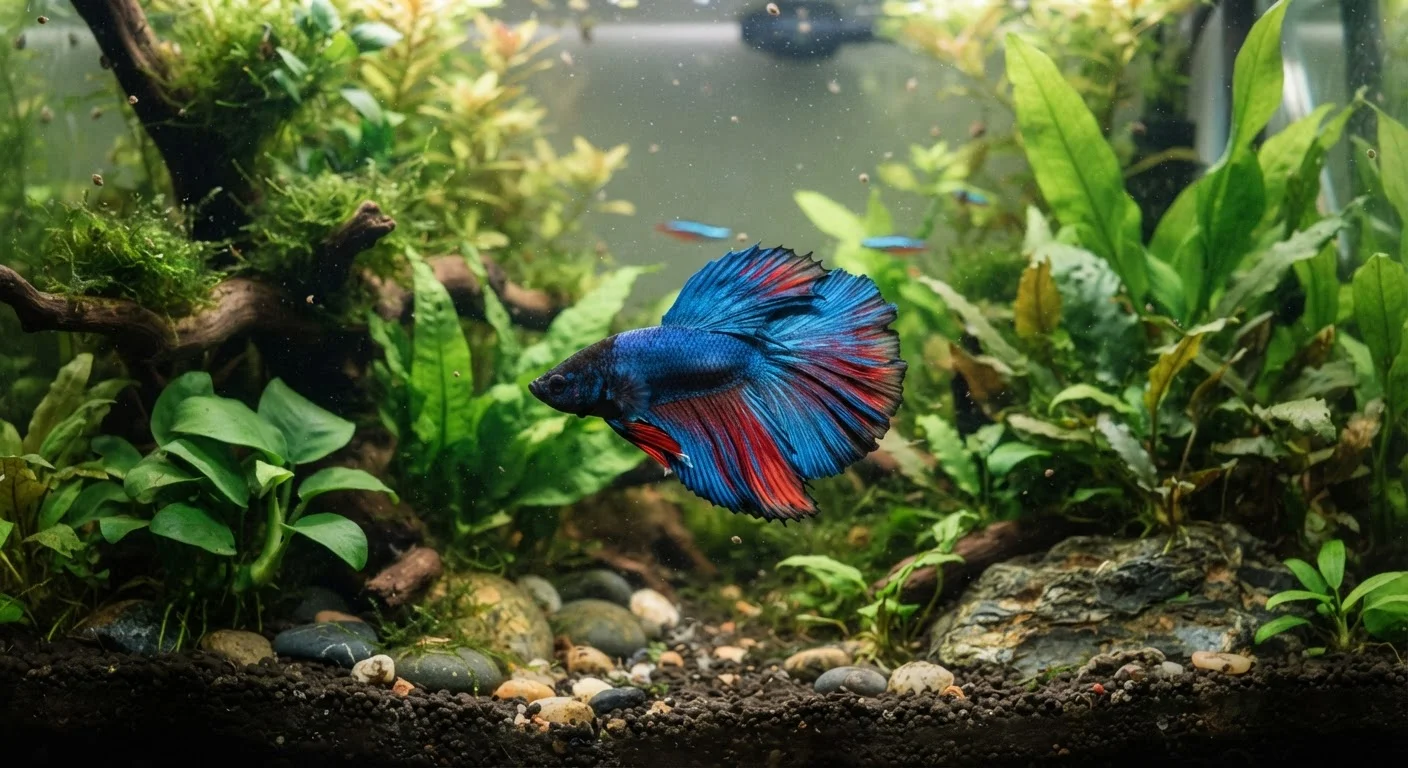
Tank Size and Water Conditions
One of the most persistent myths about betta fish is that they're happy in small bowls or unfiltered vases. In reality, bettas need a minimum of 5 gallons of water to regulate waste levels and maintain stable chemistry. A 10-gallon tank gives them even more room to explore and reduces the frequency of water changes needed.
Water temperature is critical. Bettas are tropical fish native to Southeast Asia and require water kept consistently between 76°F and 82°F. A submersible aquarium heater with a built-in thermostat is the most reliable way to maintain this range. Sudden temperature swings - even a few degrees - can stress the fish and suppress immune function.
Equally important is water quality. Bettas are sensitive to ammonia, nitrite, and high nitrate levels. A basic hang-on-back or sponge filter maintains the nitrogen cycle without creating currents too strong for a betta's long fins. Test your water weekly using a liquid test kit rather than strip tests, which are less accurate. Target: ammonia and nitrite at 0 ppm, nitrate below 20 ppm, and a pH between 6.5 and 7.5.
| Minimum recommended tank size | 5 gallons (10 gallons preferred) |
| Ideal water temperature | 76°F - 82°F |
| Target water pH | 6.5 - 7.5 |
| Ammonia and nitrite target | 0 ppm |
| Feeding frequency | 1-2 times daily; fast one day per week |
| Average lifespan | 2-4 years with proper care |
For a broader look at how freshwater setups compare in cost and complexity to marine tanks, see our guide to freshwater vs. saltwater tanks.
Feeding Your Betta
Bettas are carnivores with a short digestive tract, meaning they need protein-rich food - not generic flake food formulated for community fish. Look for pellets specifically labeled for bettas, with fish or shrimp meal listed among the first ingredients. Feed small amounts: two to four small pellets or their equivalent, once or twice daily.
Overfeeding is one of the most common mistakes. Uneaten food quickly degrades water quality, and bettas are prone to constipation and bloat when overfed. A practical rule of thumb: a betta's stomach is roughly the size of its eye. Offer only what it can consume in two minutes.
Variety supports overall health. Frozen or freeze-dried options - such as bloodworms, daphnia, or brine shrimp - make good occasional supplements, providing enrichment and different nutrient profiles. Fast your betta one day per week to support digestive health; this is a widely recommended practice among experienced betta keepers.
Recognizing Common Health Issues
Bettas are hardy when their environment is stable, but several illnesses appear frequently in fish kept in poor conditions.
Nitrogen cycle
The biological process by which beneficial bacteria in an aquarium convert toxic ammonia (from fish waste) into nitrite and then into less harmful nitrate. Establishing this cycle before adding fish is called 'cycling' the tank.
Ammonia
A toxic compound produced by fish waste, uneaten food, and decaying plant matter. Even low levels are harmful to bettas and signal inadequate filtration or overcleaning of the tank.
Swim bladder
An internal gas-filled organ that helps fish control their buoyancy. When it malfunctions, a fish may float at the surface or sink uncontrollably.
Ich (Ichthyophthirius multifiliis)
A highly contagious parasitic disease that appears as small white spots on a fish's body and fins. It is one of the most common illnesses in freshwater aquariums.
Fin rot
A bacterial (or sometimes fungal) infection that causes the edges of a betta's fins to appear ragged, discolored, or receding. It is strongly associated with poor water quality.
Quarantine tank
A separate, cycled aquarium used to house new or sick fish away from an established tank. It helps prevent the spread of disease and allows close monitoring of individual fish.
- Fin rot - Fraying or discoloration along the fin edges, usually caused by bacterial infection triggered by poor water quality. Improve water conditions first; in moderate cases, aquarium salt or medication may be warranted.
- Ich (white spot disease) - Tiny white dots resembling grains of salt on the body or fins. Caused by a parasite and treatable with heat adjustment and over-the-counter ich medication.
- Swim bladder disorder - A fish that floats sideways or sinks to the bottom may have a swim bladder issue, often linked to overfeeding or constipation. Fasting for 24-48 hours and feeding daphnia (a natural laxative for fish) often resolves mild cases.
- Velvet - A gold or rust-colored dust on the skin, caused by the Oodinium parasite. This is harder to spot and requires prompt treatment.
Behavioral changes - hiding more than usual, loss of appetite, or clamped fins - are early warning signs worth investigating before symptoms worsen. Quarantine any newly purchased fish for two weeks before introducing them to an established tank. Keep a basic medication kit on hand so you can respond quickly when needed.
If you enjoy caring for small companion animals, you may also find our complete guide to keeping pet gerbils a useful companion resource.
This article is for general informational purposes only and does not substitute for advice from a qualified aquatic veterinarian.
The content on this site is provided for informational purposes only and should not be considered a substitute for professional advice. While we strive to provide accurate and up-to-date information, we make no guarantees regarding its completeness or accuracy. Always consult a qualified professional for advice specific to your circumstances before making any decisions.