

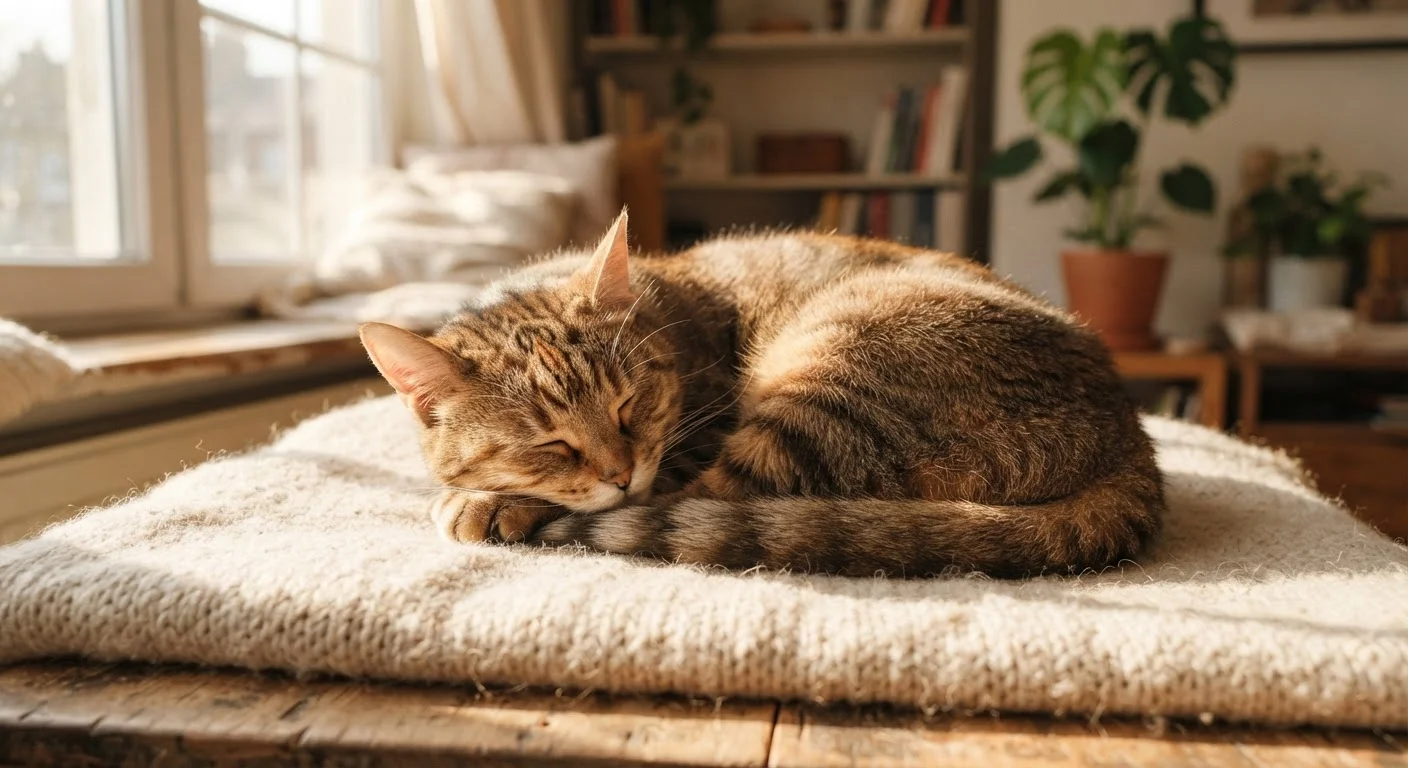
Why Cats Sleep So Much
If your cat seems to spend most of the day napping, you're not imagining it - and there's nothing wrong with your pet. Cats evolved as solitary predators, and their biology is built around short, intense bursts of activity followed by long recovery periods. Hunting - even the indoor simulation of it - demands a lot of muscular and neurological energy. Sleep is how cats restore that energy.
Unlike humans, who consolidate sleep into a single overnight block, cats are polyphasic sleepers. Their rest is distributed across many shorter periods throughout a 24-hour cycle. Most of those periods are light, non-REM sleep, which allows cats to rouse quickly if they detect something in their environment. True deep REM sleep, where dreaming occurs, makes up a smaller fraction of their total rest.
If you've ever noticed your cat's paws twitching or their whiskers flickering while they sleep, that's likely REM activity. It's a normal sign of healthy brain function - and yes, most researchers believe cats do experience something resembling dreams during those moments.
12-16 hrs
Average daily sleep for adult cats
This range is widely cited by veterinary sources as typical for healthy adult domestic cats in low-stress environments.
~20 hrs
Daily sleep for kittens and senior cats
Kittens and older cats have higher sleep needs due to rapid development and slowing metabolism, respectively.
~25%
Portion of cat sleep that is REM sleep
Research on feline sleep architecture suggests REM makes up roughly a quarter of total sleep, with lighter non-REM sleep dominating.
How Sleep Needs Change Through a Cat's Life
Age has a significant effect on how much a cat sleeps. Kittens, who are growing rapidly and processing enormous amounts of sensory information, can sleep up to 20 hours a day. Their brains are developing and their bodies are building muscle - rest is a biological necessity, not laziness.
Adult cats in their prime (roughly ages 1-10) settle into a more predictable rhythm of 12-16 hours per day. Activity level, indoor versus outdoor access, and overall health all influence where they fall within that range. A highly enriched indoor cat with plenty of play opportunities may sleep slightly less than a sedentary one.
Senior cats - generally those over ten - tend to sleep more again, often closer to 18-20 hours. Some of this is natural slowing of metabolism, but an abrupt increase in sleep should always be discussed with a vet, as it can indicate pain, cognitive decline, or systemic illness. Our guide to senior cat care covers the broader shifts owners should expect as cats age.
What Normal Feline Sleep Looks Like
Cats sleep in a range of postures, and each reveals something about how safe and comfortable they feel. A cat sleeping in a tight loaf position - paws tucked, eyes half-closed - is resting lightly and staying alert. A cat rolled onto their side or back with their belly exposed is deeply relaxed and trusts their environment.
Sleep location matters too. Cats favor elevated spots, warm surfaces, and areas with low foot traffic. These preferences reflect both safety instincts and thermoregulation - cats have a higher resting body temperature than humans and actively seek warmth. If your cat suddenly abandons a longtime favorite sleeping spot without an obvious environmental explanation, it can sometimes indicate physical discomfort worth monitoring.
Feeding schedules also shape activity and sleep cycles. Cats who eat on a consistent schedule tend to have more predictable active periods around mealtimes. If you're building or adjusting routines at home, our feeding routine guide offers practical structure that supports natural feline rhythms.
Sleep Changes That May Signal a Health Problem
Because sleep is such a central part of a cat's life, changes in sleep behavior are worth paying attention to. The key is knowing the difference between normal variation and a pattern that warrants veterinary attention.
Watch for: a sudden and sustained increase in sleep beyond your cat's normal range; difficulty settling or sleeping in unusual positions that suggest discomfort; increased vocalization at night (common in cats with hyperthyroidism or cognitive dysfunction); or a cat who seems lethargic rather than rested even after sleeping. These signs are rarely the whole picture - look for them alongside changes in appetite, litter box use, grooming, or interaction. Changes in litter box habits, for example, often accompany other early illness indicators; our article on litter box signals you shouldn't ignore explains what to look for.
New cat owners may find it particularly difficult to calibrate what's normal. If you've recently welcomed a cat into your home, the first-week guide for new cat owners addresses early behavioral baselines that help you recognize changes down the line.
This article is for general informational purposes only and is not a substitute for professional veterinary advice. If you have concerns about your cat's health or behavior, consult a licensed veterinarian.
Frequently Asked Questions
Yes, for most cats, sleeping 12-16 hours daily is completely normal. Cats are crepuscular by nature, meaning they are most active around dawn and dusk and rest heavily in between. If your cat's sleep seems excessive and is paired with other changes like reduced appetite or hiding, a vet check is worthwhile.
Cats are sensitive to light and temperature, and many will sleep more during shorter, colder days - similar to how some animals adjust their activity seasonally. Indoor cats experience a milder version of this shift. As long as appetite and behavior remain normal, increased winter sleep is generally not a concern.
There's no need to wake a sleeping cat - rest is essential to their health and immune function. What matters is the overall pattern: if your cat is sleeping more than usual and skipping meals or showing less interest in interaction, that's worth discussing with your veterinarian.
Evidence suggests they do. During REM sleep, cats show small movements like twitching paws or whiskers, which researchers believe corresponds to dream-like brain activity similar to what occurs in humans and dogs. The content of those dreams remains unknown, but the neural activity is real.
Older cats naturally sleep more as their metabolism slows and their energy levels decrease. However, a dramatic increase in sleep in a senior cat can also indicate pain, arthritis, hyperthyroidism, or kidney disease. Regular veterinary checkups are especially important for cats over ten - see our <a href="/pets-animals/cat-care/senior-cat-care-how-feline-needs-shift-after-age-10">senior cat care guide</a> for more.
Yes. Stressed cats may sleep more as a coping mechanism or may have disrupted sleep due to anxiety. New environments, changes in household routine, or the arrival of a new pet can all affect sleep behavior. Providing consistent routines and safe resting spaces helps most cats settle.
The content on this site is provided for informational purposes only and should not be considered a substitute for professional advice. While we strive to provide accurate and up-to-date information, we make no guarantees regarding its completeness or accuracy. Always consult a qualified professional for advice specific to your circumstances before making any decisions.