

Why the Distinction Actually Matters
The terms "upskilling" and "reskilling" appear constantly in career advice articles, employer announcements, and online course marketing - often used as if they mean the same thing. They don't, and conflating them can lead to a costly mismatch between the training you pursue and the outcome you actually want.
Someone who wants to move from junior to senior data analyst needs upskilling: deeper technical knowledge, more sophisticated tools, stronger analytical judgment. Someone who wants to leave retail management and enter UX design needs reskilling: an almost entirely new competency set built largely from scratch. Both people need to learn, but the type, depth, and duration of that learning are fundamentally different.
Getting this distinction right before you invest time or money is not a minor detail - it's the foundation of a sound learning strategy.
40%
Workers who say skills gaps affect their job performance
According to a Gallup workplace study, roughly 40% of employees report lacking at least one skill they need to do their job effectively.
1 in 2
Workers expected to need reskilling by the mid-2020s
The World Economic Forum's Future of Jobs reports have projected that roughly half the global workforce may need significant reskilling due to automation and market shifts.
94%
Employees who would stay longer with learning investment
LinkedIn's Workplace Learning Report found that 94% of employees said they would stay at a company longer if it invested in their career development.
What Upskilling Actually Looks Like
Upskilling is about advancing along a path you're already on. It typically involves adding technical depth, learning adjacent tools within your field, or developing management and leadership competencies that complement your existing expertise.
A marketing coordinator who learns SEO analytics, a nurse who completes a specialty certification, or a software developer who adds cloud architecture skills to their repertoire - these are all examples of upskilling. The underlying professional identity stays the same; the capabilities expand.
Upskilling tends to be more employer-friendly because the return on investment is visible within the current role. Many organizations actively sponsor upskilling through tuition assistance, internal training programs, or access to learning platforms. If your employer offers any of these, it's worth exploring what's available before paying out of pocket.
For format guidance, consider how self-paced and instructor-led online courses differ - shorter upskilling goals often suit self-paced formats, while complex skill-building may benefit from structured instruction.
What Reskilling Actually Looks Like
Reskilling is a more significant undertaking. It means acquiring the foundational knowledge and practical capabilities needed to perform a role that is genuinely outside your current domain. This is not a matter of taking a few elective courses - it typically requires sustained, structured learning over months, not weeks.
A manufacturing line worker learning to maintain automated equipment, a journalist transitioning into content strategy roles, or an administrative professional entering accounting - these require reskilling. The person's professional value isn't being extended; it's being redirected.
Reskilling decisions are usually prompted by external pressures (job displacement, automation, industry contraction) or strong internal motivation to change careers. Either way, the stakes are higher, and so is the due diligence required before committing to a program. Understanding how skills-based hiring is reshaping employer expectations can help you identify exactly which competencies to target in a new field.
Choosing the Right Path for Your Situation
The right question isn't "which path is better" - it's "which path fits where I am and where I want to go." A few diagnostic questions can help clarify this:
- Is your current industry stable? If yes and you want to advance, upskilling is likely the priority.
- Is your role at risk of automation or structural decline? If yes, reskilling may be the more strategic long-term investment.
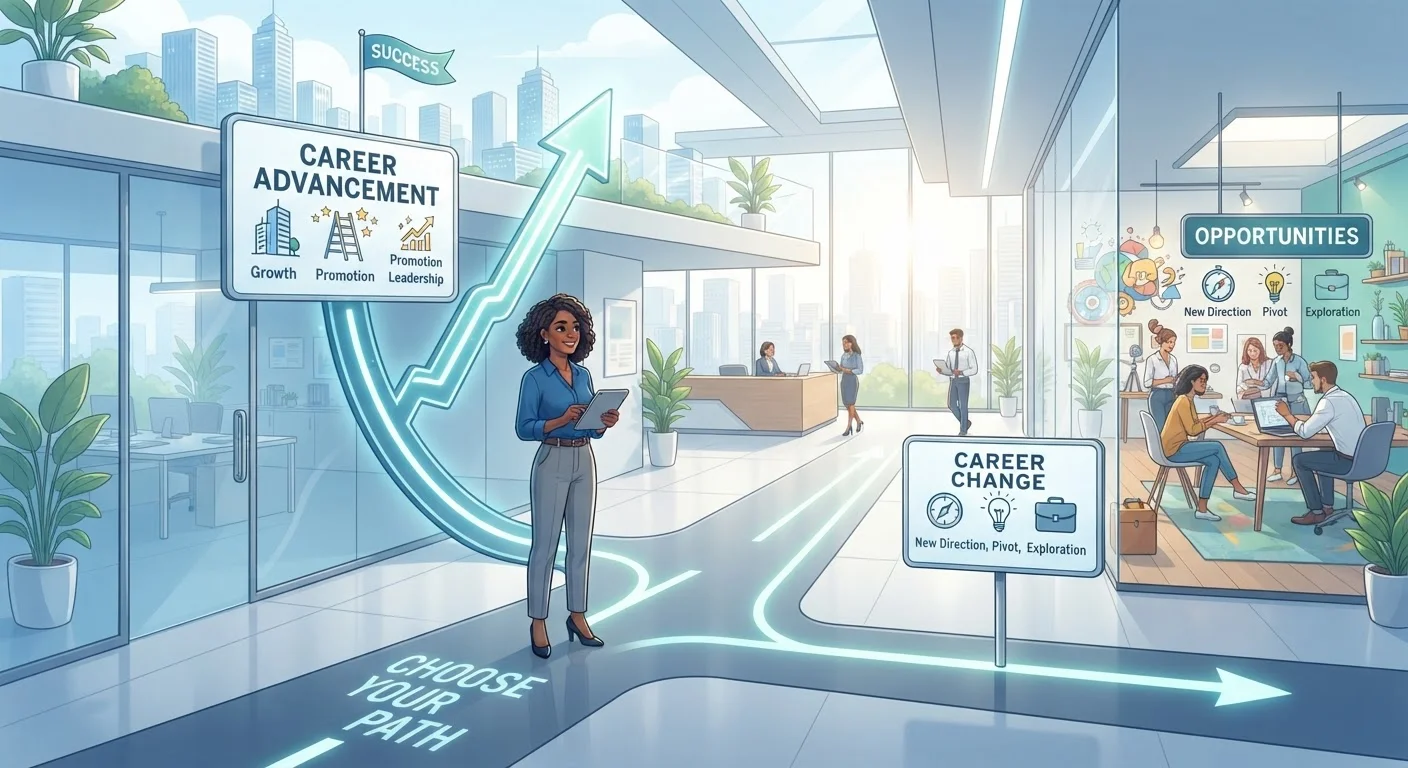
- Are you seeking a promotion or a career change? Promotions typically require upskilling; genuine career transitions require reskilling.
- How much time and money can you realistically commit? Reskilling programs demand more of both - be honest about your capacity.
It's also worth noting that both paths benefit from a clear-eyed understanding of what employers actually value. Soft and hard skills play different roles in hiring decisions, and that dynamic applies whether you're upskilling or reskilling.
A registered nurse completes a certification program in critical care nursing to qualify for ICU positions within the same hospital system.
A retail store manager completes a full-stack web development bootcamp and transitions into a junior developer role at a tech company.
An accountant learns to use advanced data visualization software and automated reporting tools to handle larger, more complex client portfolios.
A print journalist whose publication closes learns UX research methods and transitions into a user experience researcher role at a product company.
Frequently Asked Questions
Upskilling adds depth or breadth to skills you already use in your current role. Reskilling teaches you capabilities for a role you haven't held before. If the goal is a promotion or expanded responsibility, that's upskilling. If the goal is a career change, that's reskilling.
Reskilling generally takes more time because you're starting from a lower baseline in a new discipline. Upskilling can often be accomplished through shorter courses, certifications, or on-the-job practice. However, the actual timeline depends on the complexity of the skills and the learning format you choose.
Employer funding is more commonly available for upskilling, since it directly benefits your current role. Some employers do offer reskilling support - particularly in industries undergoing rapid automation - but this is less consistent. It's worth having an explicit conversation with your HR or learning and development team about what's covered.
It's possible but can stretch your time and focus thin. A more practical approach is to identify your primary career goal first, then pursue the path that aligns with it. Trying to do both simultaneously often results in incomplete learning in both areas.
Research job postings in your target role or industry and note which skills appear consistently. Industry reports from sources like the Bureau of Labor Statistics or professional associations can also signal durable demand. Focus on skills that are transferable and have demonstrated market value, not just what's currently generating buzz.
No. Reskilling can happen through bootcamps, community college programs, online courses, apprenticeships, or structured self-study. The right format depends on how much foundational knowledge you need to build. See <a href="/learning-education/skills-careers/degree-vs-bootcamp-weighing-the-trade-offs-for-tech-careers">how degrees and bootcamps compare</a> for a breakdown of the trade-offs.
The content on this site is provided for informational purposes only and should not be considered a substitute for professional advice. While we strive to provide accurate and up-to-date information, we make no guarantees regarding its completeness or accuracy. Always consult a qualified professional for advice specific to your circumstances before making any decisions.