

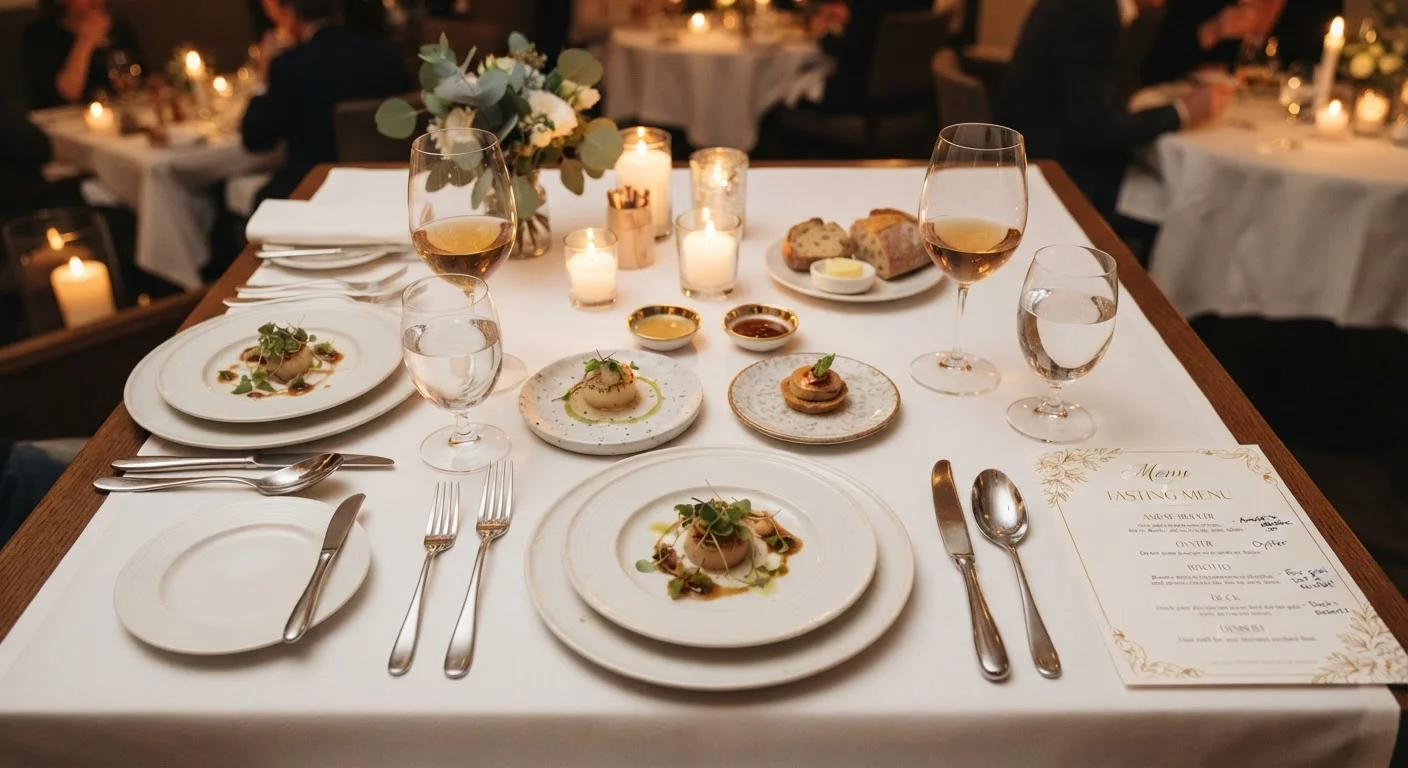
Why Course Structure Exists
A multi-course meal isn't just a way to eat more food - it's a designed experience built around pacing, contrast, and narrative. Each course serves a physiological or sensory function: stimulating appetite, cleansing the palate, or signaling a satisfying close. Understanding that logic helps you navigate a tasting menu with confidence rather than confusion.
The tradition descends from classical French service (service à la française gave way to service à la russe, which introduced sequential coursing in the 19th century). Today, both formal French-style restaurants and contemporary tasting-menu kitchens build on this framework, sometimes faithfully, sometimes by subverting it. Reading a menu like a pro starts with knowing what each section is designed to do.
Amuse-Bouche
A single complimentary bite from the chef served before the menu begins. The name is French for 'amuse the mouth.' It is not ordered or charged separately.
Intermezzo
A small palate-cleansing course - typically a sorbet or granita - served between rich savory courses to reset the diner's taste perception.
Mignardises
Tiny confections (truffles, candied fruit, miniature pastries) offered at the end of a formal meal alongside coffee or digestifs. They are a complimentary closing gesture.
Prix-Fixe
A set menu at a fixed total price, typically including a specified number of courses. Common in tasting-menu restaurants and special dining events.
Petits Fours
Small, bite-sized confections or savory nibbles served at the end of a formal meal. The term is French for 'small oven,' referencing the low-temperature baking once used for them.
Service à la Russe
A style of formal dining, adopted widely in the 19th century, in which courses are served sequentially rather than all at once. It remains the dominant model in Western fine dining.
Course by Course: What Each One Means
Not every restaurant uses every course below, and naming conventions vary. Think of this as a reference map - courses appear roughly in the order you'd encounter them.
| Typical tasting menu length | 5-12 courses |
| Average duration | 2-4 hours |
| Origin of sequential coursing | 19th-century Russia/France (service à la russe) |
| Complimentary courses (not billed) | Amuse-bouche and mignardises |
| Optional add-on | Wine or beverage pairing |
Amuse-Bouche
A single, chef-chosen bite sent before any ordering begins. It's not on the menu and costs nothing extra. Its job is to set the kitchen's tone and wake up your palate.
Appetizer / First Course (Entrée in French)
Smaller portions that open the meal. Acidic, light, or aromatic flavors are common here because they stimulate digestive enzymes and build appetite rather than suppress it.
Soup Course
Often the second or third course in formal settings. A well-crafted soup warms and prepares the stomach without overwhelming it. Consommés and chilled gazpachos each signal very different seasons and styles.
Fish Course (Poisson)
In classic French menus, a delicate fish or seafood dish bridges light starters and heavier proteins. It appears before the main meat course and is usually the most subtle savory course on the table.
Sorbet / Intermezzo
A small palate cleanser - often a lightly sweetened sorbet or a granita - served between rich courses. It resets your taste buds so the next dish reads clean and distinct.
Main Course (Plat Principal)
The anchor of the meal: typically red meat, poultry, or a substantial vegetarian centerpiece at higher-end restaurants. Portions in tasting menus are intentionally smaller than à la carte mains because context surrounds them.
Cheese Course (Fromage)
Common in European-style restaurants, served before or after dessert depending on the kitchen's philosophy. A cheese course often comes with accompaniments like honeycomb, fruit preserves, or walnut bread. It's a savory interlude before sweetness.
Dessert Course
Structured desserts - plated, composed, and temperature-layered - rather than a simple slice of cake. Pastry chefs often echo flavors introduced earlier in the meal to create a sense of closure.
Mignardises / Petits Fours
Tiny sweets - truffles, macarons, candied citrus peel - offered with coffee or digestifs. They're a gift from the kitchen, not a billable course, and serve as a graceful farewell to the meal.
How to Eat Smarter at a Tasting Menu
Knowing the structure lets you pace yourself. It's easy to overeat early when courses are small and the cadence feels slow. Trust the kitchen's pacing - rushing or skipping courses disrupts the intended contrast.
Multi-course meals can represent genuine value or significant splurge depending on the restaurant. Dining out on a budget covers when a prix-fixe tasting menu actually costs less per dish than ordering à la carte. Conversely, some courses are marked up well beyond ingredient cost - knowing which ones helps you evaluate value honestly.
Wine pairings, when offered, are designed to complement each course's weight and acidity. You're never obligated to accept a pairing, and restaurants will typically suggest a single bottle or a non-alcoholic pairing alternative if asked. Don't hesitate to communicate dietary restrictions before the meal begins - most tasting-menu kitchens accommodate these with advance notice.
The multi-course format appears across very different dining philosophies. Farm-to-table restaurants frequently adopt tasting-menu structures to highlight seasonal sourcing, while fast-casual formats deliberately strip them away. Neither is inherently superior - but understanding the structure helps you choose the experience that matches your appetite, time, and budget on any given evening.
The content on this site is provided for informational purposes only and should not be considered a substitute for professional advice. While we strive to provide accurate and up-to-date information, we make no guarantees regarding its completeness or accuracy. Always consult a qualified professional for advice specific to your circumstances before making any decisions.