

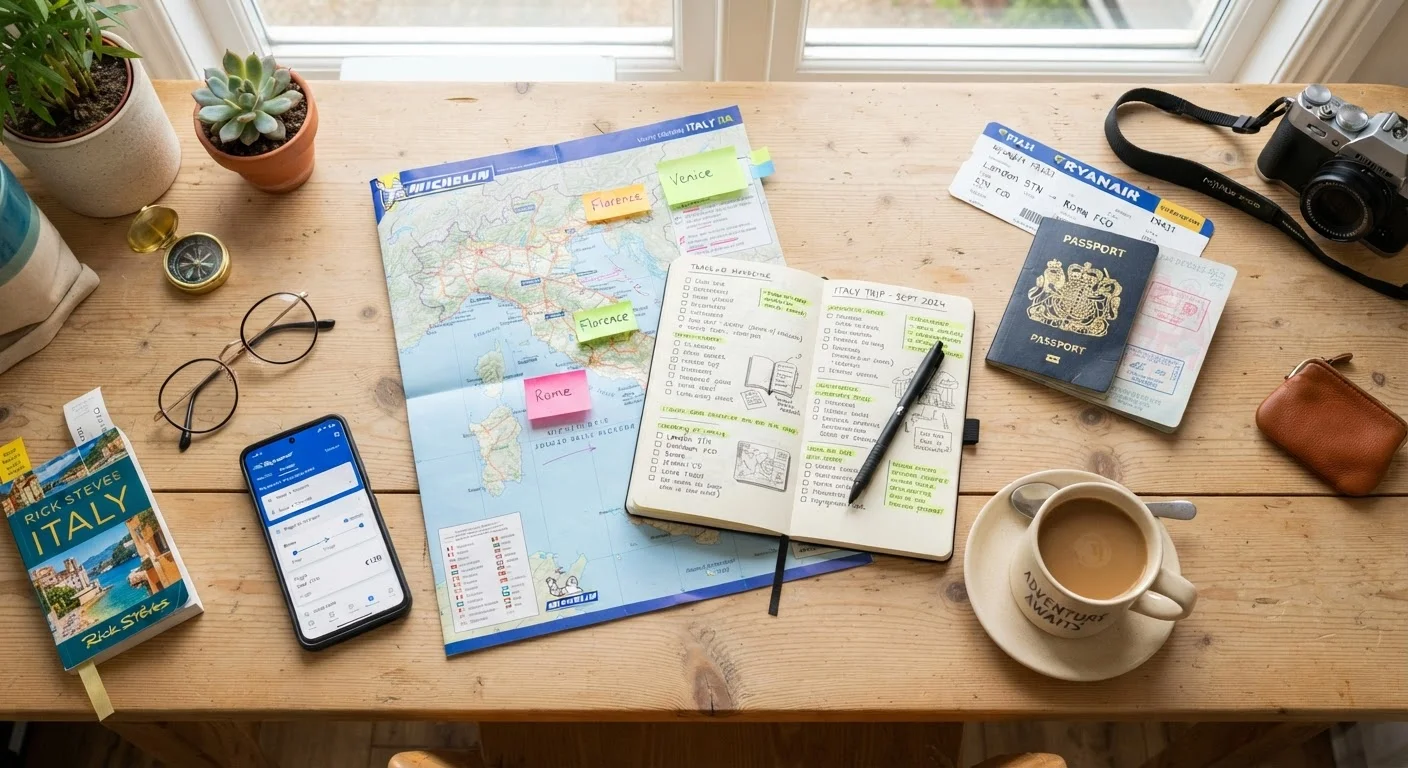
Start With a Clear Travel Vision
Every smart trip begins not with a search engine, but with a clear sense of what you actually want. Are you after deep cultural immersion, outdoor adventure, total relaxation, or a mix? Nailing this before you open a single tab saves hours of circular research and prevents you from booking a beach resort when you really wanted mountain trails.
Start by writing down three non-negotiables: the experience type, a rough budget range, and any hard constraints like travel dates or physical accessibility needs. This short exercise functions as a filter - it immediately eliminates destinations or itinerary styles that would leave you disappointed. For trips involving multiple people, getting everyone to agree on these three points early is even more critical. Our guide on organizing a group trip walks through how to align different expectations without conflict.
Once your vision is clear, research opens up rather than overwhelms. You're no longer browsing everything - you're evaluating specific options against a known standard.
Destination Research That Goes Beyond Lists
"Top 10 Things to Do in " articles have their place, but they rarely tell you what a destination actually feels like to navigate or what locals value most. Smarter research layers multiple source types: travel forums where real visitors share recent experiences, local tourism board resources for practical logistics, and mapping tools that help you understand neighborhoods before you arrive.
Pay attention to seasonality. A destination's shoulder season - the period just before or after peak tourist months - often offers a meaningful balance of good weather, thinner crowds, and more accessible pricing. That said, shoulder season conditions vary widely by region, so cross-reference what you read with recent traveler accounts.
Cultural context matters too. Understanding local customs, etiquette, and even basic phrases in the local language transforms you from a passive tourist into a more engaged traveler - and often leads to warmer interactions with residents. Our dedicated piece on meaningful destination research goes deeper on sourcing local knowledge effectively.
When researching a destination, search recent Reddit threads or travel forums filtered to the past six months - not just the past year. Conditions, prices, and crowd levels can shift quickly, and recent firsthand accounts are often more accurate than polished travel guides.
Published travel guides and articles have significant lag time between research and publication. Forum posts and recent reviews reflect current ground truth more reliably.
Set your flight search to display results in a fare calendar view - looking at a full month at a glance often surfaces cheaper travel windows you'd never have thought to check manually.
Midweek travel days frequently show lower fares on many routes, and a calendar view makes these patterns immediately visible without requiring multiple searches.
Booking Strategy: Flights, Stays, and Timing
Booking travel is part timing, part flexibility, and part patience. On flights, fare patterns vary significantly by route and season, but one consistently useful habit is setting price alerts through flight search tools rather than refreshing them manually. Flexible travel dates - even shifting by one or two days - can reveal notable differences in fare levels on many routes.
For accommodations, consider what the stay actually needs to deliver for your trip style. A central location often saves money on transportation and time even if the nightly rate is higher. Read cancellation policies carefully before confirming - conditions vary widely and can significantly affect your financial exposure if plans change.
Booking flights and accommodations separately (rather than always as a package) lets you optimize each independently, though packages occasionally offer genuine convenience for complex itineraries. Neither approach is universally better - it depends on your route, flexibility, and how much coordination you want to manage.
For families, timing and accommodation type choices carry extra weight. Our article on traveling with kids covers how specific planning decisions ripple through the entire family trip experience.
Pre-Departure Prep: Documents, Health, and Logistics
A solid pre-departure checklist is the difference between a smooth departure and a scrambled one. Start with documents: passport validity requirements vary by destination (many countries require six months of validity beyond your travel dates), and visa rules can be strict and time-sensitive. Always verify entry requirements directly with official government sources - embassy websites and your country's foreign affairs department are the authoritative references.
Always Verify Entry and Health Requirements Officially
Visa rules, passport validity requirements, and vaccination recommendations change without notice. Do not rely solely on travel blogs or booking platforms for this information. Check directly with the official embassy or consulate of your destination country, and consult a qualified health professional for any medical preparation. Arriving with incorrect documentation can result in denied boarding or entry.
Health preparation is equally important for international travel. Recommended vaccinations, prescription refills, and travel health consultations should be arranged well in advance - some vaccine courses require multiple doses over weeks. Consult a travel medicine professional or your primary care provider for guidance specific to your destination and health history.
Travel insurance deserves serious consideration rather than a quick dismissal. Policies vary enormously in what they cover, so read the terms carefully. Our pre-trip planning checklist covers the full range of pre-departure steps in a structured format you can work through systematically.
Packing Smart Without Overpacking
Overpacking is one of the most common travel mistakes - and one of the easiest to avoid with a deliberate approach. The core principle: pack for activities, not for every possible scenario. Lay out everything you think you need, then remove roughly a quarter of it. Most travelers find they use far less than they brought.
A layering system for clothing handles variable weather far more efficiently than packing separate outfits for every temperature. Neutral colors that mix and match reduce the total number of items needed. For toiletries, consider what's genuinely unavailable at your destination versus what you can buy there if needed.
Carry-on travel, where feasible, eliminates checked baggage fees and the risk of delayed luggage - a meaningful advantage on multi-leg itineraries. If you must check a bag, keep a day's worth of essentials in your carry-on in case of delays.
On-the-Ground Habits That Make Every Trip Better
Even the best-planned trip encounters the unexpected. The travelers who handle disruptions well tend to share a few common habits: they build daily buffer time rather than scheduling every hour, they keep physical copies of key documents alongside digital ones, and they download offline maps before they land so navigation doesn't depend on data connectivity.
Notify your bank of travel dates to avoid card blocks at the worst possible moment. Keep a small amount of local currency on hand for the first hours in a new destination, when ATMs or card readers may not be immediately accessible.
Finally, allow yourself to deviate from your itinerary when something genuinely interesting presents itself. The plan exists to serve the trip - not the other way around. Tracking emerging travel patterns and shifting destination popularity can also inform smarter choices; consumer trends in travel offer useful context on how American travelers' habits are evolving.
For a full overview of all planning resources by topic, the trip planning hub is a useful reference to return to at any stage of your preparation.
The content on this site is provided for informational purposes only and should not be considered a substitute for professional advice. While we strive to provide accurate and up-to-date information, we make no guarantees regarding its completeness or accuracy. Always consult a qualified professional for advice specific to your circumstances before making any decisions.