

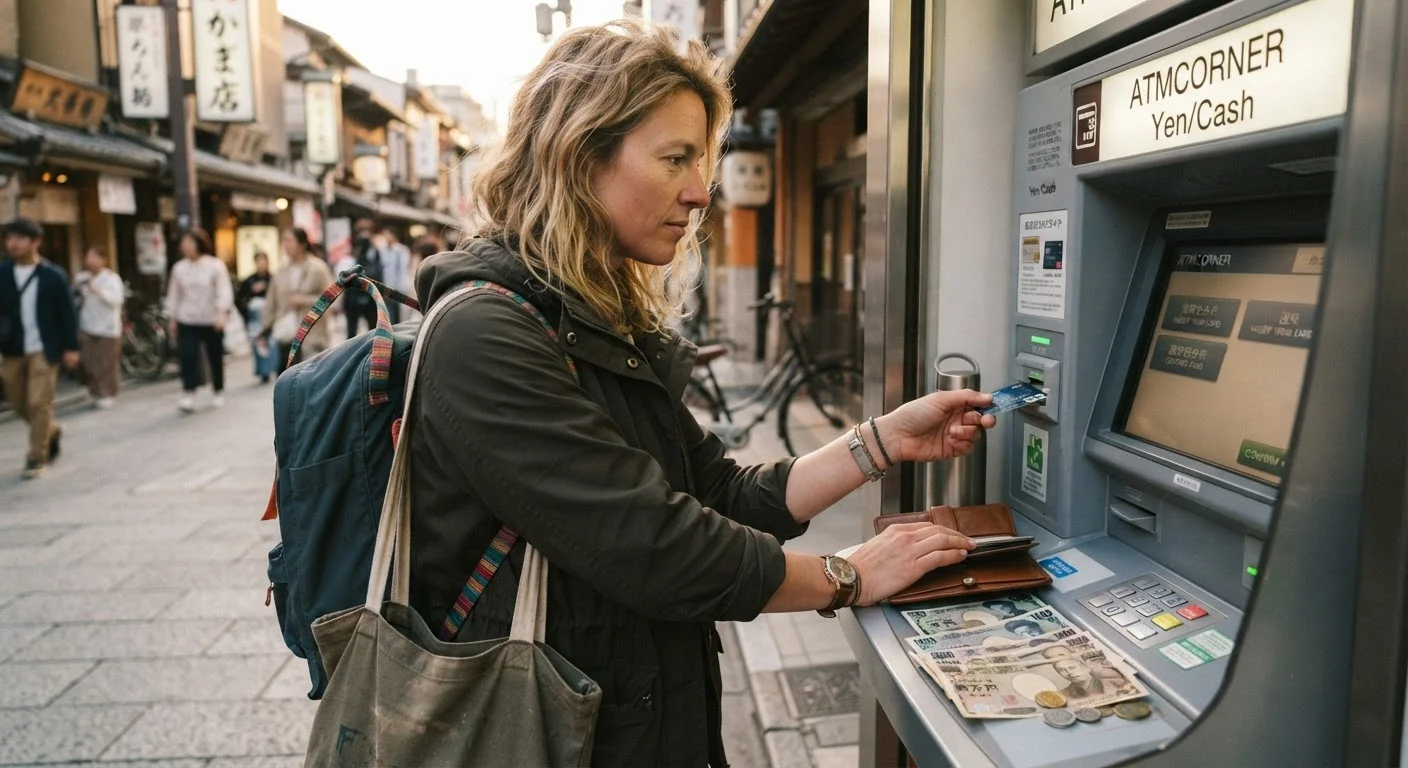
Why Your Money Doesn't Travel at Face Value
When you swipe a card or pull cash from an ATM in another country, you're not just spending money - you're navigating a system of rates, fees, and markups that most travelers never see itemized. Understanding how that system works is the first step to keeping more of your budget where it belongs: on your actual trip.
| Typical airport kiosk markup | 8-15% above mid-market rate (General industry range; varies by provider and location) |
| Typical foreign transaction fee | 1-3% per transaction (Standard range across major U.S. card issuers) |
| Dynamic currency conversion (DCC) cost | 3-7% added to your bill (General estimate; varies by terminal operator) |
| Best ATM strategy | Withdraw larger amounts at bank ATMs in-country (Reduces per-withdrawal flat fees) |
| Always pay in | Local currency, not USD (Avoids DCC markup at terminals and ATMs) |
The exchange rate you read in the news - sometimes called the interbank rate or mid-market rate - is the wholesale rate banks use to trade currencies with each other. Consumers almost never access this rate directly. Instead, banks, currency exchange kiosks, and card networks apply a spread (a markup above the interbank rate) before presenting you a price. That gap is where the quiet cost of international spending lives.
For a deeper look at how currency strength ripples into everyday prices, see what a strong dollar actually means for your purchases.
ATMs, Airport Kiosks, and Cards: Where the Fees Hide
Not all ways of accessing foreign currency cost the same. Here's how the common options generally compare:
- Airport and hotel currency exchange kiosks typically carry the largest markups - often 8-15% above the mid-market rate - because they're trading on convenience and captive customers.
- Bank ATMs in-country usually deliver rates much closer to the interbank rate, making them one of the more cost-effective options for most travelers. The catch: your home bank may charge a foreign ATM fee, and the local ATM operator may add its own flat fee on top.
- Credit and debit cards with no foreign transaction fees can offer competitive conversion rates, especially when paired with a card network that uses close-to-interbank exchange rates. Always pay in the local currency rather than U.S. dollars when given the choice - this avoids dynamic currency conversion (DCC), a merchant-side markup that can quietly add 3-7% to your bill.
These hidden charges are part of a broader pattern worth recognizing. The hidden costs that inflate your travel budget cover DCC and other traps in detail.
How to Read an Exchange Rate (Without Getting Confused)
Exchange rates express how much of one currency you get per unit of another. If the EUR/USD rate is 1.08, one euro costs $1.08. When you're the one buying euros, a higher number is better for you as an American - you're getting more euros per dollar.
Interbank Rate
The exchange rate at which major banks trade currencies with each other. It represents the closest thing to a 'true' currency value and is the benchmark consumers compare against. Retail customers rarely access this rate directly.
Spread
The difference between the interbank rate and the rate offered to a retail customer. This markup is how banks, kiosks, and card networks profit from currency conversion.
Dynamic Currency Conversion (DCC)
A service offered at card terminals or ATMs that lets you pay in U.S. dollars instead of local currency. While it sounds convenient, it typically applies a poor exchange rate that benefits the merchant or ATM operator rather than the traveler.
Foreign Transaction Fee
A fee charged by your home bank or card issuer on purchases made in a foreign currency. It usually ranges from 1-3% of the transaction amount and is separate from any ATM operator fees.
Mid-Market Rate
Another term for the interbank rate - the midpoint between the buy and sell price of a currency pair. Useful as a reference point when evaluating rates offered to you by banks or exchange services.
When comparing rates offered to you versus the mid-market rate, even a 2-3% difference compounds meaningfully across a two-week trip. A traveler spending $3,000 abroad could lose $60-$90 purely to rate markups - before any flat fees are counted.
Since cash decisions abroad are part of a larger spending picture, it helps to plan ahead. Building a travel budget that holds up in the real world walks through estimating real trip costs so surprises stay small.
Practical Moves That Actually Help
There's no single perfect strategy, but a few consistent habits tend to reduce unnecessary spending abroad:
- Use in-network or partner ATMs when possible - some U.S. banks have international ATM partnerships that waive or reimburse fees.
- Always choose local currency at card terminals and ATMs. If a machine asks whether you want to pay in USD, decline. That offer is DCC, and it costs you.
- Carry some local cash for small vendors, markets, and places that don't accept cards. The amount varies by destination - research your specific country before you go.
- Withdraw larger amounts less frequently to minimize flat per-withdrawal fees from foreign ATM operators.
- Notify your bank before departure to avoid fraud blocks on international transactions.
The decision between cash and card isn't always obvious. Paying cash vs. using a credit card explores when each method works in your favor - a useful read before you pack.
Exchange rates, ATM fee structures, and local card acceptance vary by country and change over time. Verify current rates, fees, and any entry-related financial requirements with your bank and official destination sources before you travel.
The content on this site is provided for informational purposes only and should not be considered a substitute for professional advice. While we strive to provide accurate and up-to-date information, we make no guarantees regarding its completeness or accuracy. Always consult a qualified professional for advice specific to your circumstances before making any decisions.