

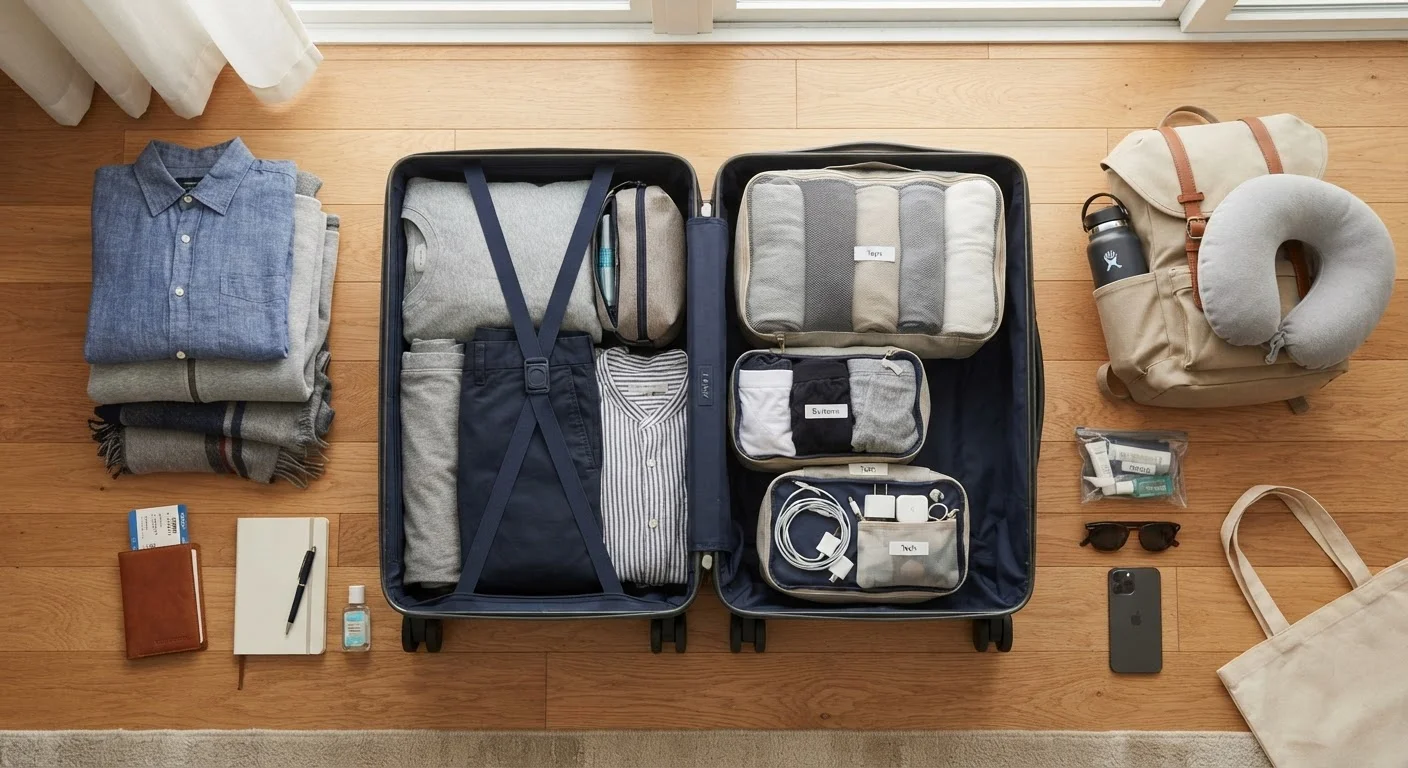
Know the Real Size Rules Before You Pack a Thing
Carry-on size limits sound standardized, but they genuinely aren't. Most major U.S. carriers allow a bag around 22 x 14 x 9 inches (including handles and wheels), but budget carriers and regional jets often have stricter limits. International legs of your trip may apply a different airline's rules entirely. Before you zip anything up, look up the specific allowance on every carrier you're flying - not just the one that sold you the ticket.
Weight limits matter too, especially on international routes. Some airlines cap carry-ons at 15-18 lbs even if the bag physically fits. A kitchen scale at home takes 30 seconds and can save you a gate-side repacking scramble.
As airline fees for checked bags have quietly expanded in recent years, more travelers are doubling down on carry-on-only travel - which makes knowing these rules more valuable than ever. See how airline fee structures have shifted for useful background on what you're avoiding by packing light.
The Packing Methods That Actually Work
Not all folding is created equal. Here are the approaches that hold up under real travel conditions:
Roll clothes instead of flat-folding whenever possible
Rolling compresses fabric more efficiently than flat folding and dramatically reduces wrinkles in casual and synthetic fabrics. It also makes individual items visible at a glance, so you're not excavating your bag mid-trip.
Use packing cubes to organize by category, not by day
Organizing by outfit-per-day sounds logical but wastes space through uneven fill. Grouping by category (tops, bottoms, layers) keeps cubes consistently full and makes mid-trip laundry easier to manage.
Pack shoes strategically using the bag's dead space
Shoes are rigid and space-hungry, but the interior of each shoe is usable real estate. Shoes placed along the bag's spine or at its base also provide a stable foundation for softer items.
Follow the 3-1-1 liquids rule precisely and pre-pack your quart bag
The TSA's 3-1-1 rule (containers of 3.4 oz or less, in one quart-sized clear zip bag, one per traveler) is consistently enforced at U.S. checkpoints. Packing your liquids bag in advance prevents last-minute security scrambles and helps you audit whether you've exceeded limits.
Board as early as your ticket allows and stow your bag wheels-first
Overhead bin space fills from front to back on most aircraft. Early boarding gives you a meaningful advantage. Placing the bag wheels-first (lengthwise into the bin) uses space more efficiently than a nose-first placement.
For a full category-by-category checklist built around these methods, the one-week packing list is a solid companion resource to keep open while you pack.
Quick Wins You Can Use Right Now
Not every carry-on upgrade requires a new system. Some of the most effective habits take under five minutes to adopt:
Packing smart also feeds into your broader trip budget - fewer checked bag fees mean real savings. The travel budget guide covers how to factor those savings into your overall planning.
What to Leave Behind (Without Regret)
The hardest carry-on discipline isn't folding technique - it's deciding what doesn't come at all. A few reliable principles help:
- The "one outfit per two days" test: If you can mix and match, you don't need item-per-day packing.
- Skip the "just in case" gear: Backup shoes, a third jacket, and formal attire for a dinner you haven't booked yet are common space thieves.
- Buy toiletries at your destination: Full-size shampoo, conditioner, and lotion are available almost everywhere - and eliminating them frees up a surprising amount of bag real estate.
- Limit books and paper: One physical book or a loaded e-reader is plenty. Maps and itineraries can live on your phone.
Traveling with kids adds complexity to the leave-it-behind calculus. The family travel planning guide covers what items genuinely matter when small children are in the mix.
For the complete picture - from researching destinations to arriving prepared - the complete travel planning guide ties all of these habits together into one workflow.
The content on this site is provided for informational purposes only and should not be considered a substitute for professional advice. While we strive to provide accurate and up-to-date information, we make no guarantees regarding its completeness or accuracy. Always consult a qualified professional for advice specific to your circumstances before making any decisions.