

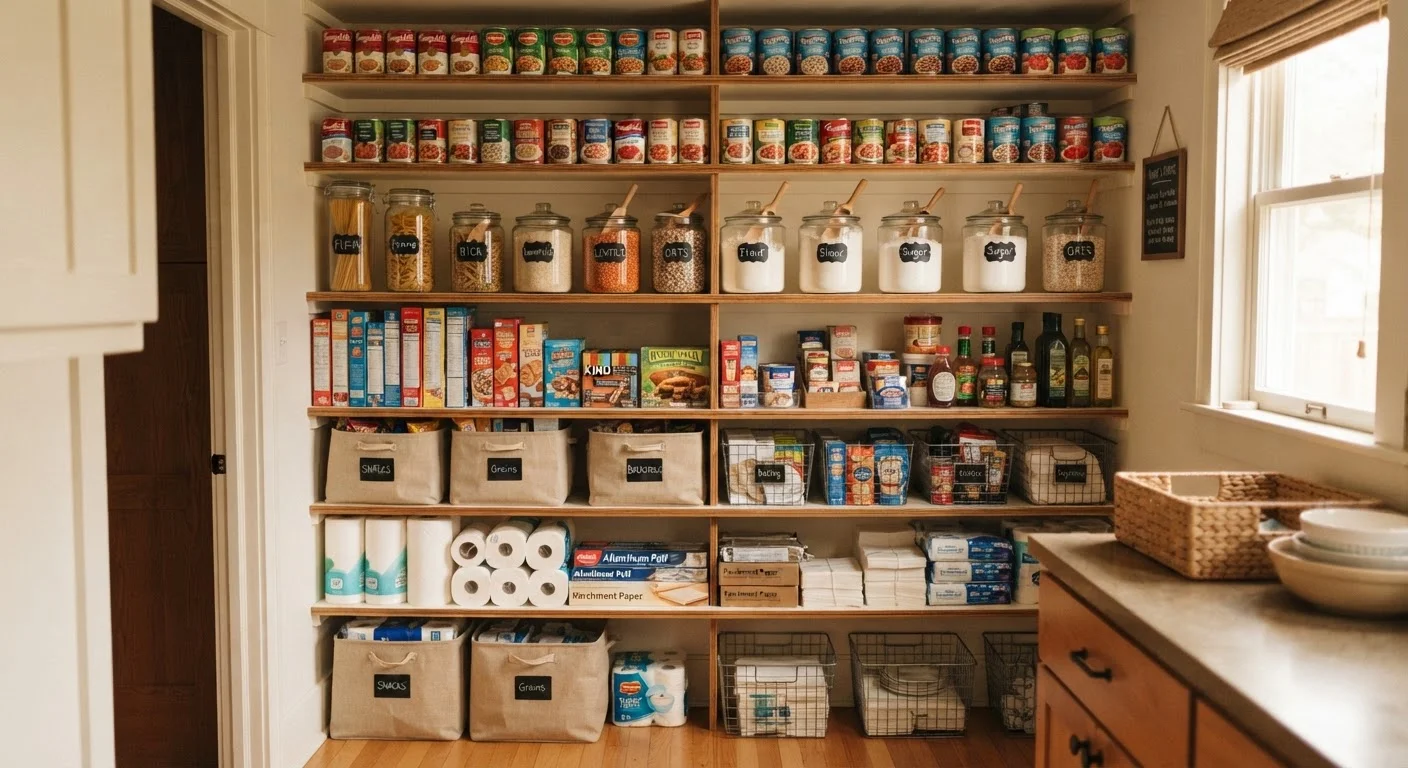
Our Verdict
Stockpiling works when it's disciplined, targeted, and tied to genuine savings on items you reliably use. Without a clear system, it often trades one problem - paying full price - for others, including waste, clutter, and frozen cash. Treat it as a strategy, not a reflex.
Households with stable storage space, predictable consumption patterns, and the cash flow to absorb an upfront purchase without straining their budget.
What Stockpiling Actually Means - and What It Doesn't
Stockpiling, in the consumer sense, means deliberately purchasing more of an item than you need right now - banking on future use, stable shelf life, or a price advantage that won't last. It's not hoarding, and it's not panic-buying. Done deliberately, it's a legitimate household budgeting tool.
The distinction matters. Effective stockpiling is driven by unit-price math and storage logic. Reactive buying - triggered by alarming headlines or vague fears of scarcity - rarely delivers the savings people expect. Before bulk-buying anything, it's worth asking the questions laid out in our guide to reacting to price spikes. The core question is always the same: Am I buying this because it genuinely makes financial sense, or because something made me anxious?
Good stockpiling candidates share three traits: they're shelf-stable, you use them regularly, and the current price is meaningfully lower than average. Miss any one of those, and the math usually stops working in your favor.
The Real Advantages of Buying Ahead
When the conditions are right, stockpiling delivers concrete benefits that go beyond simple price savings.
Lower per-unit cost on frequently used items
Buying multiples during a sale or in bulk often reduces the cost per unit measurably. For staples like canned goods, laundry detergent, or paper products, those savings compound meaningfully over a year.
Insulation against short-term price increases
Having a supply on hand means a temporary price jump at retail doesn't affect your household budget. You buy again when the price returns to a level that makes sense.
Fewer unplanned shopping trips
Running out of essentials forces reactive, often expensive, store visits. A stocked supply reduces those trips and the associated impulse purchases that tend to inflate grocery bills.
Time savings from reduced shopping frequency
Consolidating purchases means fewer trips overall, which has real value for households with limited time - especially when factored against fuel costs or delivery fees.
~$1,500
Estimated annual household food waste per family
According to USDA research, the average American household discards roughly $1,500 worth of food annually - a risk stockpiling can amplify if not managed carefully.
10-30%
Typical per-unit savings from buying in bulk
Consumer finance educators generally estimate bulk purchasing can reduce per-unit costs by 10-30% on qualifying shelf-stable items, though actual savings vary by product and retailer.
Beyond per-unit savings, a well-stocked pantry acts as a buffer against supply disruptions - minor ones, like a local shortage - and reduces the frequency of emergency store runs where impulse spending tends to spike. For households tracking grocery costs closely, our practical grocery savings guide outlines how planned purchasing habits fit into a broader cost-reduction strategy.
Where Stockpiling Goes Wrong
The pitfalls are real, and they hit harder than most people anticipate when they're standing in a warehouse store aisle doing optimistic mental arithmetic.
Expiration waste erases the savings
Food, medications, and some personal care products expire. If a stockpiled item goes bad before you use it, the "savings" become a loss - and potentially a food safety issue.
Large upfront cost strains cash flow
Buying in quantity requires spending more money now. For households with tight monthly budgets, this can create shortfalls elsewhere even when the long-term math looks favorable.
Storage space is a real constraint
Bulk goods require room. Without adequate, appropriate storage - cool, dry, organized - quality can degrade and the physical clutter itself becomes a household problem.
Risk of stockpiling items you don't actually use
A low price on something you use rarely is not a deal - it's a slow drain. Buying an unfamiliar product in bulk before testing it compounds the risk significantly.
Visible abundance can increase consumption rate
Research into household behavior suggests that people tend to use products faster when they see a large supply on hand, partially offsetting the savings the stockpile was meant to generate.
Cash flow is the hidden risk most buyers underestimate. Spending $150 upfront to "save" $30 over six months only works if that $150 wasn't needed for something else in the meantime. Stockpiling can also create a false sense of preparedness that leads to less careful consumption - studies on household inventory suggest that visible abundance tends to increase usage rates. The convenience vs. savings trade-off applies here too: the ease of grabbing from a stash can quietly erode the discipline that made the stockpile worthwhile.
A Practical Framework Before You Buy in Bulk
Stockpiling rewards shoppers who slow down before adding extra units to the cart. A quick decision framework helps separate worthwhile purchases from impulse buys dressed up as savings.
The Inventory Step Most Shoppers Skip
Before purchasing in bulk, physically count what you already have at home. It sounds obvious, but duplicate stockpiling - buying more of something you already have plenty of - is one of the most common and costly stockpiling mistakes. A simple notes-app list of your current supply, checked before each warehouse or bulk run, takes two minutes and prevents a surprising amount of waste.
- Calculate the true unit price. Divide the total cost by quantity and compare it against what you typically pay. Warehouse pricing isn't always cheaper per unit than a sale at a conventional grocery store.
- Audit your current supply first. Buying four bottles of dish soap when you already have three is a cash flow problem, not a savings strategy.
- Set a storage limit before you shop. Decide in advance how many weeks or months of supply is practical for your space - then stick to it.
- Check expiration windows honestly. If a product expires in eight months and you use one per month, buying ten is a problem.
Our pre-purchase checklist and the pre-cart checklist are useful complements here - both encourage the kind of deliberate pause that separates intentional spending from reactive spending.
The content on this site is provided for informational purposes only and should not be considered a substitute for professional advice. While we strive to provide accurate and up-to-date information, we make no guarantees regarding its completeness or accuracy. Always consult a qualified professional for advice specific to your circumstances before making any decisions.