

Why Review Literacy Has Become a Core Shopping Skill
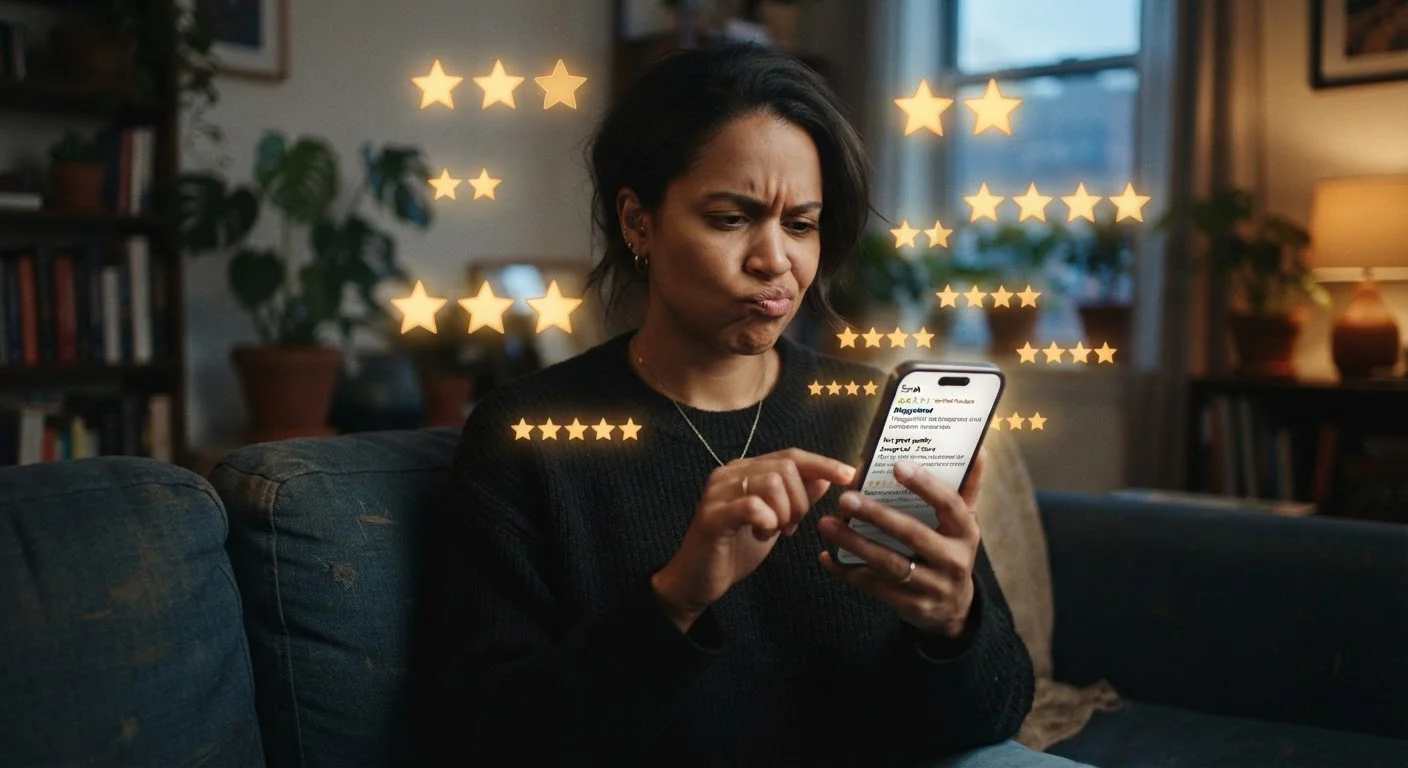
Online reviews now influence the majority of U.S. consumer purchases, yet the skills needed to read them critically are rarely taught. Most shoppers develop habits - anchor on the star average, scan the top two or three reviews, decide - that feel efficient but routinely mislead. The result is not just a bad buy. It's misplaced confidence in a system that has well-documented vulnerabilities.
Trust in online reviews has been eroding for good reason: fake reviews, review gating, and incentivized feedback have all distorted the signal. But the problem isn't only manipulation from sellers - it's also the interpretive errors shoppers bring to even legitimate reviews. Understanding both sides is what separates a smart purchase from an expensive guess.
Anchoring entirely on the average star rating without examining score distribution.
Why it happens: A single number is fast and easy to process; shoppers are primed by familiarity to treat it as a reliable summary.
Ignoring the dates of reviews and treating old feedback as current.
Why it happens: Review platforms typically surface the most-voted reviews, which are often the oldest and may reflect a product formulation, firmware version, or manufacturing run that no longer exists.
Skipping three-star reviews in favor of the emotional extremes.
Why it happens: Five-star and one-star reviews feel decisive and easy to scan. Mid-range reviews read as lukewarm and easy to dismiss.
Equating review volume with product quality or reliability.
Why it happens: High review counts feel like social proof - if thousands of people bought it, it must be good. Popularity gets conflated with performance.
Failing to check whether reviews are verified purchases or appear incentivized.
Why it happens: Most platforms display verified and unverified reviews in the same feed, and shoppers rarely look for the label.
Reading reviews for reassurance rather than information.
Why it happens: Once a shopper has decided to buy, they unconsciously seek confirmation. This confirmation bias filters out critical feedback that contradicts the decision already made.
How to Read Reviews With Sharper Eyes
Once you recognize the mistakes, correcting them takes only a small change in habit. Start by sorting reviews chronologically rather than by helpfulness - platforms typically surface older, highly-voted reviews that may no longer reflect the current product. Then look at the rating distribution histogram, not just the average. A product with 60% five-star and 30% one-star ratings is fundamentally different from one where ratings cluster around three and four stars, even if the averages appear similar.
The three-star range deserves particular attention. Reviewers in that middle band tend to be the most specific: they bought the product, used it in real conditions, and had a measured reaction. Their complaints are usually concrete - a zipper that failed after two months, a battery that doesn't hold charge as advertised, an instruction manual that omits critical steps. Those details are more actionable than a five-star review that says "love it!" or a one-star review written in anger on day one.
For higher-stakes purchases, cross-referencing across platforms adds meaningful protection. A product's reputation often looks different on a retailer's own site versus a third-party review aggregator or a subject-matter enthusiast forum. Not all review platforms apply the same standards, so checking a site's methodology before trusting its ratings is time well spent. Similarly, a product with thousands of reviews isn't necessarily the most reliable option - volume and quality are not the same metric.
Finally, train yourself to look for what reviews don't say. A product page with no critical reviews at all is a warning sign, not reassurance. Legitimate products attract legitimate complaints. If every review reads like a press release, the review set itself may warrant scrutiny. Learning how to distinguish genuine feedback from manufactured noise is one of the highest-value skills a shopper can develop - and it applies across every category, from electronics to pet supplies to travel gear.
82%
Shoppers who read reviews before buying
According to data from the Spiegel Research Center, a large majority of consumers consult online reviews before making a purchase decision.
30-40%
Estimated share of online reviews that may be fake
The U.S. Federal Trade Commission and independent researchers have consistently flagged fake and incentivized reviews as a widespread problem across major retail platforms.
The content on this site is provided for informational purposes only and should not be considered a substitute for professional advice. While we strive to provide accurate and up-to-date information, we make no guarantees regarding its completeness or accuracy. Always consult a qualified professional for advice specific to your circumstances before making any decisions.