

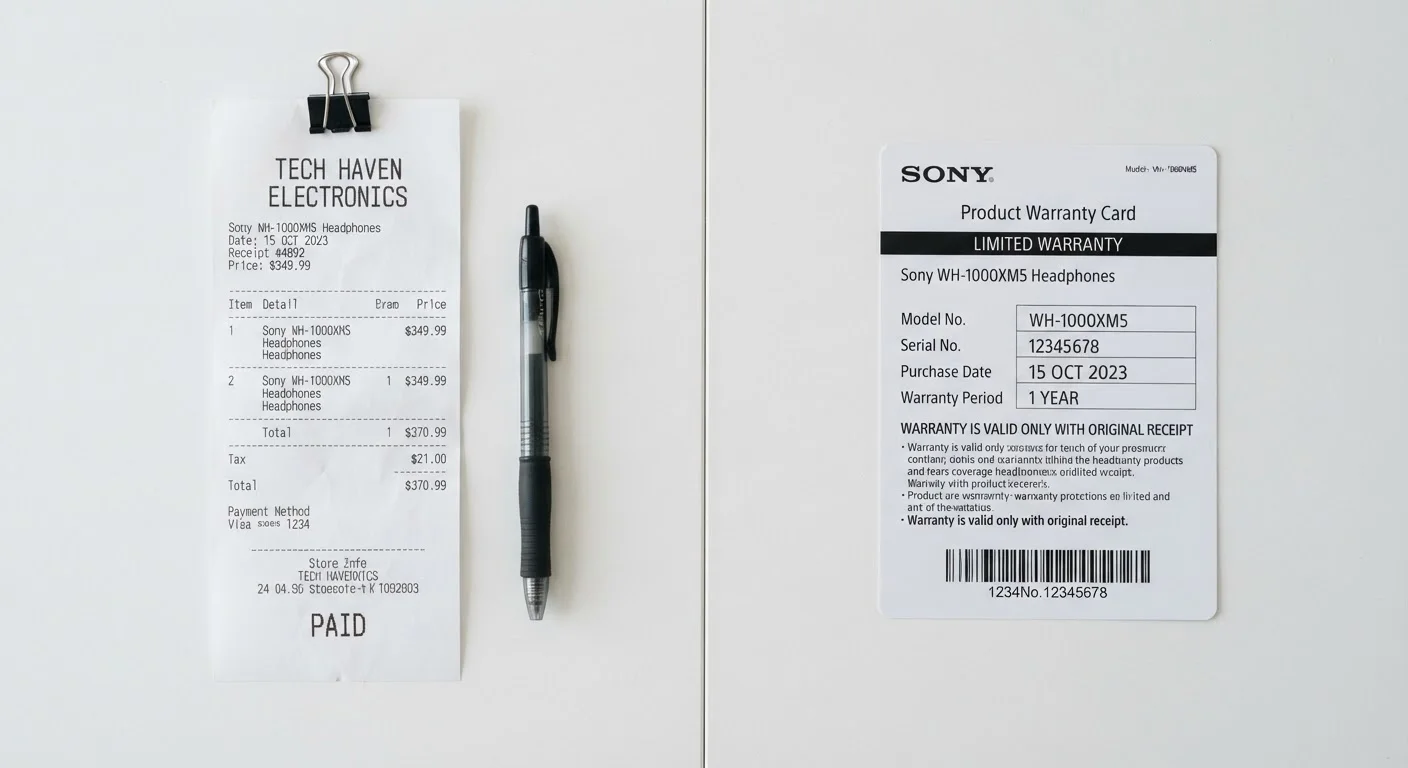
Option A
Return Policy
The short-window exit ramp for unwanted or flawed purchases.
Best for: Shoppers who receive something defective, wrong, or simply not what they expected and want a refund or exchange quickly.
Option B
Warranty
The longer-term promise that a product will function as intended.
Best for: Buyers whose product works fine at first but develops a defect or failure during normal use over time.
What Each Protection Actually Covers
A return policy is a retailer's agreement - typically printed on your receipt or posted at checkout - that defines how long after purchase you can bring a product back and under what conditions. It's short-term by nature. A 30-day return window means you have 30 days from purchase to decide whether the item suits you, works correctly, or matches what was advertised. After that window closes, the retailer's obligation under its own policy generally ends.
A warranty is a different kind of promise. It typically comes from the manufacturer, not the store where you bought the product. Its job is to guarantee that the product will work as intended for a defined period - often one to three years, though this varies widely by product category. If the product fails due to a defect in materials or workmanship during normal use within that period, the manufacturer is obligated to repair it, replace it, or in some cases issue a refund.
The key distinction: return policies are about the immediate post-purchase period and cover almost any reason for return (subject to the retailer's terms). Warranties are about product performance over time and are limited to specific failure types - usually manufacturing defects, not accidental damage, misuse, or normal wear.
For a deeper look at what's typically excluded from manufacturer coverage, see what a manufacturer's warranty actually covers.
Side-by-Side: How They Stack Up
The table below captures the practical differences most shoppers encounter. Understanding these distinctions upfront - before something goes wrong - can determine whether you get your money back or are left with a broken product and no clear path forward.
| Criterion | Return Policy | Warranty |
|---|---|---|
| Set by | The retailer | The manufacturer |
| Typical time frame | 15-90 days after purchase | 1-3 years (varies by product) |
| Covers | Unwanted, wrong, or initially defective items | Defects in materials or workmanship |
| Does NOT cover | Items outside the return window | Accidental damage, misuse, normal wear |
| Who you contact | The store or website | The manufacturer directly |
| Typical resolution | Refund or exchange | Repair, replacement, or refund |
| Documentation needed | Receipt or order confirmation | Proof of purchase; sometimes registration |
One thing the table makes clear: these two protections rarely overlap. A defective product discovered on day two is best handled as a return. The same defect discovered six months later requires a warranty claim. Knowing which clock is ticking - and who sets it - puts you in a much stronger position as a buyer.
Common Situations and Which Protection Applies
Wrong item delivered: Use the return policy. The retailer is responsible for fulfillment errors, and most will correct this within the return window - often with free return shipping.
Product breaks after a few months of normal use: File a warranty claim. This is a classic warranty scenario. Contact the manufacturer directly with your proof of purchase and describe the failure.
Changed your mind: Return policy only - and only if the retailer allows change-of-mind returns. Some do, many don't, and some charge restocking fees. Check terms before buying.
Accidental damage: Neither. Standard warranties exclude accidental damage, and return policies won't cover items damaged by the user. Separate accidental damage protection plans - sold by some retailers - are a distinct product entirely.
Your payment method can also affect your options. Credit cards sometimes offer purchase protection or extended warranty benefits that kick in after the manufacturer's warranty expires. Which payment method gives you the most protection breaks this down in detail.
It's also worth knowing that federal and some state laws give buyers baseline protections that exist independently of any policy or warranty. Consumer rights every American shopper should know is a practical overview of what those laws actually guarantee.
What to Do Before You Buy
The time to understand these protections is before a purchase, not after something goes wrong. A few practical steps:
- Check the return window. Look for the specific number of days, any item exclusions (e.g., opened software, perishables), and whether you'll receive a full refund or store credit only.
- Locate the warranty terms. For higher-value items - electronics, appliances, tools - find out whether a warranty is included, how long it lasts, and whether registration is required to activate it.
- Keep your proof of purchase. Both return policies and warranty claims almost always require it. A digital copy stored in email is often sufficient.
- Understand "as-is" and open-box purchases. These may come with limited or no return rights and reduced warranty coverage. What open-box and refurbished labels really mean explains the risk profile of each.
Neither protection is a guarantee of a smooth resolution - but knowing how each one works, and which applies to your situation, dramatically improves your odds of a fair outcome.
The content on this site is provided for informational purposes only and should not be considered a substitute for professional advice. While we strive to provide accurate and up-to-date information, we make no guarantees regarding its completeness or accuracy. Always consult a qualified professional for advice specific to your circumstances before making any decisions.