

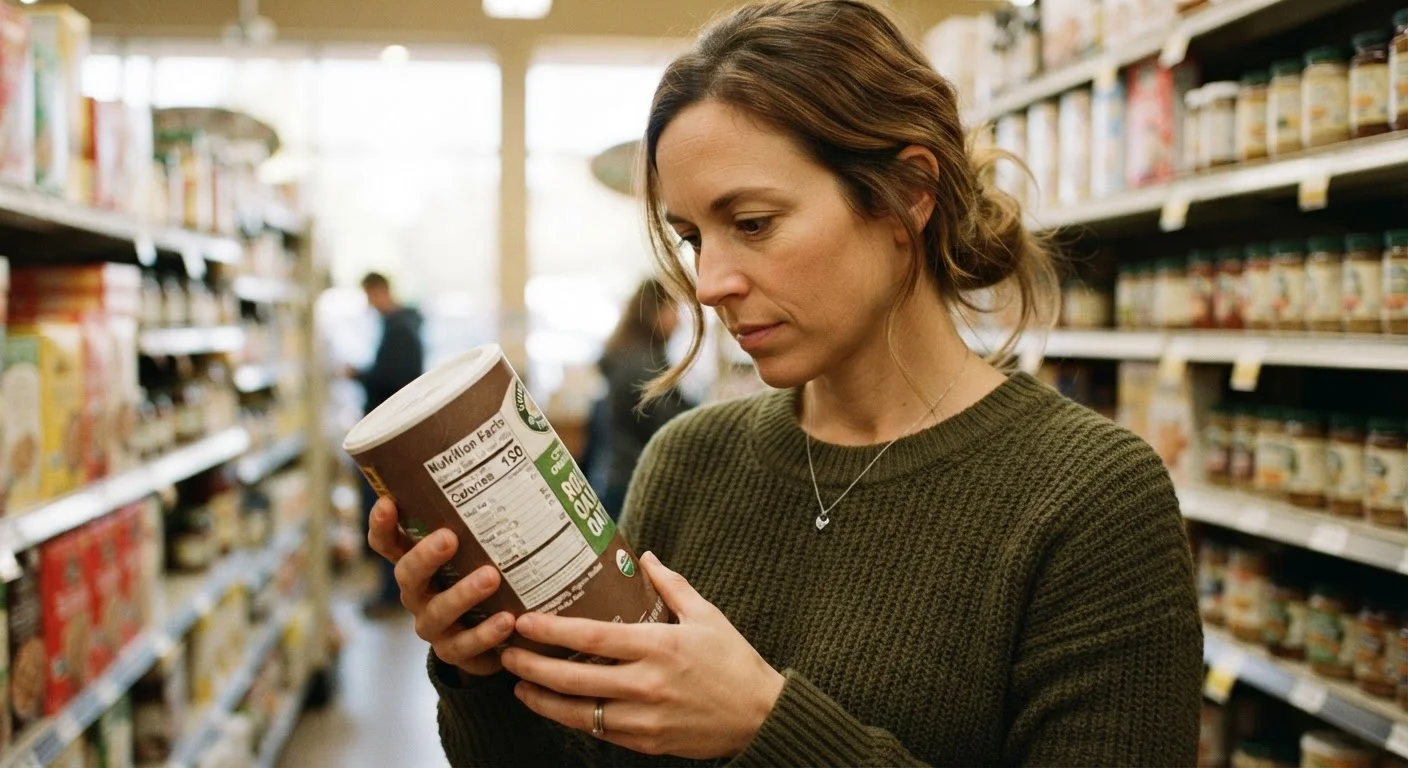
Why the Front of the Package Isn't the Whole Story
Walk down any grocery or household goods aisle and you'll see words like "natural," "clinically proven," "ultra-premium," and "doctor-recommended" plastered on the front of packages. These phrases are largely unregulated marketing language - they don't have to meet a legal definition or pass any verification standard before appearing on a shelf. The front panel is essentially advertising space.
The information that actually matters is on the back or side of the package: the ingredient list, the nutrition or content facts panel, and any third-party certification seals. Once you know where to look and what each section is designed to tell you, skimming a label takes under a minute. For a broader framework on digging past surface-level claims, see our guide to reading product reviews without falling for the hype.
What to Look for and In What Order
Following a consistent process prevents you from getting distracted by design and marketing noise. Here's how to work through a label efficiently:
Flip the package over immediately
Ignore the front panel until you've reviewed the back. Turn the product over and locate the ingredient list and the facts panel (nutrition facts for food, drug facts for OTC medicines, or content/ingredient disclosure for other products). This is where the regulatory requirements live.
Read the ingredient list from top to bottom
Ingredients are listed in descending order by weight. The first three to five ingredients typically account for the bulk of what you're buying. If the ingredient you're looking for - say, a specific active compound - appears near the bottom of a long list, its presence is minimal.
Check the serving size before reading any other number
Every figure on a nutrition or content facts panel is calculated per serving, not per package. Confirm the serving size first, then determine how many servings the package contains and how many you're likely to use. Adjust the label figures accordingly if your real-world use differs.
Evaluate any certification seals
For each seal you see, ask two questions: Who issued it? Are their standards publicly documented and independently audited? Search the certifying organization's name if it's unfamiliar. Established bodies publish their criteria online; self-issued seals typically don't have a verifiable standard behind them.
Return to the front panel with context
Once you understand what the product actually contains, the front-panel claims become easier to assess. A product that says "made with real fruit" but lists fruit concentrate as the eighth ingredient is technically accurate - but now you know what that claim is actually worth.
If you're navigating labels on a vehicle purchase rather than a consumer product, the same principle of going past the surface applies - our article on reading a Monroney sticker walks through how federally required window sticker data is structured.
Certifications: Which Ones Carry Weight
Third-party seals can be meaningful - or they can be self-issued badges that a manufacturer designed and awarded to itself. The difference matters enormously.
Credible certifications are issued by independent organizations with published standards, audit processes, and publicly available criteria. Examples of well-established certifying bodies include the USDA for organic claims on food, NSF International for supplements and water filtration, and UL (Underwriters Laboratories) for electrical safety. These programs require manufacturers to meet documented benchmarks and often include periodic re-certification.
Less rigorous seals are those created by industry trade groups or by the manufacturer itself. A logo that reads "Certified by the Quality Institute" tells you nothing meaningful. When a seal is unfamiliar, a quick search for the certifying organization - and whether it publishes its standards publicly - reveals whether it carries real weight.
When a Seal Is Unfamiliar, Search It
A 10-second search for the certifying organization's name will usually reveal whether it has published standards and independent audits - or whether it's a logo the brand created itself. Established certifiers are transparent about their criteria. If you can't find published standards, treat the seal as decorative rather than informative.
For products governed by contract terms rather than labels - warranties, service agreements, and the like - our article on what reading fine print actually requires of you provides a practical framework for finding key clauses.
Special Considerations for Food Labels
Food labels in the U.S. follow a format regulated by the FDA and USDA, which gives them more standardization than labels on cosmetics, supplements, or household products. Even so, several points trip up shoppers regularly.
Serving size is a defined reference amount, not a recommendation. If a bag of chips lists a serving as 12 chips but you'll realistically eat 30, multiply the label figures accordingly. Daily Value percentages (shown as %DV) are based on a 2,000-calorie reference diet - useful as a rough benchmark but not calibrated to any individual.
Ingredient lists run in descending order by weight. If sugar (or any of its many synonyms - dextrose, maltose, cane juice, agave) appears among the first three ingredients, it's a primary component of the product, regardless of what the front panel claims. Shoppers managing food allergies should read ingredient lists especially carefully; for guidance on communicating those restrictions beyond the label, our article on food allergy communication at restaurants covers the dining-out side of that equation.
This article is for general informational purposes only. Readers with specific health, dietary, or safety concerns should consult a qualified professional and verify regulatory guidance directly with the relevant agency.
The content on this site is provided for informational purposes only and should not be considered a substitute for professional advice. While we strive to provide accurate and up-to-date information, we make no guarantees regarding its completeness or accuracy. Always consult a qualified professional for advice specific to your circumstances before making any decisions.