

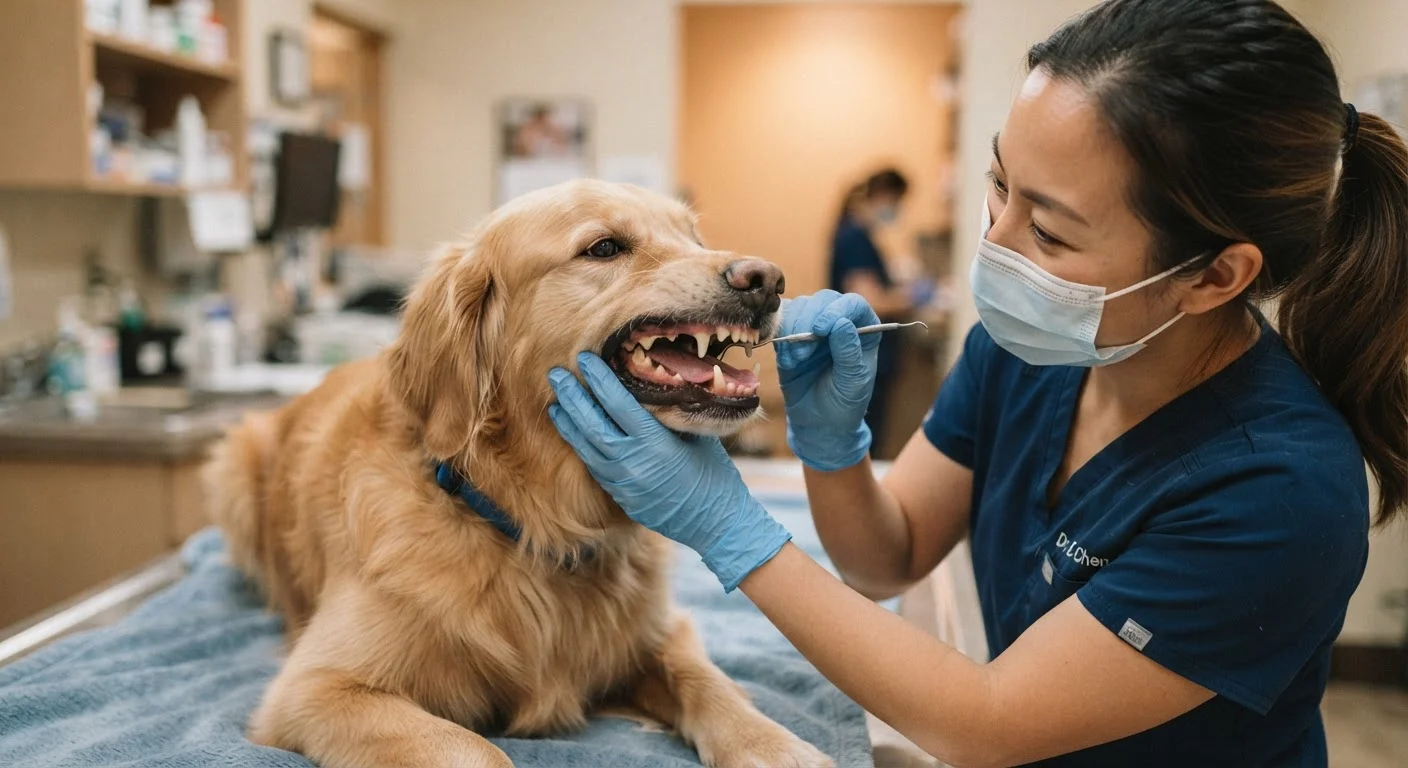
Why Dental Disease in Dogs Is So Common
Dental disease is the most frequently diagnosed health problem in dogs, affecting an estimated 80% of dogs by the time they reach age three, according to the American Veterinary Medical Association. Yet it remains one of the most under-addressed conditions in routine pet care.
The reason it progresses so quickly comes down to plaque. Bacteria in a dog's mouth form a sticky film on tooth surfaces within hours of eating. When plaque mineralizes - typically within a few days - it hardens into tartar (also called calculus), which cannot be removed by brushing alone. Tartar buildup at and below the gumline triggers inflammation, gum recession, and, eventually, bone loss around the roots.
Smaller and brachycephalic (flat-faced) breeds such as Bulldogs, Pugs, and Chihuahuas face heightened risk because their teeth are often crowded into a shortened jaw. But no breed is exempt, and the process begins early in life.
Dental health is a standard focus during your dog's annual wellness exam, which is why annual vet visits matter even for dogs that appear healthy.
The Systemic Risks Beyond Bad Breath
Bad breath is often the first thing owners notice, but it's the least serious consequence of chronic dental disease. The bigger concern is what happens when oral bacteria enter the bloodstream through inflamed gum tissue.
Veterinary research has established associations between severe periodontal disease and damage to the heart valves (endocarditis), kidneys, and liver. The prevailing explanation is that chronic bacteremia - bacteria circulating in the blood - places ongoing stress on these organs. While the causal relationship is still an active area of study, the evidence is strong enough that veterinary professional organizations treat dental care as a systemic health priority, not merely a cosmetic one.
When introducing tooth brushing to a reluctant dog, use a tiny amount of meat-flavored enzymatic toothpaste on your fingertip first - let the dog lick it for several days before ever introducing a brush. The goal is to build a positive association before any scrubbing begins.
Dogs that associate brushing with a pleasant taste are significantly more compliant, making consistent daily brushing a realistic habit rather than a daily struggle.
If your dog's breath suddenly changes - becoming noticeably fouler or taking on a sweet or chemical odor - contact your vet promptly rather than attributing it to diet. Dramatic breath changes can indicate infection, metabolic disease, or oral masses, not just dental buildup.
Gradual halitosis is typically associated with periodontal disease, but abrupt changes in breath character can signal systemic problems that require prompt evaluation.
Diet also plays a role. Nutritional research on raw versus kibble diets includes some discussion of how food texture and composition may influence plaque accumulation, though no diet alone substitutes for active dental hygiene.
Warning Signs Owners Often Miss
Dogs rarely signal tooth pain with obvious crying or pawing at their mouth. Instead, discomfort from dental disease typically surfaces through subtle behavioral shifts - the same patterns described in our guide to signs your dog is in pain that are easy to miss.
Watch for these indicators:
- Dropping food or chewing on one side - suggests pain when biting down
- Reluctance to chew toys that were previously enjoyed
- Increased drooling or bloody saliva
- Visible discoloration or yellowing of teeth
- Red, swollen, or receding gums
- Facial swelling below the eye - may indicate a tooth root abscess
Any of these signs warrants a veterinary evaluation rather than a wait-and-see approach. Dental pain tends to worsen gradually and is rarely self-resolving.
Home Care: What Actually Works
Not all dental products marketed for dogs deliver measurable benefit. The Veterinary Oral Health Council (VOHC) maintains a list of products that have met standards for reducing plaque or tartar through independent trials - this is a useful reference when evaluating options.
Tooth brushing is the gold standard. Daily brushing with a dog-safe enzymatic toothpaste (never human toothpaste, which contains fluoride and xylitol - both toxic to dogs) disrupts plaque before it mineralizes. Soft-bristled brushes or finger brushes both work; the key is consistency and covering the outer tooth surfaces where tartar typically accumulates first.
Dental chews and water additives can provide supplemental benefit but should not replace brushing. Chews that carry VOHC approval have evidence behind them; others may offer limited dental value despite marketing claims.
Dental diets - large-kibble formulations specifically designed to mechanically scrub teeth - are another validated option for dogs that resist brushing, though they're not universally suitable.
Professional Cleanings: What to Expect
Home care slows plaque accumulation but cannot remove established tartar, particularly below the gumline where periodontal disease does its most serious damage. Professional veterinary dental cleanings accomplish what no brush or chew can.
These cleanings are performed under general anesthesia - a point that concerns some owners but is non-negotiable for safe, thorough care. Anesthesia allows the vet to scale below the gumline, probe each tooth for pocketing (a measure of bone loss), and take dental X-rays to assess root and jaw bone health that isn't visible above the surface. Anesthesia-free dental cleaning, sometimes offered at grooming facilities, addresses only visible surfaces and provides a false sense of care.
Frequency depends on the individual dog. Some dogs need annual cleanings; others may go longer or need more frequent care depending on breed, age, and home hygiene practices. Your vet will advise based on examination findings.
As dogs age, the need for diligent oral care typically intensifies. Our overview of senior dog care after age seven covers how dental health fits into the broader picture of caring for an older dog.
Building a Long-Term Dental Routine
Starting early makes a significant difference. Puppies acclimated to mouth handling and brushing from a young age are far more cooperative as adults. For older dogs, gradual desensitization - starting with finger touching the gums, then introducing a brush without paste, then adding toothpaste - is more effective than attempting full brushing from day one.
A realistic routine for most owners looks like this:
- Daily: Brush teeth using enzymatic dog toothpaste
- Several times per week: Offer a VOHC-approved dental chew
- As needed: Add a water additive if recommended by your vet
- Annually (at minimum): Professional oral examination and cleaning as advised
Dental care should be a standing conversation at every vet visit, not just an afterthought. If your vet hasn't discussed your dog's oral health recently, bring it up proactively - the mouth is one of the clearest windows into overall health.
This article is for informational purposes only and does not constitute veterinary medical advice. Always consult a licensed veterinarian for guidance specific to your dog's health needs.
The content on this site is provided for informational purposes only and should not be considered a substitute for professional advice. While we strive to provide accurate and up-to-date information, we make no guarantees regarding its completeness or accuracy. Always consult a qualified professional for advice specific to your circumstances before making any decisions.