

Our Verdict
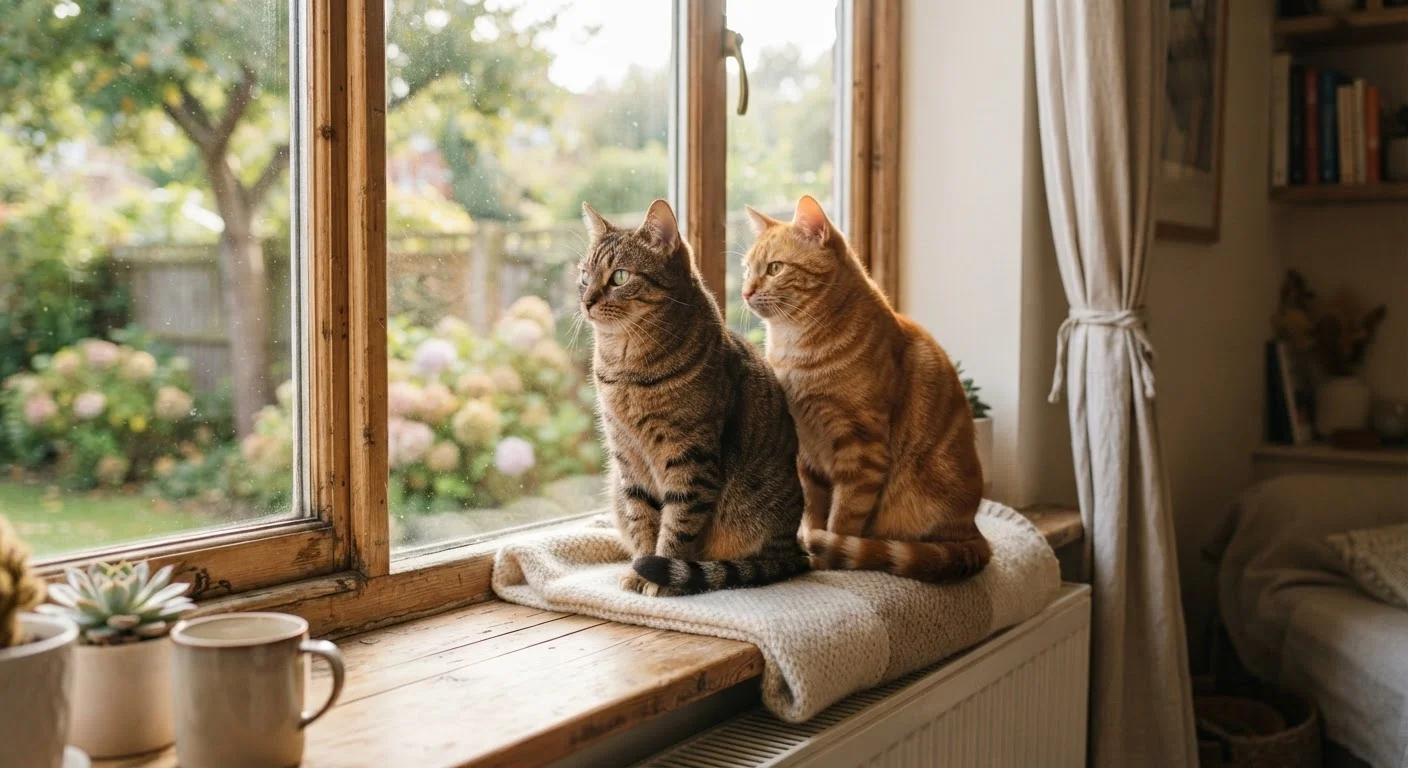
Neither a single-cat nor a multi-cat household is universally superior - the right choice depends on your current cat's temperament, your living space, and your capacity to manage a gradual introduction. A single cat with strong enrichment can live a full, contented life. A well-matched pair that bonds successfully may show genuine social benefits. The evidence points most strongly to careful assessment over assumption.
| Best for | Recommended |
|---|---|
| Owners with a shy, older, or previously solitary cat | Single-cat household |
| Owners with a young, socialized cat and ample space | Multi-cat household |
| Anyone working long hours with limited enrichment in place | Single cat plus structured enrichment |
| Households with kittens adopted at the same time | Multi-cat household |
What Feline Social Science Actually Tells Us
Cats occupy an unusual position among domestic animals: they are descended from a largely solitary ancestor (Felis silvestris lybica) yet have shown clear capacity for social living under the right conditions. Animal behaviorists describe domestic cats as facultatively social - meaning social living is possible but not obligatory. This is fundamentally different from dogs, which are genuinely pack-oriented.
Research suggests that whether a cat views another feline as a companion or a competitor hinges heavily on early experience. Cats socialized with other cats during the critical developmental window (roughly two to seven weeks of age) are meaningfully more likely to accept feline housemates later in life. A cat raised in isolation during that window may never fully accept a resident companion, regardless of how carefully an introduction is handled.
This is why common myths about cat independence can mislead owners - assuming all cats are either sociable or solitary misses the genuine individual variation that shapes every decision about adding a second pet.
The Real Costs and Benefits of Each Setup
Single-cat households are not a compromise. A solo cat with a committed owner, consistent play, and good environmental enrichment can thrive without a feline companion. Studies on cat welfare generally find that the quality of human-cat interaction and the richness of the environment matter at least as much as feline social contact.
That said, some cats - especially highly social individuals or those left alone for long hours - show behavioral signs of understimulation: excessive vocalization, destructive play, or overly intense attachment to their owner. For these cats, a compatible companion may genuinely reduce stress. See our enrichment strategies for indoor cats for ways to address boredom even in a single-cat home.
Multi-cat households introduce a different set of trade-offs. The benefits - mutual grooming, play, and social buffering during the owner's absence - are real but not guaranteed. They depend entirely on compatibility. When cats do not get along, the costs are significant: chronic stress, resource guarding, inappropriate elimination, and in some cases, stress-induced urinary disease.
| Single-Cat Household | Multi-Cat Household | |
|---|---|---|
| Social stimulation | Relies on owner and enrichment | Potential feline companionship |
| Stress risk | Lower baseline stress | Higher if cats are incompatible |
| Resource requirements | Standard: one of each | More litter boxes, feeding stations, space |
| Best candidate | Older, shy, or previously solitary cats | Young, socialized, high-energy cats |
| Owner time investment | High-quality one-on-one interaction | Extended introduction period required |
| Health considerations | Enrichment critical to prevent boredom | Stress-related illness possible if conflict persists |
How to Evaluate Your Current Cat's Likely Response
Before making any decision, observe your resident cat honestly across several dimensions:
- History with other cats: Has your cat lived with other cats before? Positive prior experience is a meaningful predictor of future tolerance.
- Age and tenure: Cats who have been the sole pet for many years - especially those over seven - are statistically less likely to accept a newcomer without significant stress.
- Reaction to outside cats: A cat that watches outdoor cats with calm curiosity signals different social wiring than one that becomes intensely agitated at the window.
- Activity level: High-energy, playful cats are better candidates for a companion. Anxious or fearful cats often do better solo.
Consulting a veterinarian or a certified cat behavior consultant before adopting a second cat is worthwhile, particularly if your current cat has a history of anxiety or stress-related health issues.
Making a Multi-Cat Home Work: The Non-Negotiables
If you decide to introduce a second cat, the introduction process is not a formality - it is the single biggest factor in whether the relationship succeeds. Rushing this step is the most common cause of lasting inter-cat conflict.
The core principles, supported by veterinary behavioral guidance:
- Separate spaces first: The new cat should have its own room with food, water, litter, and bedding for a minimum of one to two weeks before any visual contact.
- Scent swapping: Exchange bedding between cats before they meet. Scent familiarity reduces the novelty stress of first encounters.
- Controlled visual introductions: Use a cracked door or baby gate before allowing full contact. Positive associations (treats, play) during these sessions matter.
- One litter box per cat, plus one extra: The standard veterinary recommendation is N+1 boxes, placed in separate locations - not side by side.
- Vertical territory: Cat trees, shelves, and elevated perches allow cats to spatially separate without conflict. Horizontal space alone is rarely sufficient.
Adopt a Matched Pair When Possible
If you want two cats and don't yet have one, adopting a bonded pair from a shelter is often the most successful route. These cats have already established a social dynamic, which removes the uncertain introduction phase entirely. Shelter staff can help identify genuinely bonded pairs versus cats that merely tolerated each other.
Even well-matched cats may take three to six months to fully settle. Some degree of early hissing or avoidance is normal; ongoing chasing, blocking, or aggression after that window warrants professional behavioral guidance.
The content on this site is provided for informational purposes only and should not be considered a substitute for professional advice. While we strive to provide accurate and up-to-date information, we make no guarantees regarding its completeness or accuracy. Always consult a qualified professional for advice specific to your circumstances before making any decisions.