

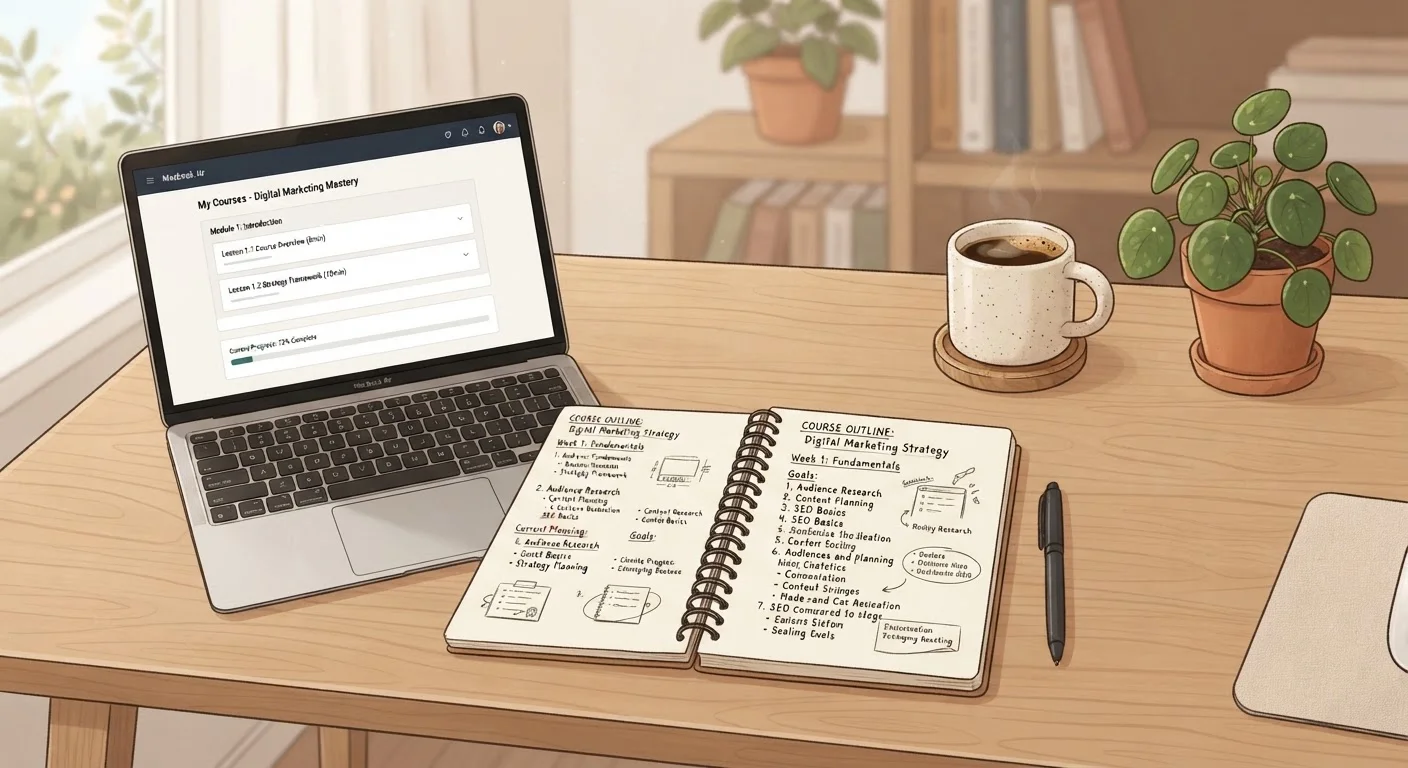
Why Self-Directed Online Study Needs a Written Plan
Online learning offers remarkable flexibility - but flexibility without structure often leads to a graveyard of half-finished courses. Without a professor setting deadlines or a cohort moving through material together, motivation and direction have to come from within. A written personal learning plan makes that self-direction concrete rather than aspirational.
Research on self-regulated learning consistently points to three factors that predict whether adults complete self-directed study: clear goals, deliberate scheduling, and regular self-assessment. A personal learning plan addresses all three in one document. It also helps you spend less time deciding what to do next and more time actually learning.
If you're returning to structured study after a long gap, building a plan first gives you a scaffold before you encounter the inevitable moments of doubt or fatigue. For broader guidance on that transition, online learning for adult learners returning to education walks through what to expect and how to pace yourself.
Vague Goals Quietly Kill Plans
"I want to learn more about data" is not an actionable goal. Without a specific outcome - such as completing a particular skill track or being able to perform a defined task - it's nearly impossible to choose the right resources, measure progress, or know when you're done. Before selecting a single course, write your goal in one concrete sentence.
How to Build Your Plan: The Core Steps
The steps below take you from a vague interest to a working, calendar-backed learning plan. You don't need any special tools - a notebook and a calendar are enough to start.
What you will need
Define a specific, outcome-oriented learning goal
Write one sentence that names what you want to be able to do or understand once your study period ends. Tie it to a concrete outcome: completing a project, passing an assessment, or applying a skill in a real context. This single sentence will guide every subsequent decision in your plan.
Audit your available time honestly
Look at a typical week and count the hours realistically available for focused study - not aspirational hours, but actual windows. Account for commute time, family obligations, and rest. Most adults find between two and six hours per week sustainable. Knowing your real capacity prevents overcommitment and the discouragement that follows.
Choose learning resources that match your format preference
Not all online learning looks the same. Some learners thrive with self-paced video content; others retain more from live sessions or discussion-based formats. Match your resources to both your goal and your lifestyle. For a deeper breakdown of how these formats differ in practice, see how online learning formats actually differ.
Build a weekly study schedule with fixed blocks
Assign specific days and times for study rather than leaving it open-ended. A fixed block - even 45 minutes on Tuesday and Thursday evenings - creates a habit anchor. Add these sessions to your calendar the same way you would any appointment. Consistency in timing reduces the daily decision cost of when to study.
Set a short-term milestone for the next four to six weeks
Break your larger goal into the single next milestone you'll reach in the coming month or so. A milestone might be finishing a specific course module, completing a practice project, or being able to explain a key concept clearly. Short horizons keep the plan motivating and give you an early win to build on.
Schedule a weekly review of your plan
Once per week, spend 15-20 minutes reviewing what you studied, what you retained, and whether your pace is realistic. Note what's working and adjust what isn't. This review practice is what separates a plan that stays useful from one that gets abandoned. For evidence-backed habits that support this kind of consistency, see habits that separate successful online learners from those who quit.
Treat Your Review Session Like a Meeting
Block 15-20 minutes on your calendar at the same time each week specifically for reviewing your learning plan. Treating it as a non-negotiable appointment - rather than something you do when you remember - makes it far more likely to actually happen. Even a brief check-in keeps your plan a living document rather than a forgotten file.
Once you've completed these steps, your plan should fit on a single page: your goal, your weekly time commitment, your chosen resources, your first milestone, and your review day. Simplicity makes it more likely you'll actually use it.
To take your learning further by capturing and retaining what you study, see building a personal knowledge system that actually sticks.
Keeping the Plan Working Over Time
A plan built once and never revisited quickly becomes irrelevant. Life shifts, interests evolve, and some resources turn out to be better or worse than expected. The weekly review built into Step 6 is your primary maintenance tool, but a broader monthly check-in is also worth scheduling.
During your monthly check-in, ask yourself: Has my goal changed? Am I on pace for my milestone? Are the resources I chose still the right ones? Is my schedule still realistic? Adjusting the plan is not failure - it's evidence that you're treating learning as a dynamic process rather than a fixed obligation.
Adults pursue online learning for a wide range of reasons beyond career advancement. If your motivations shift toward personal enrichment, civic understanding, or creative exploration, your plan should reflect that honestly. See ways adults are using online learning beyond career goals for perspective on the full range of valid reasons to keep learning.
The content on this site is provided for informational purposes only and should not be considered a substitute for professional advice. While we strive to provide accurate and up-to-date information, we make no guarantees regarding its completeness or accuracy. Always consult a qualified professional for advice specific to your circumstances before making any decisions.