

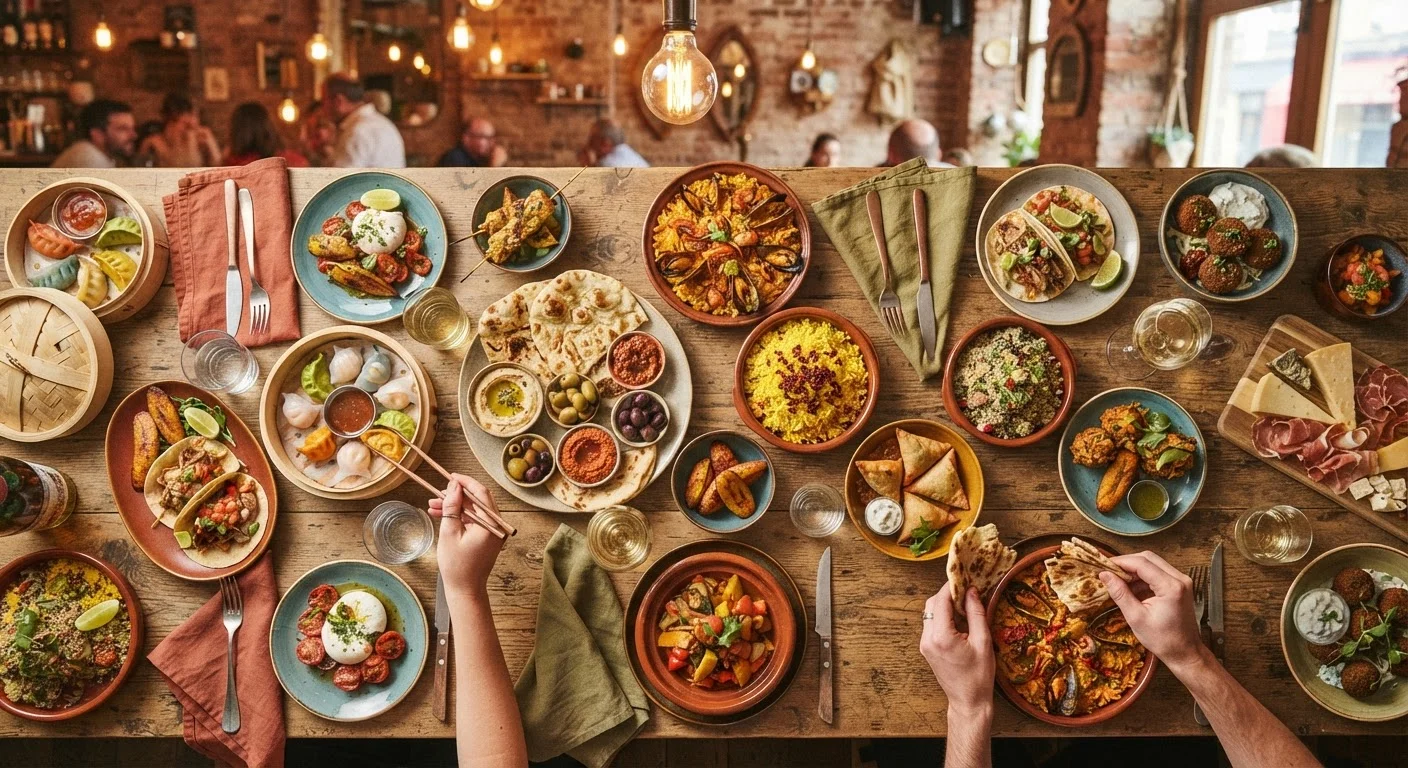
Why Cautious Eaters Hesitate - and Why It's Worth Pushing Past That
Many Americans grew up eating a narrow range of foods, and stepping into a restaurant serving an unfamiliar cuisine can feel genuinely intimidating. Menus written partly in another language, ingredients you've never heard of, and unfamiliar eating customs can all trigger the instinct to retreat to something safe.
That hesitation is understandable, but it's also worth examining. Ethnic cuisines - a broad term covering everything from Ethiopian injera and Korean bibimbap to Peruvian ceviche and Lebanese mezze - often reflect centuries of culinary tradition. Trying them isn't just an adventure in taste; it connects you to the richness of global food culture in a way few other experiences can.
The practical good news: every cuisine has entry-level dishes. Knowing how to find them makes the difference between a frustrating night and one you'll want to repeat.
Before You Go: Do a Little Groundwork
A few minutes of preparation dramatically lowers anxiety. Look up a short overview of the cuisine online - not to memorize dishes, but to get a rough sense of key ingredients and common cooking methods. You might learn, for example, that Thai food frequently uses coconut milk, fresh herbs, and fish sauce, or that Ethiopian cuisine centers on a tangy fermented flatbread called injera used as both plate and utensil.
If you have dietary restrictions or allergies, research common allergens in that cuisine ahead of your visit. Many traditional cuisines use ingredients like peanuts, shellfish, gluten-containing sauces, or dairy in ways that aren't obvious from a menu description. Our guide on food allergy communication at restaurants walks through exactly how to raise these concerns clearly once you arrive.
What you will need
At the Restaurant: How to Order Confidently
Once you're seated, take a breath and use the menu strategically. Look for sections labeled "appetizers," "small plates," or "chef's specials" - these often contain the restaurant's most representative and crowd-tested dishes. Our article on reading a restaurant menu like a pro explains how menus are structured to guide your choices.
When in doubt, speak up. A simple question like, "I'm new to this cuisine - what would you suggest for someone trying it for the first time?" almost always earns a helpful, enthusiastic response. Servers and owners at ethnic restaurants tend to take genuine pride in their food and appreciate curious diners.
Anchor to something familiar
Look for dishes built around proteins, vegetables, or cooking styles you already enjoy. Grilled meats, rice dishes, noodle soups, and flatbreads appear across dozens of world cuisines and tend to be accessible entry points. If you enjoy Italian pasta, a Vietnamese pho or Japanese ramen may feel like a natural bridge.
Order one anchor dish and one small adventurous one
Rather than ordering an entirely unfamiliar meal, pair a safer choice with one dish that pushes your comfort zone slightly. This way, if the unfamiliar dish surprises you, you still have something you enjoy. Small plates, dumplings, or appetizers are low-risk ways to sample bold flavors without committing to a full entrée.
Disclose dietary needs before ordering
Tell your server about any allergies or restrictions before you finalize your order, not after. Mention specific ingredients - not just broad categories - since restaurant staff may define terms like "vegetarian" differently depending on their culinary tradition. For example, some cuisines use fish-based broths as a base even in ostensibly meatless dishes.
Eat slowly and pay attention to flavors
Unfamiliar flavors sometimes need a moment to register positively. Fermented, sour, umami-rich, or intensely spiced foods can seem off-putting on the first bite and deeply satisfying by the third. Eating slowly also helps you gauge heat levels - many cuisines have dishes that build in spice intensity gradually.
Note what you liked and ask follow-up questions
Before you leave, identify which flavors or ingredients stood out positively. Ask your server what those elements are called and whether they appear in other dishes on the menu. This builds a personal flavor vocabulary that makes future visits - to this restaurant or others in the same cuisine - far easier to navigate.
Building Confidence Over Time
One visit rarely tells the whole story of a cuisine. If your first experience is only so-so, consider going back before writing it off - ordering differently often changes everything. If it goes well, try branching out on your next visit: order one familiar dish and one completely unfamiliar one.
Dining with a friend or partner makes this process easier and more enjoyable. Sharing several small dishes lets both of you try more variety with less commitment per plate. If you're comfortable going solo, dining alone actually offers its own advantages - you can focus entirely on the food and conversation with staff without distraction.
For readers also watching their spending, ethnic restaurants frequently represent strong value - lunch specials, prix-fixe options, and generous portions are common. See our guide on eating out on a budget for strategies that apply equally well here.
Cuisine exploration is cumulative. Each restaurant visit adds to your reference library of flavors, textures, and techniques - and makes the next unfamiliar menu a little less daunting.
The content on this site is provided for informational purposes only and should not be considered a substitute for professional advice. While we strive to provide accurate and up-to-date information, we make no guarantees regarding its completeness or accuracy. Always consult a qualified professional for advice specific to your circumstances before making any decisions.