

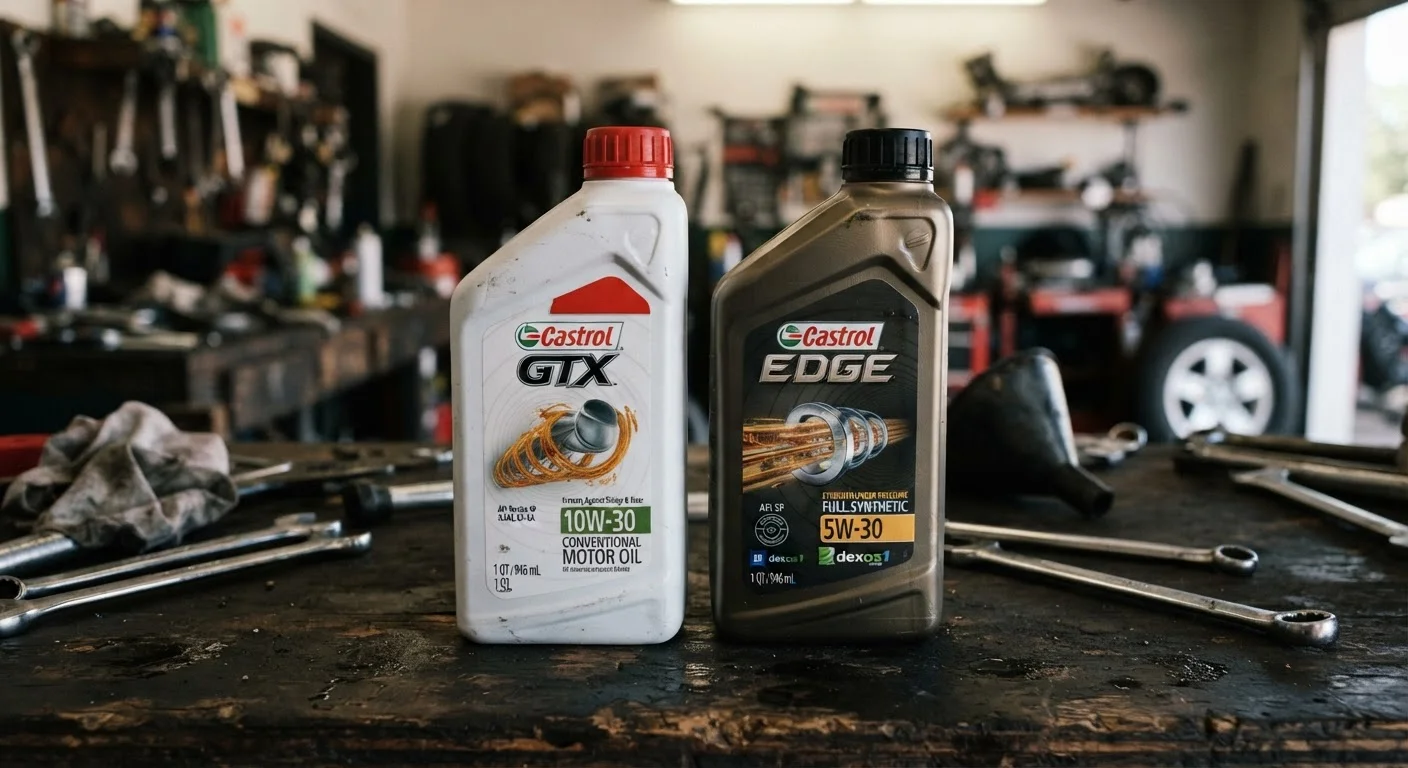
Option A
Synthetic Motor Oil
The engineered, high-performance formulation.
Best for: Drivers with newer vehicles, turbocharged engines, extreme climates, or long intervals between oil changes.
Option B
Conventional Motor Oil
The time-tested, refined petroleum standard.
Best for: Older vehicles with simple engine designs, low-mileage drivers, and those following shorter oil change schedules.
What Makes Them Different at the Molecular Level
The core difference between synthetic and conventional motor oil isn't brand or price - it's chemistry. Conventional motor oil is derived from crude petroleum that's been refined and processed to remove most impurities. The result is a lubricant with molecules of varying sizes and shapes, which works well under normal operating conditions but starts to break down more quickly under sustained heat or stress.
Synthetic motor oil, by contrast, is built from scratch in a lab. Chemists engineer uniform, purpose-designed molecules that are optimized for lubrication. Because every molecule is essentially identical, synthetic oil flows more consistently, resists oxidation longer, and maintains its protective properties across a wider range of temperatures. This isn't a marketing claim - it reflects a genuine difference in how the two fluids are constructed.
There's also a middle-ground product called synthetic blend oil, which mixes conventional base stock with synthetic components. It offers some performance advantages over full conventional at a lower price than full synthetic, and it's worth understanding when your vehicle's manufacturer recommends it.
To understand how these oil types interact with your engine's specific needs, it helps to know what the numbers on the label mean. Our guide to engine oil grades and viscosity walks through what ratings like 5W-30 actually tell you - and why matching the right grade matters as much as oil type.
Head-to-Head: How They Perform Where It Counts
Understanding how each oil performs in real-world conditions helps clarify which is the right fit for your vehicle and driving habits.
| Criterion | Synthetic Motor Oil | Conventional Motor Oil |
|---|---|---|
| Base composition | Engineered chemical compounds | Refined crude petroleum |
| Cold-start performance | Flows readily at low temps | Thickens more in cold weather |
| Heat resistance | Resists breakdown under high heat | Degrades faster under sustained heat |
| Typical change interval | Often 7,500-10,000+ miles | Typically 3,000-5,000 miles |
| Cost per quart | Higher upfront cost | Lower upfront cost |
| Suitability for turbocharged engines | Generally recommended | Often insufficient |
| Suitability for older engines | Usually compatible, check specs | Commonly specified by design |
One area where synthetic clearly leads is cold-weather performance. On a freezing morning, conventional oil temporarily thickens, which means your engine runs with less lubrication during those critical first seconds after startup. Synthetic oil flows much more readily at low temperatures, reducing wear during cold starts. On the opposite end, synthetic also holds up better in sustained high-heat situations - especially relevant for turbocharged engines, which can expose oil to temperatures that cause conventional oil to break down more rapidly.
That said, conventional oil isn't a poor product - it's simply optimized for a different set of conditions. For a well-maintained older vehicle driven primarily in moderate climates, conventional oil may perform adequately within its recommended change interval.
Cost, Change Intervals, and the Real Math
Synthetic motor oil typically costs noticeably more per quart than conventional. However, that upfront difference should be weighed against change interval differences. Many vehicle manufacturers that specify full synthetic allow longer intervals - sometimes 7,500 to 10,000 miles or more - compared to the shorter intervals common with conventional oil. Over time, fewer changes can offset some of the per-quart cost difference.
~2-4x
Typical cost multiplier per quart vs. conventional
Synthetic oil generally costs two to four times more per quart than conventional oil at retail, though prices vary by brand and viscosity grade.
7,500-10,000 mi
Common synthetic oil change interval range
Many automakers specify extended oil change intervals when full synthetic is used, though exact intervals depend on the vehicle model and driving conditions.
It's worth being cautious about the old "every 3,000 miles" rule, which was widely valid decades ago but doesn't apply to most modern engines using synthetic oil. Our article on oil change interval myths covers this in detail - because following outdated advice can cost you unnecessary money without adding any real protection.
The most important factor is still your vehicle's owner's manual. It specifies which oil type and viscosity grade the manufacturer requires - and deviating from that can affect warranty coverage and engine performance. If your manual calls for conventional, synthetic is generally a safe upgrade. If it specifies synthetic, conventional is not an adequate substitute.
This article is for general informational purposes only. Always consult your vehicle's owner's manual and a qualified mechanic for maintenance guidance specific to your vehicle.
The content on this site is provided for informational purposes only and should not be considered a substitute for professional advice. While we strive to provide accurate and up-to-date information, we make no guarantees regarding its completeness or accuracy. Always consult a qualified professional for advice specific to your circumstances before making any decisions.