

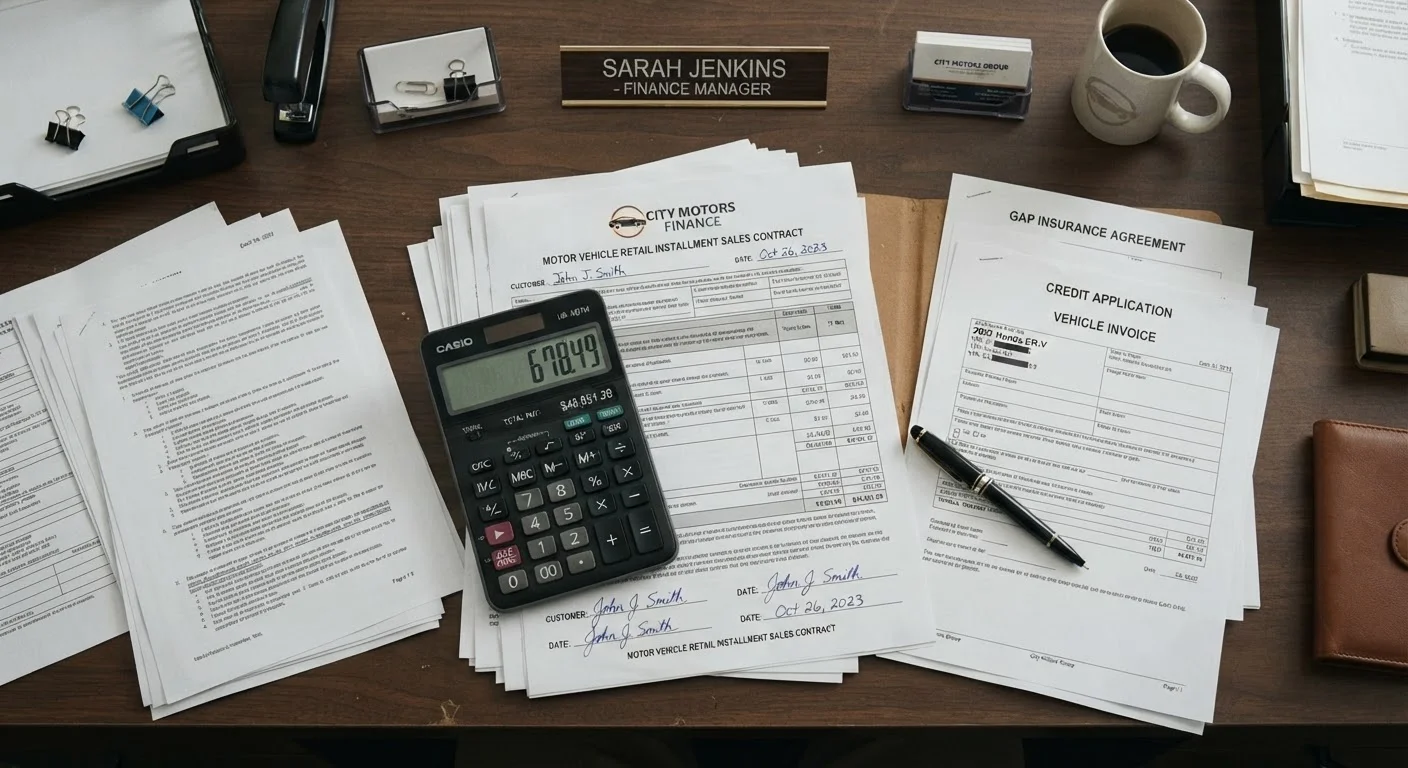
How the Monthly Payment Frame Works Against You
Walk into most dealerships and one of the first questions you'll hear is: "What are you looking to spend per month?" It sounds helpful. In practice, it shifts the entire negotiation onto terrain that favors the dealer.
Once you name a monthly figure, a skilled finance manager can work backward from it - adjusting the loan term, the interest rate, or the trade-in credit to hit that number while preserving their margin on the vehicle itself. The monthly payment becomes a moving target they control, not a ceiling that protects you.
The number that actually determines whether you got a fair deal is the total purchase price - specifically, the out-the-door price, which captures every fee and charge you'll actually pay. Monthly payments are a byproduct of that number combined with loan term and interest rate. Negotiate the source, not the output.
Never Lead With a Monthly Budget
Telling a dealer 'I want to stay under $400 a month' hands them a powerful lever. They can extend your loan term to 72 or 84 months, keeping your monthly figure low while dramatically increasing what you pay in total interest. Always negotiate the vehicle's purchase price first - financing is a separate conversation.
The Most Costly Mistakes Buyers Make
The monthly payment trap isn't the only misstep buyers make when sitting across the table from a dealer. Several related errors tend to compound each other, often invisible until the paperwork is already signed. Here's what to watch for and how to sidestep each one.
Anchoring the negotiation to a monthly payment target rather than the vehicle's purchase price.
Why it happens: Monthly payments feel manageable and relatable compared to a lump-sum price. Buyers instinctively think in terms of budget impact on their paycheck rather than total outlay.
Allowing the trade-in, financing, and new vehicle price to be bundled into a single negotiation.
Why it happens: Dealers benefit from combining these variables because adjusting one can offset another, making the overall deal harder to evaluate clearly.
Accepting an extended loan term to hit a lower monthly payment without calculating total interest paid.
Why it happens: A 72- or 84-month loan looks attractive when it makes a payment feel affordable. Most buyers don't mentally multiply the monthly figure by the number of payments to grasp the full cost.
Neglecting to secure independent financing before visiting the dealership.
Why it happens: Many buyers assume dealer financing is convenient and competitive, and skip the step of checking rates with a bank or credit union beforehand.
Treating add-ons and dealer fees as non-negotiable line items within the monthly payment.
Why it happens: When everything is folded into one monthly number, it's easy to lose sight of extras like extended warranties, paint protection packages, or documentation fees that may have been added without full discussion.
For a broader look at how pricing tactics can obscure a deal's real value, the piece on why "sale price" doesn't always mean you're saving money applies the same critical lens to retail environments beyond car lots.
Redirecting the Conversation: What to Do Instead
The good news is that protecting yourself doesn't require combativeness. It requires a clear sequence and a willingness to pause when the conversation drifts.
Start by researching the vehicle's market value before you visit. Arrive knowing what comparable vehicles are selling for - not the sticker price, but actual transaction data available through publicly accessible automotive pricing tools. This gives you a realistic number to anchor to.
At the dealership, be direct: "I'd like to agree on the purchase price before we discuss financing." Most dealers will comply. If the conversation keeps circling back to monthly payments, redirect it each time. Refer to smart habits for negotiating a vehicle purchase for grounded tactics that don't require aggressive posturing.
Once you've locked in a price, bring your pre-approved loan offer to the table. Let the dealer try to beat it. If they can, great - you've gained something. If not, you already have financing in hand. Either way, you're comparing total loan costs, not reacting to monthly figures shaped to look appealing.
It's also worth stepping back from the dealership entirely and considering everything that goes into the total cost of owning a car - because what you pay on the lot is only the beginning of the financial picture. And if you want to stress-test your broader assumptions about car buying, common car-buying myths that cost people money is worth a read before you go.
Loan Term Extension Is a Real Risk
Stretching a loan from 48 to 72 months can reduce monthly payments by $100 or more while adding thousands in interest charges over the life of the loan. A lower monthly number does not mean a better deal - it often means the opposite. Run the full loan math yourself before agreeing to any financing terms.
The content on this site is provided for informational purposes only and should not be considered a substitute for professional advice. While we strive to provide accurate and up-to-date information, we make no guarantees regarding its completeness or accuracy. Always consult a qualified professional for advice specific to your circumstances before making any decisions.