

The Neighborhoods That Define the Real City
Bourbon Street delivers what it promises - noise, neon, and a particular kind of organized chaos - but it represents a narrow slice of what New Orleans actually is. Step a few blocks in any direction and the city's true architecture, rhythm, and food culture begin to reveal themselves.
The Tremé, just northwest of the French Quarter, is widely regarded as the oldest African American neighborhood in the United States. It's the cradle of jazz culture, home to brass band traditions, and the site of Congo Square - a place of immense historical significance where enslaved people maintained African musical and cultural practices. Walking its streets on a Sunday afternoon, you might hear a second-line parade rounding a corner without warning.
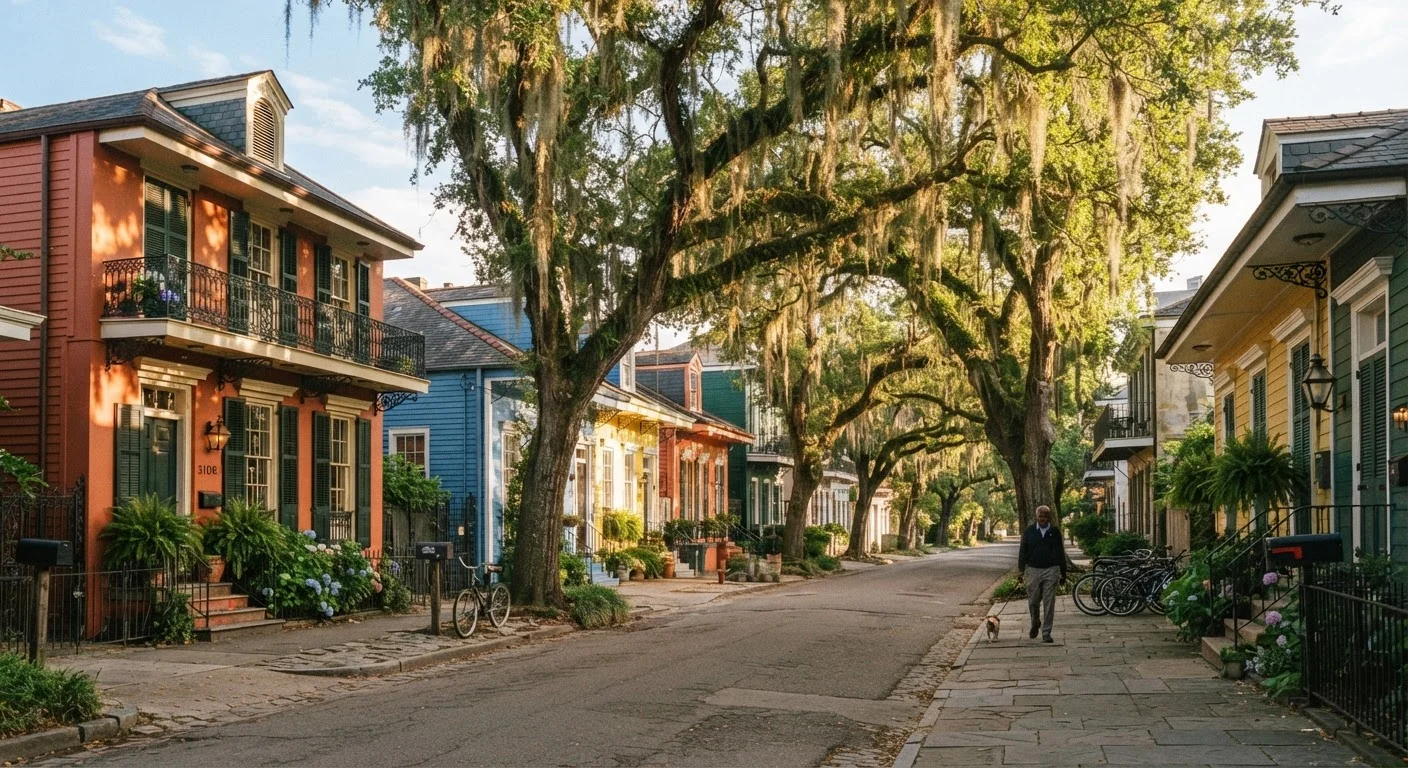
The Garden District, accessible by the St. Charles streetcar, is a showcase of Greek Revival and Italianate mansions shaded by ancient live oaks. It's a functioning, lived-in neighborhood - not a museum - and its quieter blocks feel worlds apart from the Quarter's foot traffic.
Bywater, further downriver, has an arts-district energy and a dense collection of shotgun houses painted in bright, idiosyncratic colors. It's walkable, creative, and increasingly home to local restaurants and music venues that draw more neighborhood regulars than tourists.
Where the Food Culture Actually Lives
New Orleans food is genuinely one of the most distinctive regional cuisines in the country - a living blend of West African, French, Spanish, Native American, and Caribbean traditions. But the most memorable meals rarely happen on Decatur Street.
The Monday red beans and rice tradition is a good place to start understanding local food culture. Historically tied to washday (Monday was laundry day, so a slow-simmering pot of beans required little attention), the dish is still served in neighborhood joints across the city every week. It's humble, deeply flavored, and tells you more about New Orleans than any tourist brochure can.
Mid-City is worth a detour for its cluster of locally rooted restaurants. The area around Bayou St. John draws a mix of families, cyclists, and anyone who wants to eat well without fighting tourist-area crowds. Look for plate lunch spots - usually a meat, two sides, and a roll - which remain a cornerstone of everyday New Orleans eating.
73+
Distinct official neighborhoods in New Orleans
The city's official neighborhood map recognizes more than 73 areas, each with its own geographic and cultural identity.
1,300+
Live music venues citywide (pre-pandemic estimates)
Industry and city estimates have historically placed New Orleans among the highest concentrations of live music venues per capita of any U.S. city.
~1,500 acres
Size of City Park in New Orleans
City Park covers approximately 1,500 acres, making it one of the largest urban parks in the United States.
The po'boy also deserves honest context: the best versions are often found at neighborhood delis and grocery counters, stuffed with roast beef debris or fried shrimp, dressed with lettuce, tomato, and mayonnaise on crisp French bread baked locally that morning.
Music Scenes That Go Deeper Than Karaoke Bars
Live music in New Orleans is not a performance for tourists - it's a community practice. The city's tradition of street music, jazz funerals, and second-line parades exists because of deep cultural roots, not because it draws a crowd.
Frenchmen Street in the Marigny neighborhood is probably the most well-known alternative to Bourbon Street for live music, and it's genuinely worth the short walk from the Quarter. On any given night, multiple venues host jazz, funk, and brass bands simultaneously. There's no cover charge at many spots, and the audience tends to be a mix of locals and clued-in visitors.
The Maple Leaf Bar in Uptown has hosted weekly brass band performances for decades. Tipitina's, also in Uptown, is a historic venue that has been central to the New Orleans music scene since the 1970s. Both reflect a side of the city where music is part of the neighborhood's identity - not a product being sold to passersby.
Keep an eye out for free community events. Second-line parades, organized by social aid and pleasure clubs, happen on many Sundays and follow published routes. They are open to all and represent one of the most joyful, culturally rich things you can witness in any American city.
How to Actually Explore the City
New Orleans rewards slowness. The best way to experience neighborhoods like Bywater, the Tremé, or Uptown is on foot or by bicycle - the city is largely flat, making cycling unusually accessible. The St. Charles streetcar line is a practical and scenic way to travel the spine of Uptown and the Garden District.
Bayou St. John is a slender, navigable waterway that cuts through Mid-City and is lined with walking paths, historic bridges, and a community atmosphere that feels nothing like the Quarter. City Park, adjacent to the bayou, is one of the largest urban parks in the country and contains centuries-old oak trees, a fine arts museum, and enough space to genuinely decompress.
A useful reframe for any New Orleans trip: treat the French Quarter as a starting point, not the destination. Its history and architecture are real and worth exploring - St. Louis Cathedral, the Cabildo, and the courtyards hidden behind iron-lace balconies all have genuine stories to tell. But the city doesn't end at Rampart Street. The neighborhoods beyond it are where New Orleans has always actually lived.
Frequently Asked Questions
Many neighborhoods outside the French Quarter - including the Garden District, Uptown, and Bywater - are popular with locals and visitors alike. As with any major city, it's wise to stay aware of your surroundings, especially at night, and to research current conditions before your trip. Always check official travel advisories and local news for up-to-date guidance.
The Tremé is recognized as one of the oldest African American neighborhoods in the country and is considered the birthplace of jazz. It has a deep cultural legacy tied to Creole culture, second-line parades, and community brass bands. Congo Square, where enslaved people once gathered to maintain African musical traditions, is located on the neighborhood's edge.
The St. Charles streetcar line is a working transit route used by locals and runs through Uptown and the Garden District. Many residents also bike, walk, or drive. Rideshare services are widely available, though some neighborhoods benefit most from simply exploring on foot.
Look for neighborhood restaurants serving red beans and rice on Mondays (a longstanding New Orleans tradition), plate lunches, stuffed po'boys, and homemade gumbo. These spots are often unassuming in appearance but deeply rooted in local culinary tradition.
Spring (February through April) and fall (October through November) generally offer more comfortable temperatures and a vibrant events calendar. Summer is hot and humid with afternoon thunderstorms, and hurricane season runs June through November - travelers should monitor weather and purchase appropriate travel insurance.
The content on this site is provided for informational purposes only and should not be considered a substitute for professional advice. While we strive to provide accurate and up-to-date information, we make no guarantees regarding its completeness or accuracy. Always consult a qualified professional for advice specific to your circumstances before making any decisions.