

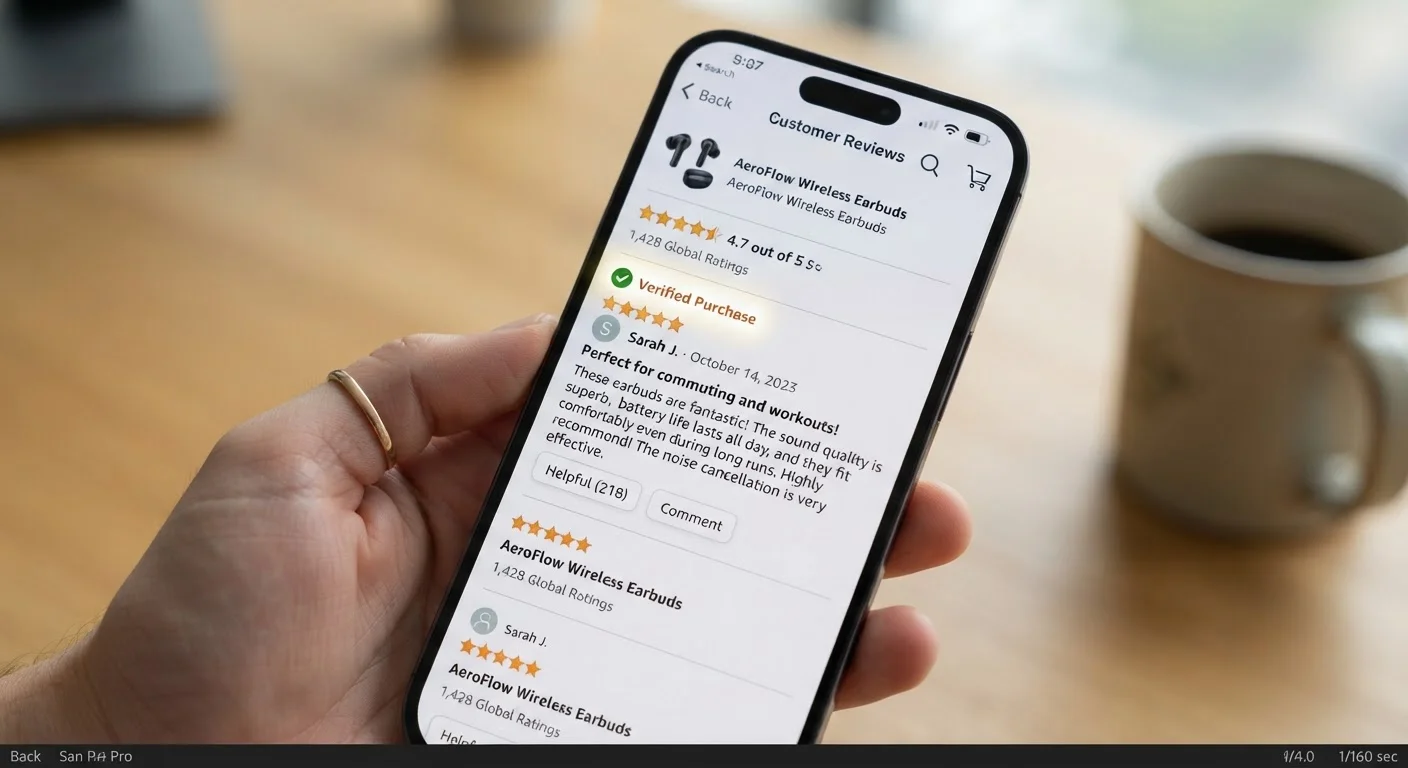
Option A
Verified Purchase Review
The platform-credentialed signal of real buyer experience.
Best for: Shoppers who want a baseline filter that confirms the reviewer actually bought the item through that platform.
Option B
Unverified Review
The uncredentialed voice that ranges from worthless to invaluable.
Best for: Readers who know how to evaluate review quality on their own terms - and don't rely on a badge as a proxy for trustworthiness.
What the Verified Label Actually Confirms
On most major retail platforms, a "verified purchase" label means the reviewer bought the product through that specific platform at or near the listed price. That's it. The platform matched a review account to an order record. It does not confirm the reviewer used the product, that their assessment is accurate, or that their feedback wasn't influenced by an incentive received after purchase.
This distinction matters because incentivized review schemes - where sellers offer refunds, gift cards, or free products in exchange for leaving a review after a verified purchase - have been a documented problem across major retail sites. A purchase can be verified and the review still manipulated. The Federal Trade Commission has issued guidance on disclosure requirements for incentivized reviews, but enforcement is uneven at the individual listing level.
The label also doesn't travel across platforms. A reviewer who bought a blender at a local store and left a detailed, accurate review on a retailer's website would show as unverified - even if their experience is completely genuine. How to spot fake reviews covers the specific patterns that reveal manipulation, which goes well beyond what a badge can detect.
Why Unverified Reviews Aren't Automatically Worthless
The assumption that unverified equals suspicious is understandable but often wrong. Unverified reviews include gift recipients who genuinely used a product for months, people who bought the same item from a competing retailer, professional testers or enthusiasts who purchased through specialty channels, and long-term owners reviewing a product they bought years before the review system existed.
Some of the most specific and useful product feedback comes from these groups - people who have no purchase record on that platform but have direct, extended product experience. A reviewer who details exactly which screw stripped after six months of use, names the replacement part, and describes the workaround is providing real value regardless of their verification status.
| Criterion | Verified Purchase Review | Unverified Review |
|---|---|---|
| What it confirms | A purchase was made on that platform | Nothing about purchase origin |
| Can be manipulated | Yes - via incentivized schemes | Yes - via fake submissions |
| Includes expert/enthusiast voices | Not necessarily | Often yes |
| Includes gift recipients | Rarely | Frequently |
| Platform consistency | Varies by platform definition | No standard across platforms |
| Best used as | A baseline credibility filter | A supplementary detail source |
The signal to focus on is content quality, not the badge. Signals that make a review worth reading - specificity, disclosed context, acknowledged limitations, and consistent detail - apply equally to both verified and unverified submissions.
How to Read Both Types More Effectively
Rather than filtering exclusively by verification status, use it as one signal among several. Look at the ratio of verified to unverified reviews for a product - a listing where the vast majority are unverified and arrived in a short window is worth scrutinizing. Patterns that separate genuine feedback from noise include sudden review spikes, identical phrasing across multiple submissions, and reviewers with single-product histories.
For verified reviews, sort by most critical and read for specificity. Vague five-star reviews that could describe any product in a category - "Great product, fast shipping, love it!" - add little information value whether verified or not. A verified two-star review that details a specific functional failure tells you something real.
For unverified reviews, read them with the same content-quality lens. A long, detailed, technical review from an account with a consistent review history across many products over years is more credible than a brief, generic verified submission. Questions worth asking before trusting any review platform also apply here - the platform's own policies on incentivized content shape what both verified and unverified reviews actually represent.
No single label substitutes for reading critically. The verified badge is a starting filter, not an ending one.
The content on this site is provided for informational purposes only and should not be considered a substitute for professional advice. While we strive to provide accurate and up-to-date information, we make no guarantees regarding its completeness or accuracy. Always consult a qualified professional for advice specific to your circumstances before making any decisions.