

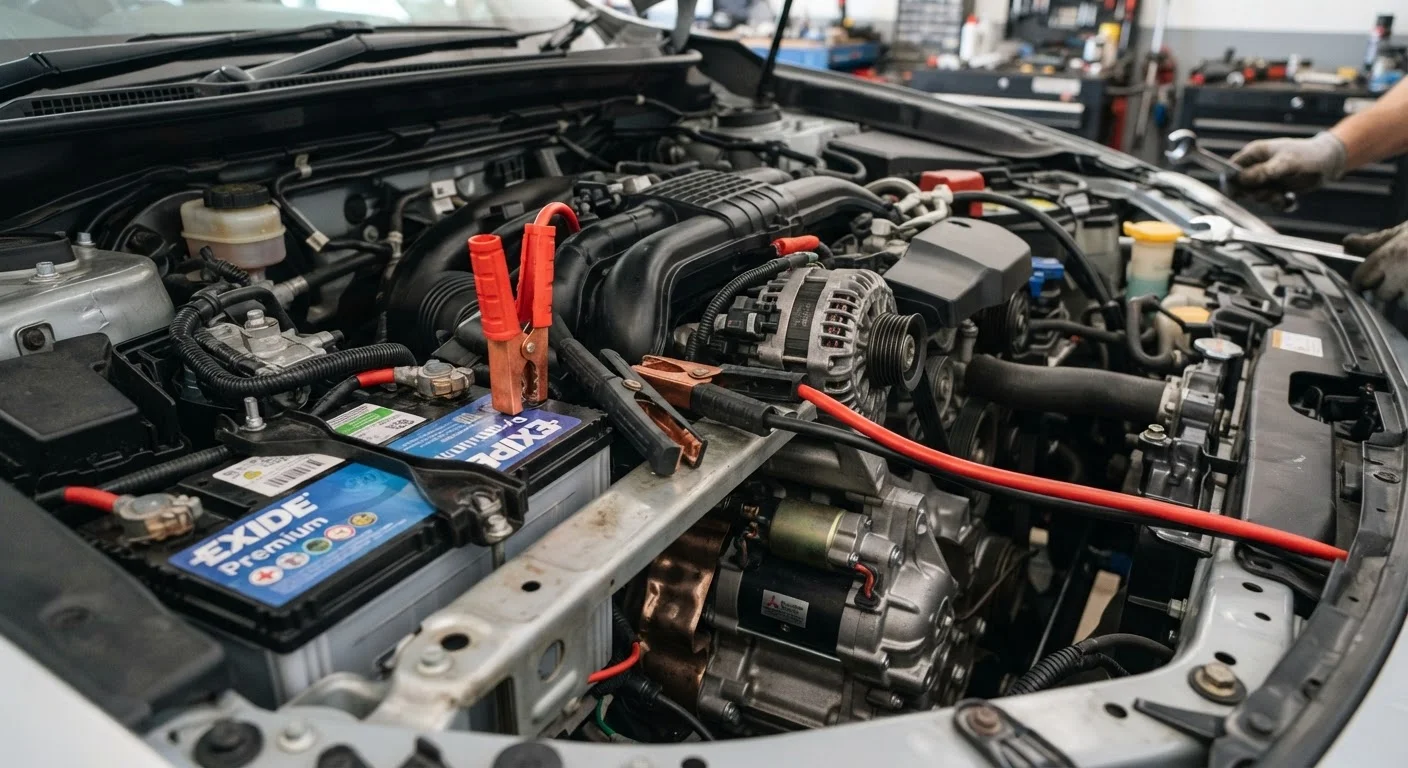
How the Three Components Work Together
Think of the starting system as a relay race. When you turn the ignition key or press the start button, the battery sends a burst of electricity to the starter motor. The starter motor then spins the engine's flywheel fast enough to initiate the combustion cycle. Once the engine is running, the alternator takes over - generating electricity to power your vehicle's systems and simultaneously recharging the battery for the next start.
Each handoff matters. If the battery lacks sufficient charge, the starter won't spin. If the starter's internal solenoid or motor fails, the battery charge is irrelevant - nothing will crank. And if the alternator fails silently while you're driving, it slowly depletes the battery until the engine stalls, sometimes miles from home.
Hybrid and EV Systems Differ Significantly
Hybrid and fully electric vehicles use a separate high-voltage battery pack for propulsion and may retain a small 12-volt auxiliary battery for accessories and control systems. The starting system concepts described here apply primarily to conventional gasoline and diesel vehicles. If you own a hybrid or EV, consult your owner's manual for guidance specific to your vehicle's architecture.
The Battery: Your Car's Energy Reserve
The 12-volt lead-acid battery in most passenger vehicles is designed to deliver a large burst of current on demand, not to provide long-term power like a household battery bank. That's an important distinction. Its job is measured in seconds - starting the engine - after which the alternator carries the load.
Battery failures are the most common cause of a no-start situation. Cold weather thickens engine oil and simultaneously reduces a battery's ability to deliver current, which is why frigid mornings reveal weak batteries that seemed fine all summer. Signs of a dying battery include slow cranking, dim headlights when idling, and an illuminated battery warning light.
3-5 years
Average car battery lifespan
Industry guidance from automotive organizations consistently cites this range under normal driving conditions, with heat and short trips accelerating wear.
~50%
No-start calls attributed to battery issues
Roadside assistance data from major providers consistently shows battery-related failures as the leading cause of roadside service calls.
13.5-14.8V
Healthy alternator output range
This voltage range at the battery terminals while the engine is running indicates a properly functioning alternator and charging circuit.
The Alternator: Keeping Everything Charged
The alternator is a generator driven by a belt connected to the engine. As the engine runs, it spins the alternator, which produces alternating current (AC) that an internal rectifier converts to the DC power your car's electronics require. A healthy alternator typically outputs between 13.5 and 14.8 volts - enough to run accessories and top off the battery simultaneously.
Alternator wear is often gradual. An aging alternator may still charge the battery partially, masking the problem until it fails completely. Warning signs include flickering interior lights, electronics behaving erratically, a whining or grinding noise from the engine bay, or the charging system warning light appearing on your dashboard.
The Starter: Converting Electrical Power to Mechanical Motion
The starter motor is a compact but powerful electric motor mounted near the bottom of the engine. When you turn the key, a component called the solenoid engages a small gear (the pinion) that meshes with the engine's flywheel ring gear, cranking the engine until combustion begins. The whole process typically takes less than a second on a healthy vehicle.
Starter failures can be sudden or progressive. A worn solenoid may produce rapid clicking without the engine turning. A seized or burned-out starter motor may result in complete silence. In some cases, a starter may work intermittently - starting the car on the third or fourth attempt - before failing entirely. Starter replacement is generally considered a job for a qualified mechanic, as access can be difficult depending on the vehicle's engine layout.
Test Before You Replace
Before spending money on any of these three components, get each one tested individually. Many auto parts stores provide free battery and alternator testing. A systematic test takes about 15 minutes and can save you from replacing a part that isn't actually the problem.
Diagnosing the Problem Without Guessing
Because the three components are linked, misdiagnosing which one failed is a common and expensive mistake. Replacing a battery when the alternator is actually the problem means the new battery will drain just as quickly. A systematic approach - testing the battery voltage, the alternator output, and the starter circuit separately - is the most reliable method.
Many national auto parts retailers offer free battery and charging system tests using handheld diagnostic tools. These tests measure cold cranking amps (CCA), state of charge, and alternator output voltage. While these tests aren't always definitive, they give you a solid starting point before spending money on parts. If the diagnosis is unclear, an independent mechanic with a full electrical diagnostic tool can provide a more thorough assessment.
This article is for informational purposes only. Always consult a qualified mechanic before performing repairs on your vehicle's electrical system.
Frequently Asked Questions
If the car starts fine after a jump but dies again shortly after, the alternator is likely not recharging the battery. If the car simply won't start and the battery is old or has been sitting, the battery itself is more likely the culprit. Many auto parts stores will test both components for free.
Most car batteries last three to five years under normal driving conditions. Extreme heat or cold, frequent short trips, and leaving electronics on can shorten battery life. Age alone is a reason to have it tested, even if there are no obvious symptoms.
A single loud click or rapid clicking when you turn the key often points to a starter or battery issue. Complete silence - with no crank at all - can indicate a failed starter, a blown fuse, or a poor electrical connection. A grinding noise during cranking may suggest worn starter gears.
Not safely or for long. A failing alternator will slowly drain your battery while you drive, eventually causing the car to stall. Warning lights - particularly the battery or charging system light - often appear first. It's best to address alternator problems promptly rather than risk being stranded.
Jump-starting is generally safe when done correctly, but consult your owner's manual first - some modern vehicles have specific jump-start procedures or dedicated terminals. Always connect cables in the correct order and ensure neither battery is cracked or leaking before attempting a jump.
The content on this site is provided for informational purposes only and should not be considered a substitute for professional advice. While we strive to provide accurate and up-to-date information, we make no guarantees regarding its completeness or accuracy. Always consult a qualified professional for advice specific to your circumstances before making any decisions.